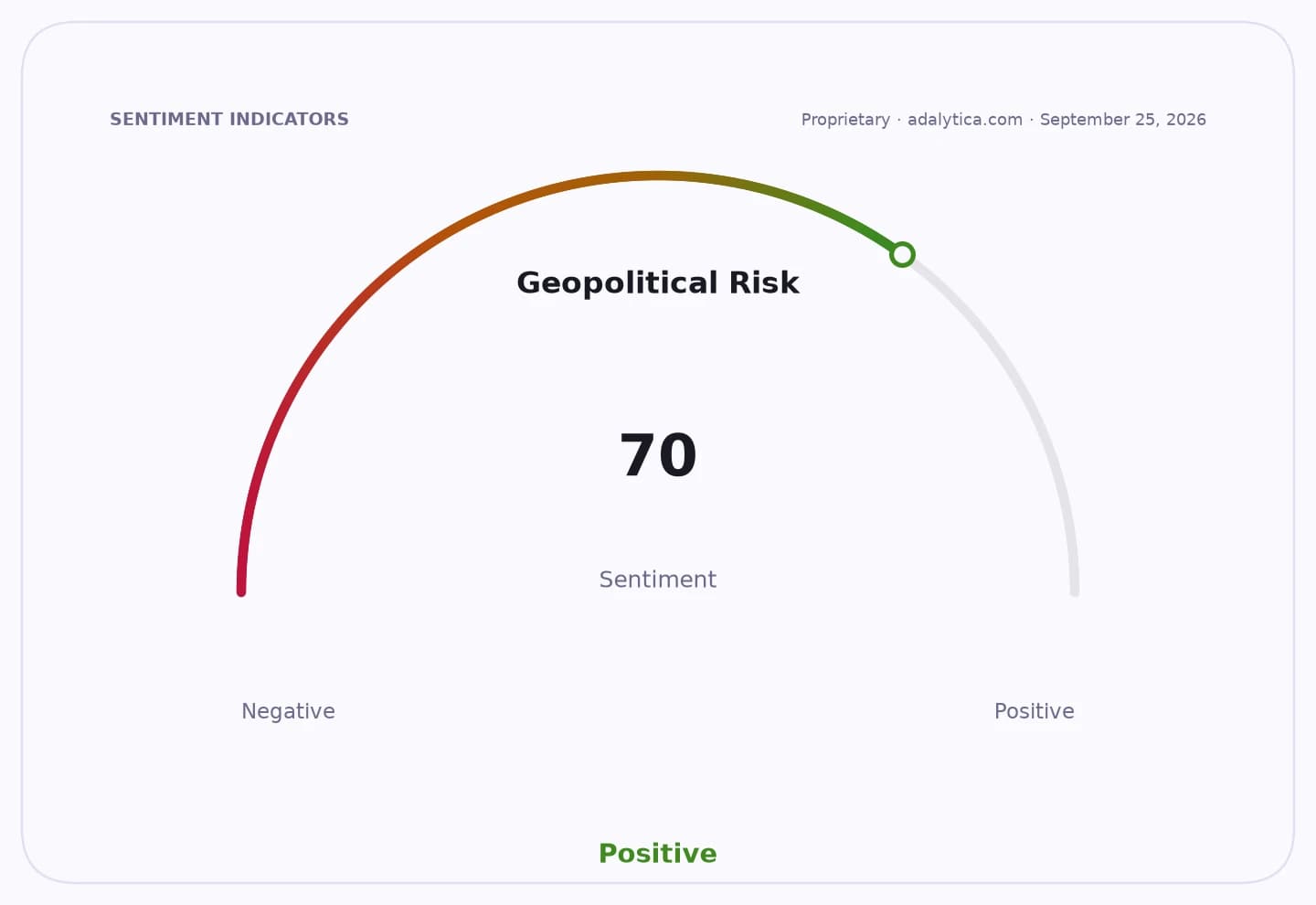
The biggest economic consequence of Donald Trump’s tariff strategy is not whether one legal route survives, but whether the White House can preserve the duties through another. That makes the latest push to resurrect a tariff wall economically meaningful because it keeps alive a policy that taxes imports, raises the cost of supply chains and reshapes pricing power across U.S. industry, even after courts questioned the original legal basis.
Tariff Risk Keeps Inflation and Bond Yields Elevated
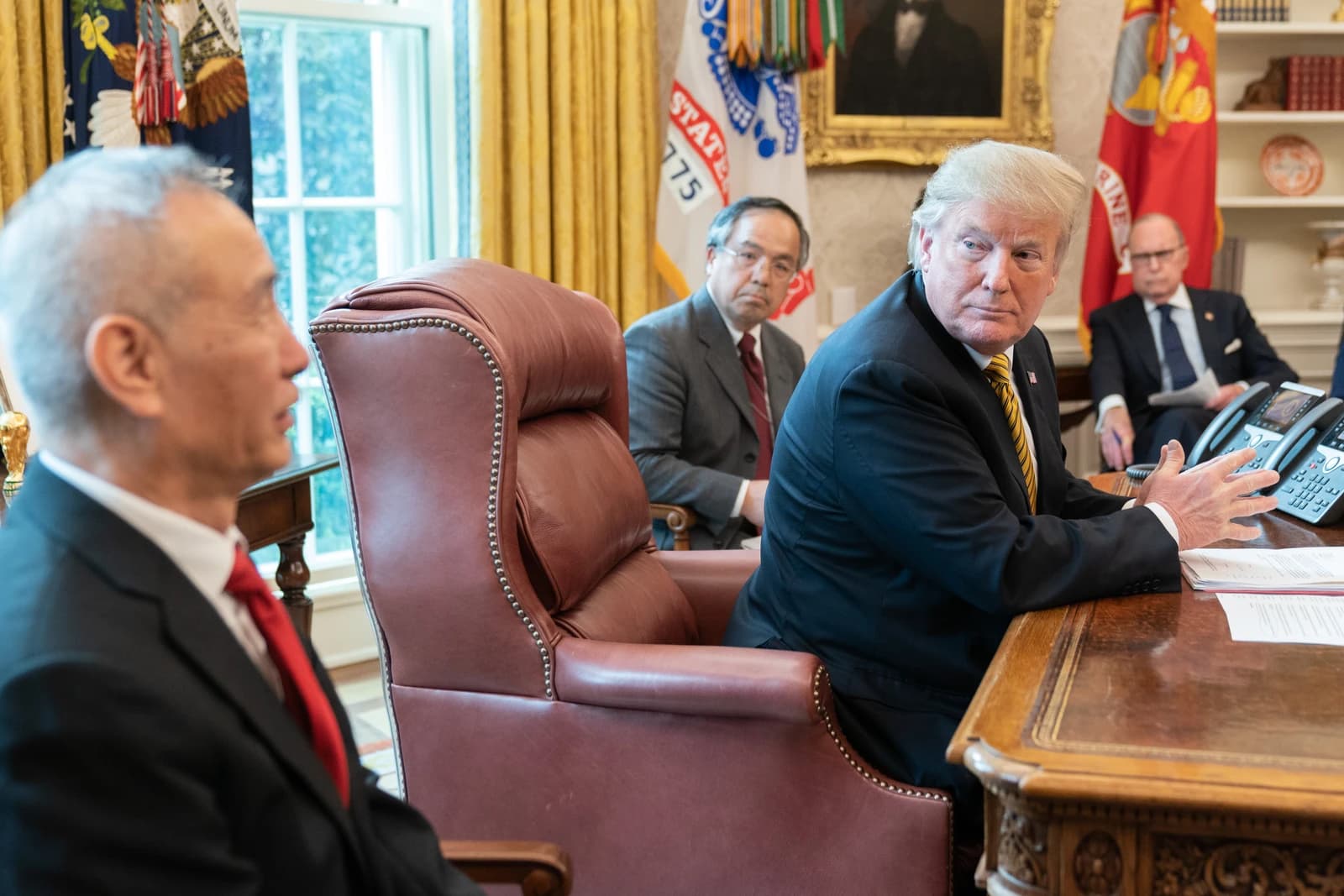
For investors, the issue is bigger than trade law. A durable tariff regime alters margins, capital spending plans and inflation expectations, while changing the relative appeal of domestic manufacturers, multinationals, importers and consumer brands. It also complicates the Federal Reserve’s job if tariffs feed into broader price pressures at the same time growth is already showing strain.
Sentiment IndicatorsⓘProprietary · adalytica.com · July 26, 2026
This is a snapshot — live sentiment, awareness and momentum for 130+ markets update continuously in the dashboard.Open AlphaPulse
Markets have been forced to price that risk in real time. The U.S. Treasury 10-year yield has climbed to around 4.75% in the latest reading from 4.63% two sessions earlier, while the two-year note has risen to 4.41% from 4.26%, a move that suggests traders are not treating tariff risk as a one-off legal event but as a persistent macro input. At the same time, the U.S. dollar has flipped into what Adalytica labels “Extreme Fear,” reflecting growing concern that trade policy uncertainty can feed volatility across currencies, equities and commodities.
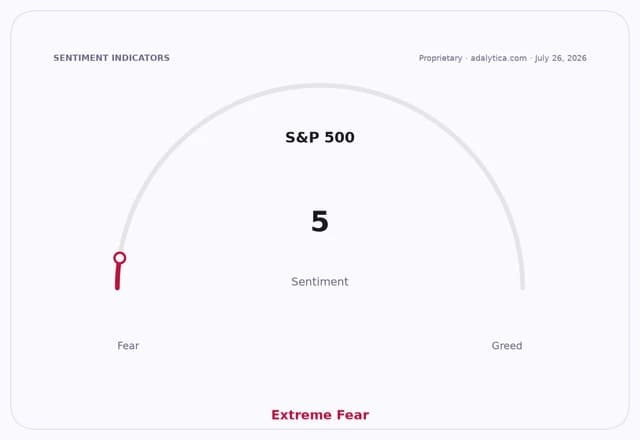
Equities are sending a mixed signal. The S&P 500 remains well above its March lows, but the index has retreated from recent highs and its Adalytica trade-signal reading has slumped into “Extreme Fear,” a sign that investors are uneasy about policy risk even as the broader market stays near elevated levels. That tension helps explain why tariff-sensitive names are already trying to digest a world in which the legal challenge may not end the policy.
DGS10 vs DGS2 — macro contextadalytica.com
Explore this data interactively — full history, time series and cross-market comparisons.Open AlphaPulse
Commodity markets are also telling the story. USO, the oil-tracking ETF, jumped sharply from the low $110s to about $136.69 on the latest close after touching $139.49, with its 50-day moving average now well above the 200-day average and RSI readings deep in overbought territory. The move reflects a broader risk bid across hard assets, but it also underscores how trade policy, geopolitical stress and inflation hedging can reinforce one another when investors expect supply chains to stay under pressure.
The corporate impact is straightforward. Companies with significant import exposure face the prospect of higher input costs, weaker volume growth or both. Apple has already warned in filings that tariffs and related measures can materially hurt business and supply chains, while Caterpillar has estimated tariff costs of roughly $2.2 billion to $2.4 billion in 2026 based on duties already in place. Consumer staples and equipment makers are among the clearest losers if tariff walls are extended or reassembled through a different statute.
The bull case for Trump’s approach is that tariffs remain one of the few policy levers that can be deployed quickly, with visible leverage over trading partners and potential support for domestic manufacturing and selected industrial names. The bear case is that the tax falls largely on U.S. importers and consumers, with limited evidence that broad tariffs revive productivity or permanently rebuild supply chains at scale. The risk is that Washington ends up locking in a higher-cost economy while creating repeated legal and market uncertainty.
That is why the Supreme Court question matters less than the broader administrative workaround. If the White House can find a durable substitute, investors may have to assume the tariff wall is not a temporary bargaining chip but a structural feature of the next phase of U.S. trade policy. The key watchpoint is whether the market begins to reprice inflation, earnings and growth on the assumption that tariff protection is staying put rather than fading with the courts.
| Entity | Gains | Losses |
|---|---|---|
| Domestic manufacturers | ▲More pricing power | ▼Higher input costs |
| Importers and retailers | ▲Short-term hedging opportunity | ▼Margin compression |
| Tariff-sensitive multinationals | ▲Selective reshoring leverage | ▼Supply-chain disruption |
| Treasury market bears | ▲Higher inflation risk | ▼Lower bond prices |