The biggest risk in real estate investing right now is not rates, vacancies or even property values — it is tax policy, and the same lesson applies whether you own REITs, REIT mutual funds or buildings outright.
Tax Policy Is Shaping Real Estate Returns
South Korea’s plan to reshape property taxes, ease transfer levies and focus the burden on ultra-high-value homes is a reminder that after-tax returns drive real estate behavior more than sticker prices do. That matters for investors because REITs and REIT funds are not just property plays; they are income vehicles whose appeal rises and falls with the tax treatment of distributions, capital gains and portfolio turnover.
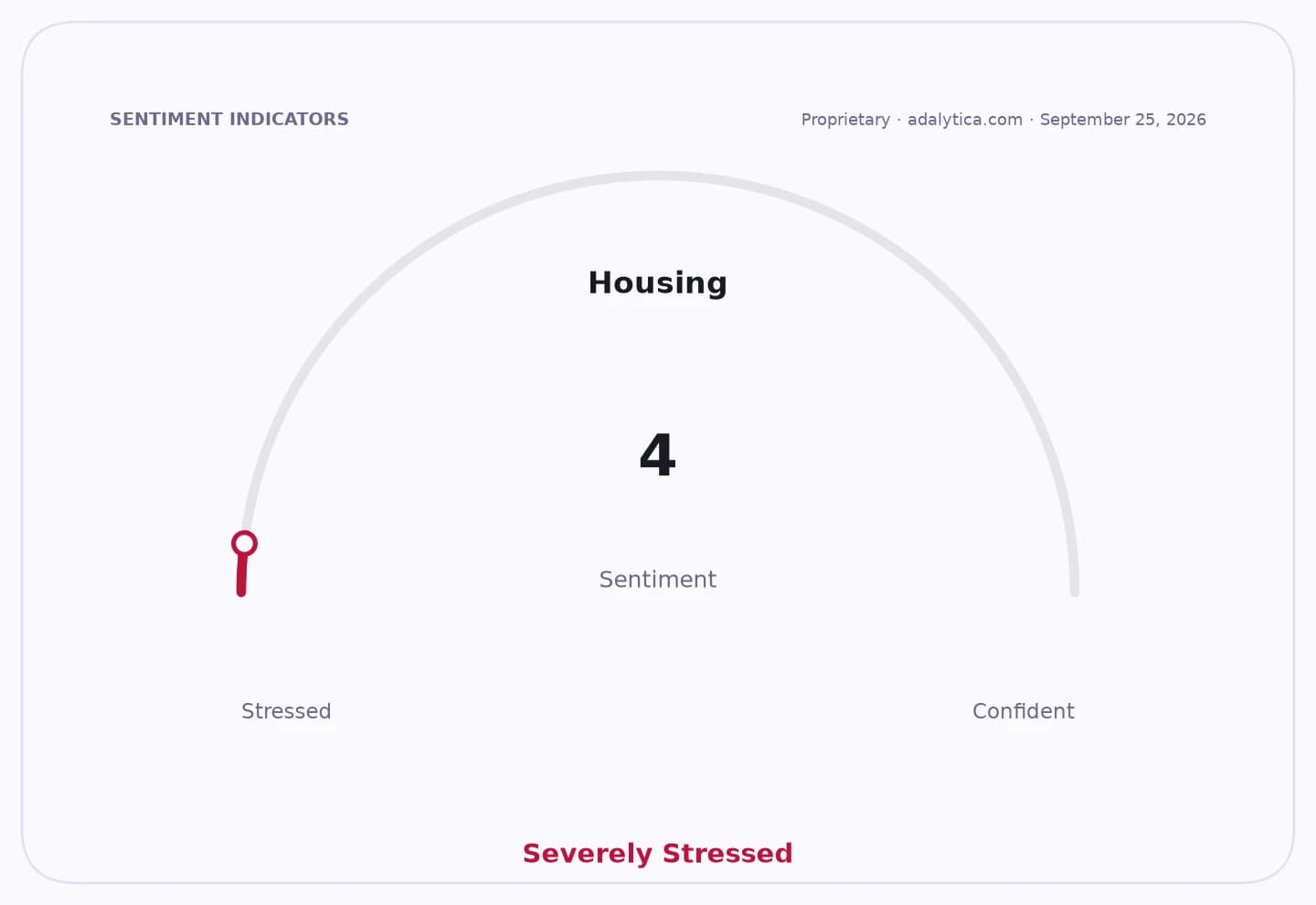
Sentiment IndicatorsⓘProprietary · adalytica.com · July 26, 2026
This is a snapshot — live sentiment, awareness and momentum for 130+ markets update continuously in the dashboard.Open AlphaPulse
For income investors, the comparison is crucial. Direct real estate can offer leverage, depreciation and more control over timing, but it also brings the full weight of local property taxes, transfer taxes and capital gains rules. REITs typically push most taxable income through to shareholders, which means they are efficient cash-generators but often tax-inefficient in taxable accounts. REIT mutual funds add another layer: investors get diversification and professional management, but they also inherit capital-gains distributions from the fund’s trading activity, which can create an unexpected tax bill even in weak markets.
The market is already behaving as if the tax and policy backdrop matters. The Vanguard Real Estate ETF, VNQ, has climbed to about 100.81 from 85.6 a year earlier, while the iShares U.S. Real Estate ETF, IYR, is up to 107.00 from 92.2 and the Schwab U.S. REIT ETF, SCHH, has advanced to 24.86 from 20.21. Those gains tell you investors are still willing to pay for real estate income, but they also show how quickly capital rotates toward the cleanest, most liquid way to access the sector when policy uncertainty rises.
Technically, the three ETFs are all trading above their 50-day and 200-day moving averages, which points to a broader uptrend, but the recent push has left them closer to overbought territory on RSI readings than earlier in the year. That combination usually means investors are not abandoning the trade — they are becoming more selective about how they own it.
That selectivity is where the opportunity sits. In a world where governments want more tax revenue from property and are increasingly targeting concentrated wealth, the winners are likely to be listed vehicles with scale, liquidity and professional tax management. The losers are likely to be owners of ultra-expensive property sitting on concentrated exposure to local tax reform, and investors who assume direct ownership always beats pooled exposure after taxes.
The deeper narrative is that real estate is no longer just an inflation hedge or an income trade. It is becoming a policy trade. If lawmakers keep pushing taxes toward high-value properties and away from broad ownership, capital can migrate toward REITs and REIT funds that offer exposure without the same headline risk. That is why I believe the market underestimates the value of tax simplicity in real estate: in the next phase of the cycle, the best returns may not come from owning more property, but from owning the right wrapper around it.
For investors, the actionable takeaway is clear: treat REITs, REIT mutual funds and direct real estate as different tax businesses, not interchangeable asset classes. In taxable accounts, efficiency matters as much as yield; in policy-sensitive markets, structure can matter more than location. The asymmetry favors liquid REIT exposure, especially when governments start rewriting the rules.
| Entity | Gains | Losses |
|---|---|---|
| Listed REITs | ▲liquidity premium | ▼direct-property owners |
| REIT mutual funds | ▲diversification access | ▼tax-efficient buyers |
| Direct real estate investors | ▲control over assets | ▼higher policy risk |
| Governments | ▲more tax revenue | ▼speculative property holders |