Inflation has not finished working its way through the economy, and that is exactly why bond investors should not assume the next crisis will resemble 2008, RBC BlueBay chief investment strategist for bonds Mark Dowding says.
Tech Bond Issuance Faces 4.6% Treasury Yields
For long-term investors, that matters because the plumbing of the financial system is changing. The last crisis was built around mortgages and leverage in the banking system. The next one, Dowding argues, could be driven by something more familiar to today’s market: heavy borrowing by technology companies, a still-stubborn inflation backdrop and the growing strain of higher interest rates on balance sheets that once looked bulletproof.
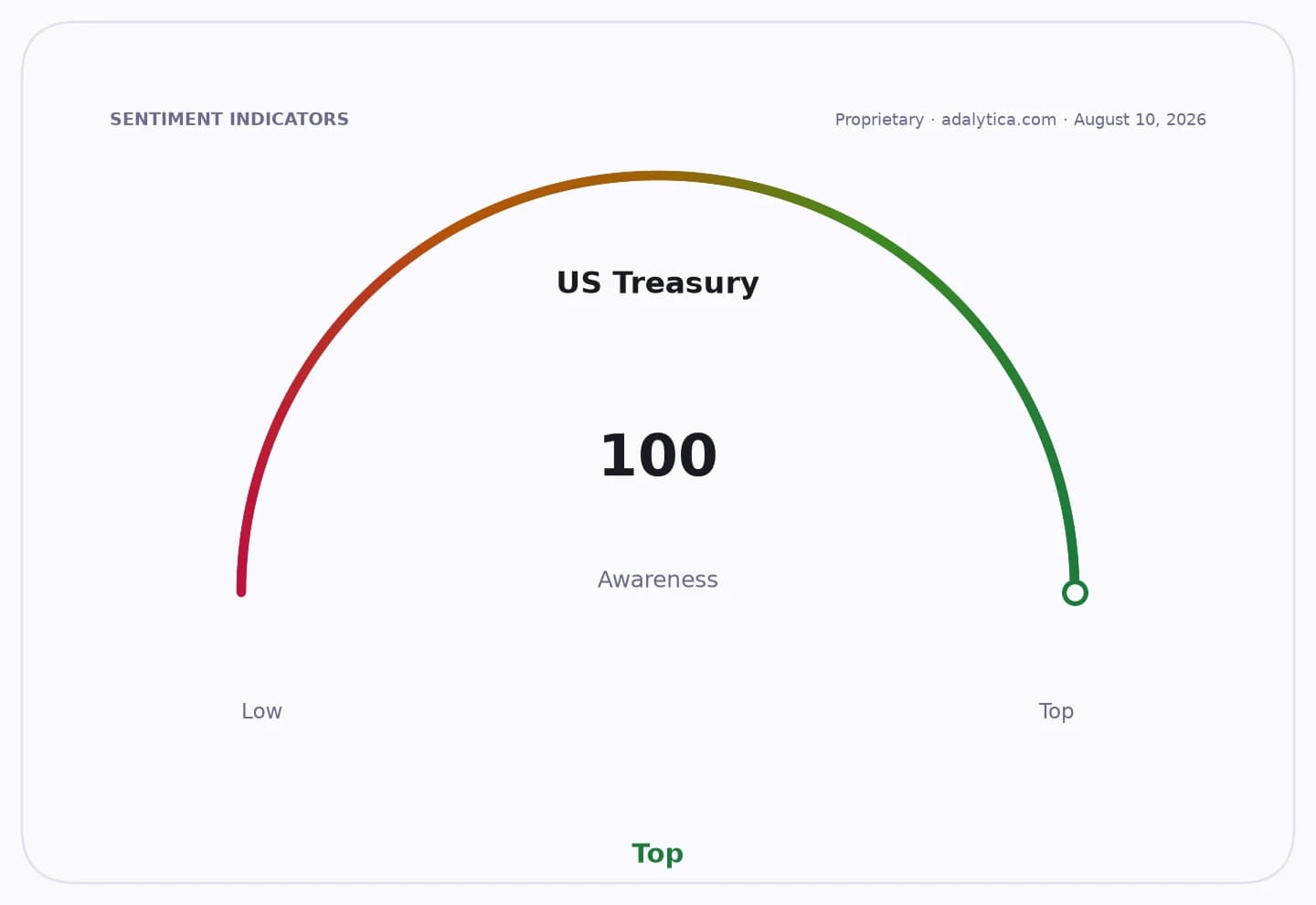
Sentiment IndicatorsⓘProprietary · adalytica.com · August 10, 2026
This is a snapshot — live sentiment, awareness and momentum for 130+ markets update continuously in the dashboard.Open AlphaPulse
That’s not just theory. US high-yield credit spreads, a closely watched measure of stress in junk debt, are still near 2.7 percentage points, below the recent peaks around 4.2 points earlier this year. In plain English, credit markets are not flashing panic. But they are also not priced as if rates will fall quickly enough to make leverage cheap again. The 10-year Treasury yield is around 4.6%, a level that keeps borrowing costs elevated for everyone from speculative borrowers to investment-grade issuers.
That is where the tech-bond angle becomes important. Investors tend to think of technology companies as cash-rich and resilient, and many are. But a big chunk of the sector has also become a major borrower, especially as artificial intelligence spending has exploded. Alphabet’s large bond sale is a reminder that even the strongest names are tapping debt markets to fund growth, while Microsoft has continued to expand financing activity even as it pushes aggressively into AI infrastructure. For bondholders, the issue is not whether these companies will miss payments tomorrow. It is whether a wave of debt-funded capital spending will eventually run into slower cash generation, tighter financing conditions and weaker refinancing terms.
That combination is what makes this cycle different. Inflation has not fully passed through every part of the economy, which means the Federal Reserve may not get the clean disinflation story investors keep hoping for. Meanwhile, the US inflation index is still running far above pre-pandemic norms, and the 10-year yield has been stuck at a level that keeps real borrowing costs restrictive. If growth softens while inflation stays sticky, the market may not get the rate relief needed to bail out levered borrowers.
Credit markets are showing a mixed picture. High-yield exchange-traded funds such as HYG have held up, with the fund recently trading above its 50-day and 200-day moving averages, while investment-grade bonds via LQD are hovering near their longer-term trend lines. That looks calm on the surface. But calm credit markets often sit on top of major structural shifts until something breaks. The more relevant question for investors is not whether spreads are tight today, but which issuers would struggle if funding costs stayed high for another year or two.
That is why Dowding’s warning should land with equity and bond investors alike. If the next crisis is not a bank-leverage story, then traditional playbooks may fail. In a world of AI capex, higher-for-longer yields and lingering inflation, the biggest risks may sit in places investors still associate with growth, not fragility.
For investors, the takeaway is simple: don’t assume the winners of the AI boom are immune just because they are profitable today. Keep an eye on tech balance sheets, refinancing needs and the cost of capital. In a diversified portfolio, the best defense is patience, discipline and a willingness to hold quality assets through noisy cycles. This is a story worth watching, especially if you own both tech and credit for the long run.
| Entity | Gains | Losses |
|---|---|---|
| Cash-rich tech leaders | ▲Fund expansion with easier market access | ▼Face higher refinancing costs |
| Bondholders in strong issuers | ▲Collect yield from large borrowers | ▼Take more duration and credit risk |
| High-yield borrowers | ▲Benefit if spreads stay contained | ▼Suffer if rates stay elevated |
| Long-term diversified investors | ▲Can buy quality assets on weakness | ▼Those chasing leverage-heavy growth |