Gold prices in Tehran are holding up better than many traders expected, and that relative stability matters because it signals a market still anchored by safe-haven demand, inflation stress and limited confidence in the local currency.
Tehran Gold Stability Signals Persistent Safe-Haven Demand
The key takeaway is not just that bullion is changing hands in an auction setting, but that buyers appear willing to absorb supply without forcing a sharp discount. In a market like Iran’s, where households and businesses use gold as a store of value against currency weakness, even a steady auction outcome can tell you a lot about capital preservation behavior. When people trust gold more than cash, they are voting with their balance sheets.
That dynamic has clear economic significance. Persistent demand for bullion in Tehran suggests inflation expectations remain elevated and domestic confidence in fiat money is fragile. The broader macro backdrop reinforces that view: U.S. 10-year Treasury yields are around 4.56%, a reminder that global financial conditions remain tight, while oil’s recent move back toward the high-$70s helps keep sanctions-sensitive economies exposed to volatile external revenues. For Iranian savers, gold is not a speculative luxury — it is insurance.
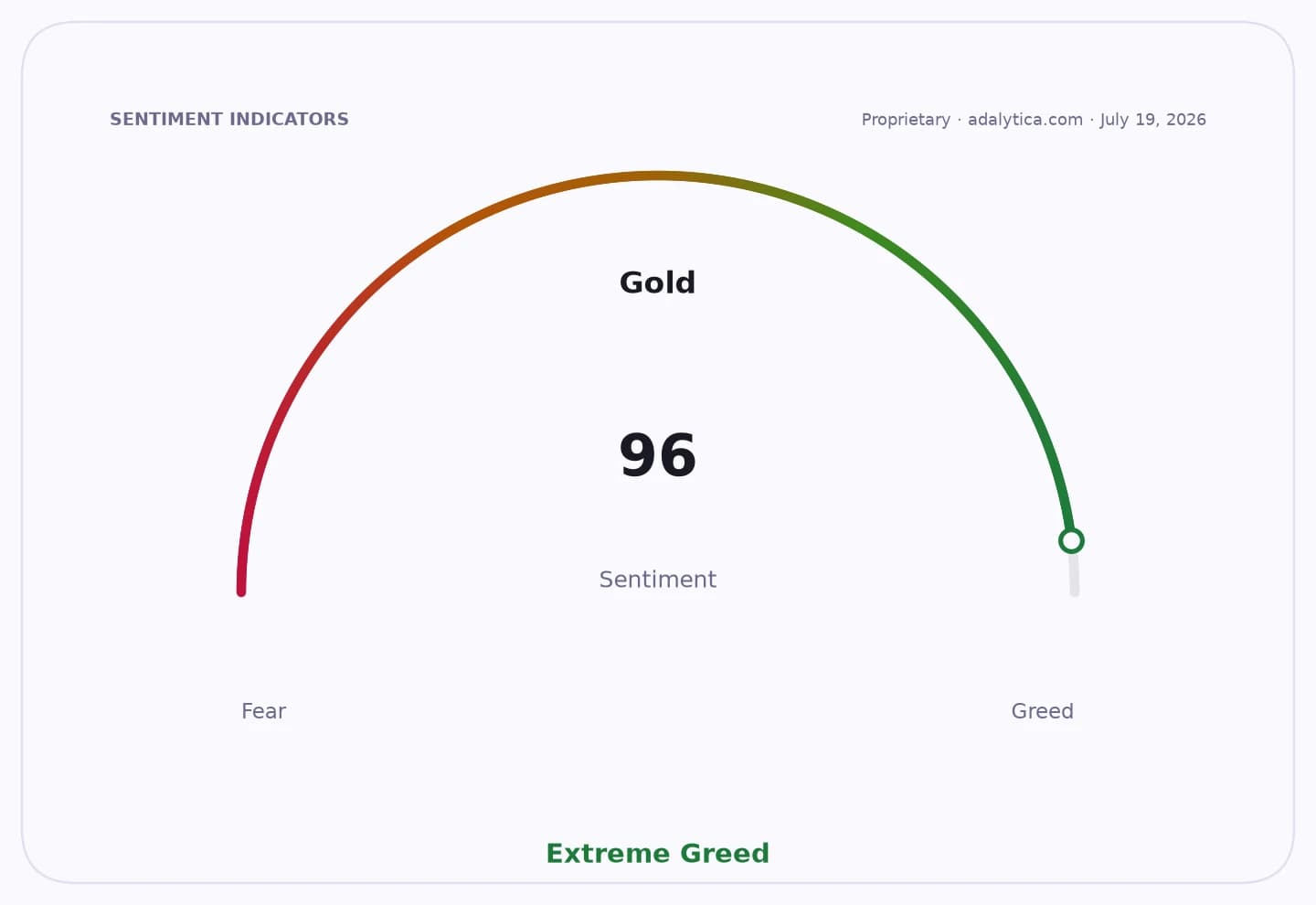
Investors should pay attention because stable local gold pricing often reflects more than commodity fundamentals. It points to ongoing demand for physical metal, stronger retail absorption and a market that is not yet in panic liquidation. That is bullish for bullion-linked assets, from GLD to IAU, even after a powerful run that has left some conventional technical indicators stretched. GLD is trading below its 200-day moving average after a volatile pullback, but the Adalytica.com Gold Fear & Greed snapshot still shows Extreme Greed at 96, suggesting investor appetite for gold remains intense even as short-term positioning cools. GDX and the major gold ETFs have also shown that miners can lag or outrun bullion depending on sentiment, but the underlying message is the same: gold remains a preferred hedge when macro uncertainty refuses to fade.
The auction details matter because they show how the market is clearing. When a bullion auction does not trigger an abrupt price break, it usually means the buyer base is deep enough to support the market. That can happen when inflation is sticky, when currency risk is still high, or when households are rotating out of cash and into hard assets. In practical terms, that supports dealers, vault operators and import-linked intermediaries, while pressuring anyone who is short volatility or betting on a return to confidence.
The bigger narrative is that Tehran’s gold market is functioning as a pressure gauge for economic anxiety. If prices keep showing resilience, it will reinforce the idea that inflation hedges remain in demand and that trust in the local currency is still weak. For investors, that is a reminder that the best opportunities are often in the upstream beneficiaries of fear — bullion, selective miners and liquidity providers — before the broader market catches up.
| Entity | Gains | Losses |
|---|---|---|
| Gold buyers in Tehran | ▲Inflation hedge | ▼Cash purchasing power |
| Bullion dealers/auction sellers | ▲Stable clearing prices | ▼Forced discounts |
| Gold ETFs and miners | ▲Safe-haven flows | ▼Risk-on allocations |
| Local currency holders | ▲— | ▼Store-of-value appeal |