Tesla’s latest results sharpened a question that now matters more to the shares than another quarter of vehicle delivery volatility: whether Elon Musk’s robotics and autonomy push can justify the company’s much heavier spending and a weaker near-term profit profile.
Tesla Faces Higher Spending and Slower Autonomy Payoff
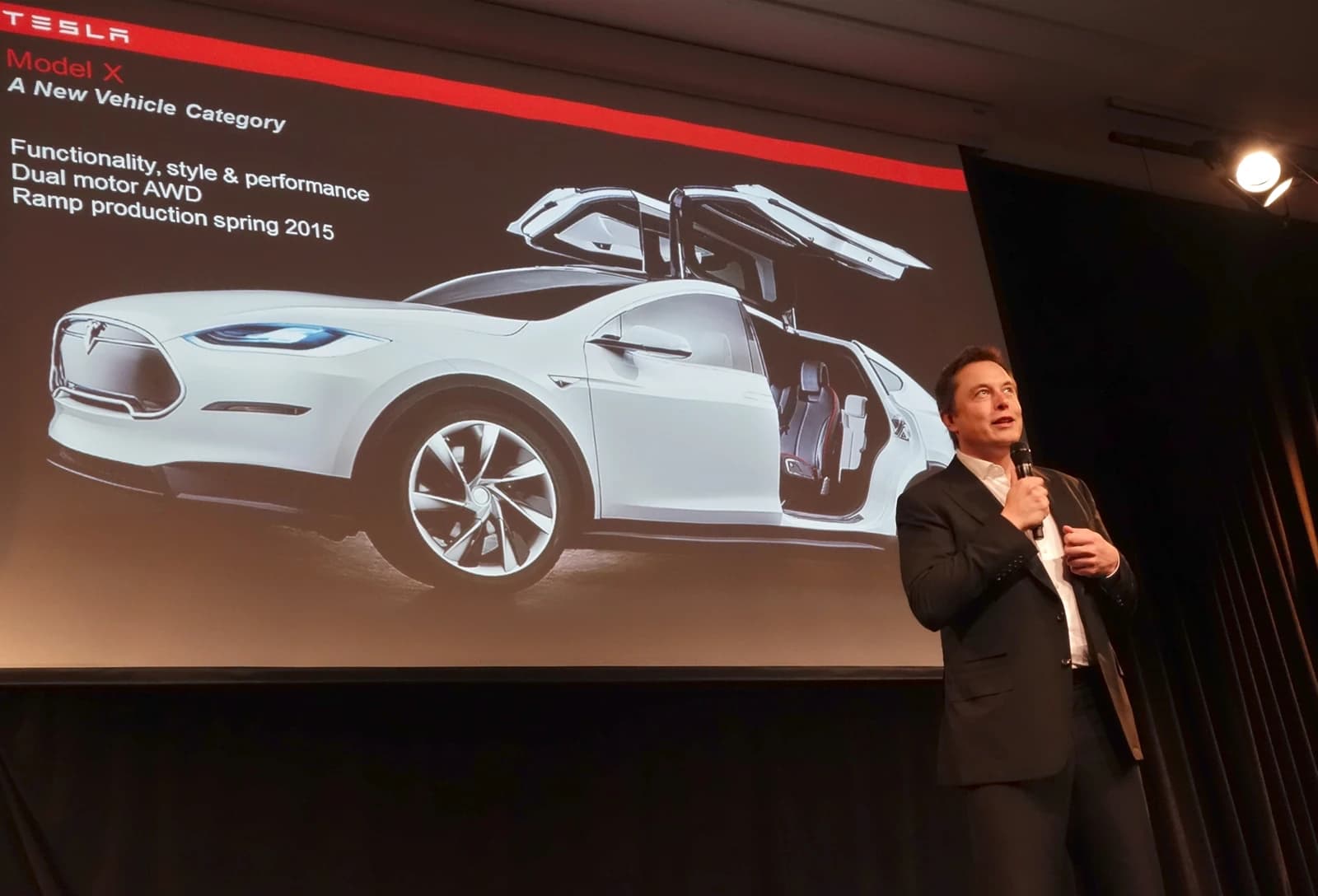
The answer will determine whether Tesla remains valued as a carmaker with a volatile growth premium or as an AI and mobility platform still waiting for its economics to prove out. Tesla said capital expenditures are expected to exceed $25 billion in 2026, with the money going largely into AI infrastructure, data centers, manufacturing ramp-ups and robotics. That is an enormous commitment even by Tesla standards, and it comes as the company is signaling a slower, more cautious path for robotaxi rollout than bulls had hoped.
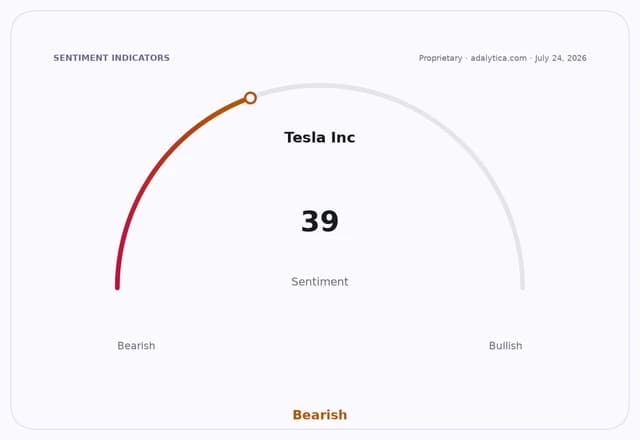
Sentiment IndicatorsⓘProprietary · adalytica.com · July 24, 2026
This is a snapshot — live sentiment, awareness and momentum for 130+ markets update continuously in the dashboard.Open AlphaPulse
That tension is the market story. Tesla’s latest quarter showed a meaningful cash burn of about $1.1 billion tied to the strategic shift, underscoring that the robotaxi and robotics program is not a marginal experiment but a core capital allocation decision. The company is effectively asking investors to underwrite years of investment before the service-driven model can contribute meaningfully to earnings. For a stock that has long traded on narrative as much as fundamentals, that is a high-stakes test.
The market reaction reflects the strain. Tesla shares dropped sharply after the numbers, leaving the stock around 319.69, down from 378.93 two days earlier and well below the 50-day moving average near 405. That technical damage matters because it suggests momentum traders and discretionary longs are losing conviction just as the business is leaning harder into its most speculative growth engine. The relative strength index near 29 points to deeply oversold conditions, but also to how quickly enthusiasm has been flushed out.
For investors, the key issue is not whether autonomous driving and robotics are strategically important — they are — but whether the timeline can support the current valuation. Tesla still has a powerful bull case: if robotaxis scale safely and profitably, the company’s addressable market expands far beyond auto sales, and the margin structure could look more like software than manufacturing. The bear case is equally clear: if commercialization slips, the company is left with a stretched capital plan, slower earnings growth and a stock that becomes more exposed to auto-cycle and margin pressure.
The broader industry context reinforces the stakes. Rivals are still spending aggressively on AI and autonomy, and the competitive race for data, compute and regulatory approval is intensifying. Tesla’s advantage has always been the ability to move faster than incumbents and keep investors focused on the long game. But the latest numbers show that the long game is now carrying a heavier bill.
For now, Tesla’s stock is trading less on what it sold last quarter than on whether Musk can convert its robotics story into a credible earnings model. Until there is clearer evidence that robotaxi economics are moving from concept to cash flow, the shares are likely to remain hostage to execution, not vision.
| Entity | Gains | Losses |
|---|---|---|
| Tesla bull investors | ▲Long-term autonomy upside | ▼Near-term earnings visibility |
| Tesla bears | ▲Weaker profit profile | ▼Risk of a robotaxi surprise |
| Elon Musk / Tesla management | ▲Strategic optionality | ▼Higher scrutiny on execution |
| Legacy automakers | ▲Time to catch up on autonomy | ▼Competitive pressure from Tesla's AI push |