Thailand’s central bank is moving to tighten oversight of nonbank lenders and push banks to confront the country’s debt overhang, a shift that could determine whether the economy regains traction in the second half of the year or stays trapped in a low-growth, high-debt loop.
Thailand Central Bank Tightens Nonbank Lender Oversight

Governor Vitai Ratanakorn has signaled that modern banks must “take action” on four lending problems tied to Thailand’s economic crisis, with household debt at the center of the policy response. The Bank of Thailand has also created new divisions focused on nonbank financial institutions, consumer protection and digital payments, underscoring that the fight is no longer just about interest rates or credit growth, but about how credit is distributed and who is protected from predatory lending.
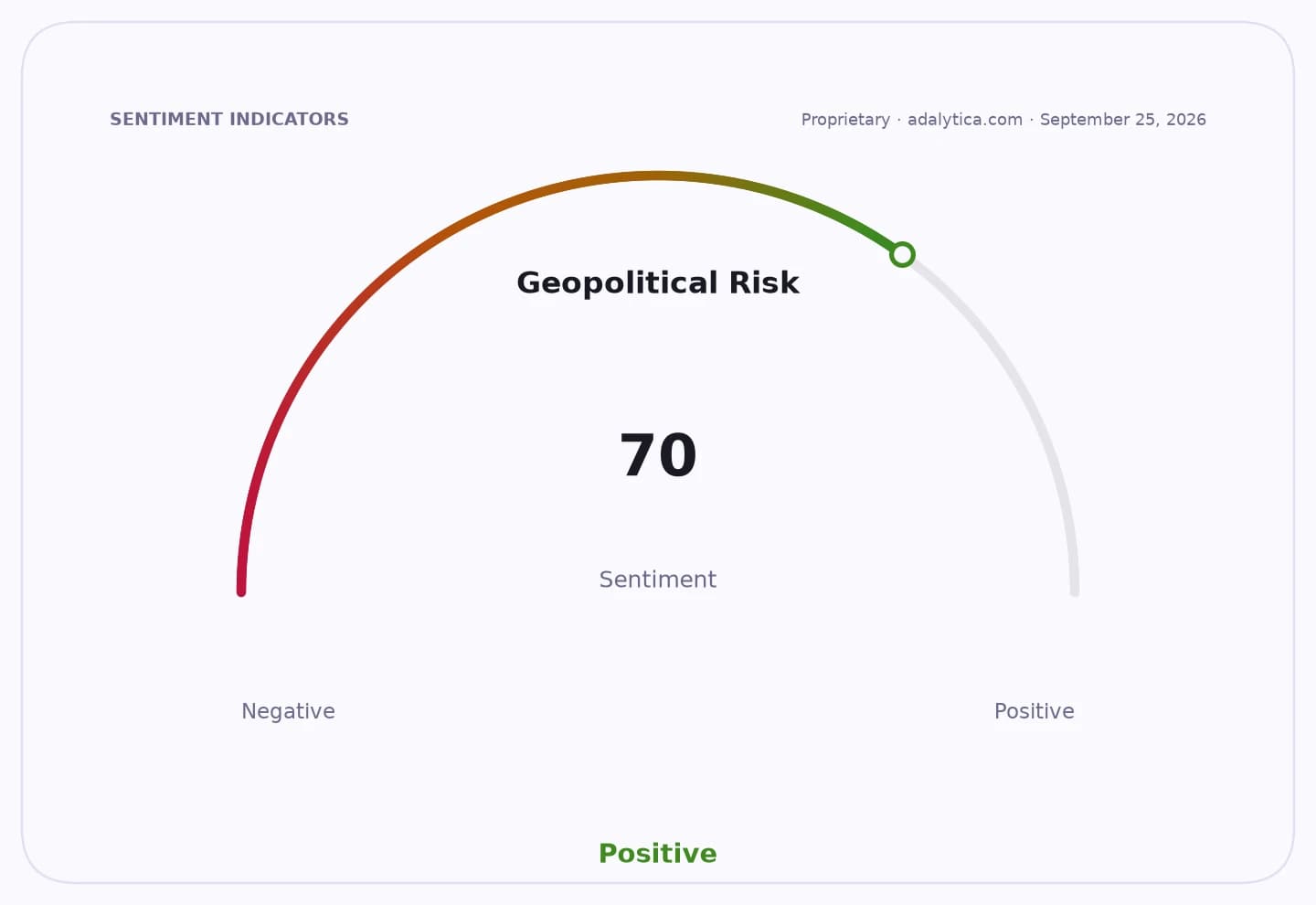
Sentiment IndicatorsⓘProprietary · adalytica.com · August 14, 2026
This is a snapshot — live sentiment, awareness and momentum for 130+ markets update continuously in the dashboard.Open AlphaPulse
That matters because Thailand’s expansion has been constrained less by lack of liquidity than by weak credit quality. When household debt is high, banks become more cautious, borrowers spend more of their income servicing liabilities, and consumer demand softens. In that environment, stronger supervision of nonbanks can reduce the risk that vulnerable households are pushed into expensive shadow financing, but it can also squeeze lenders that have built profitable businesses around higher-risk credit.
The policy shift comes as the central bank warns of an uncertain outlook for the second half, reflecting structural pressures rather than a cyclical slowdown alone. With benchmark yields around 4.7% on the 10-year U.S. Treasury and 4.2% on the 2-year, global funding conditions remain tight enough to keep pressure on emerging-market credit channels. At the same time, the U.S. unemployment rate near 4.1% points to a still-resilient external backdrop, even as Adalytica’s trade signals show neutral sentiment in the S&P 500 and the dollar, suggesting global risk appetite is not offering Thailand much of a tailwind.
For investors, the key issue is whether tighter regulation can improve asset quality without choking credit extension. Thai banks could benefit over time if cleaner household balance sheets lower default risk and reduce the need for costly collections and provisioning. But near term, tougher rules on nonbanks and a broader push to rein in household leverage could slow loan growth and pressure fee income, especially for lenders exposed to unsecured consumer credit.
The bull case is that the central bank is finally addressing the root cause of Thailand’s weak consumption and uneven credit transmission: overleveraged households and lightly supervised nonbanks. The bear case is that reform arrives after damage has already been done, leaving banks and finance companies to absorb slower growth before demand recovers. What investors should watch next is whether the new supervisory structure translates into easier debt restructuring, more disciplined lending and a clearer path out of Thailand’s prolonged credit drag.
| Entity | Gains | Losses |
|---|---|---|
| Thai households | ▲debt relief prospects | ▼high-interest borrowing |
| Regulated banks | ▲lower long-term credit risk | ▼slower loan growth |
| Nonbank lenders | ▲clearer rules | ▼tighter oversight |
| Bank of Thailand | ▲stronger policy reach | ▼near-term growth pressure |