Anutin Charnvirakul’s decision to double down on support for China, even as Taiwan is left disappointed, is another reminder that Southeast Asia’s diplomatic balancing act has real economic consequences for investors trying to price Asia risk over the long term.
Thailand's China Tilt Keeps Asia Risk Elevated
For markets, the bigger story is not the diplomatic snub itself. It is the way Thailand’s incoming political posture appears to lean toward Beijing at a time when US-China relations remain deeply strained and regional governments are being forced to choose their words, if not their alignments, more carefully. That matters because trade flows, tourism, supply chains and capital allocation all respond to these kinds of signals long before they show up in headline GDP numbers.

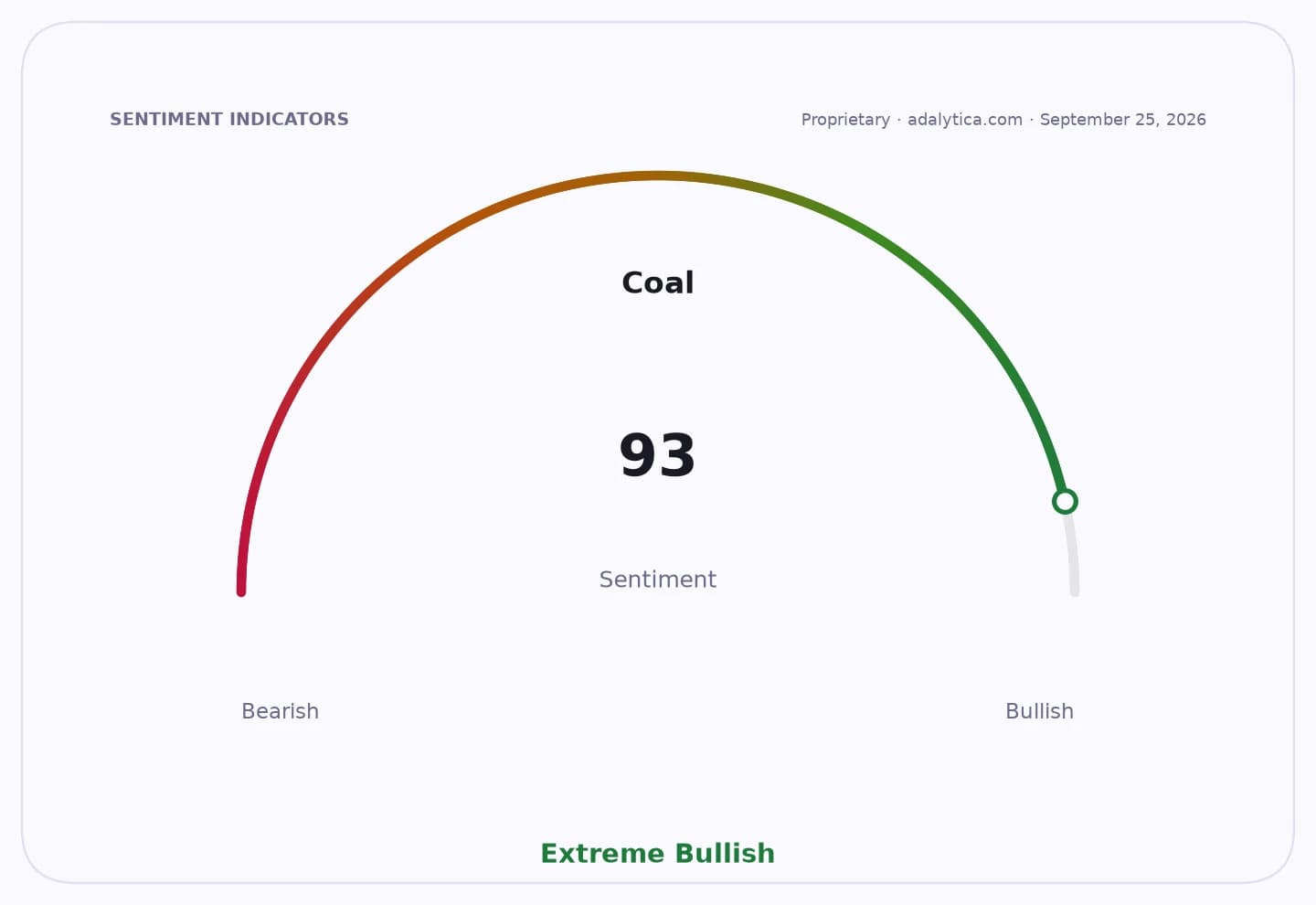
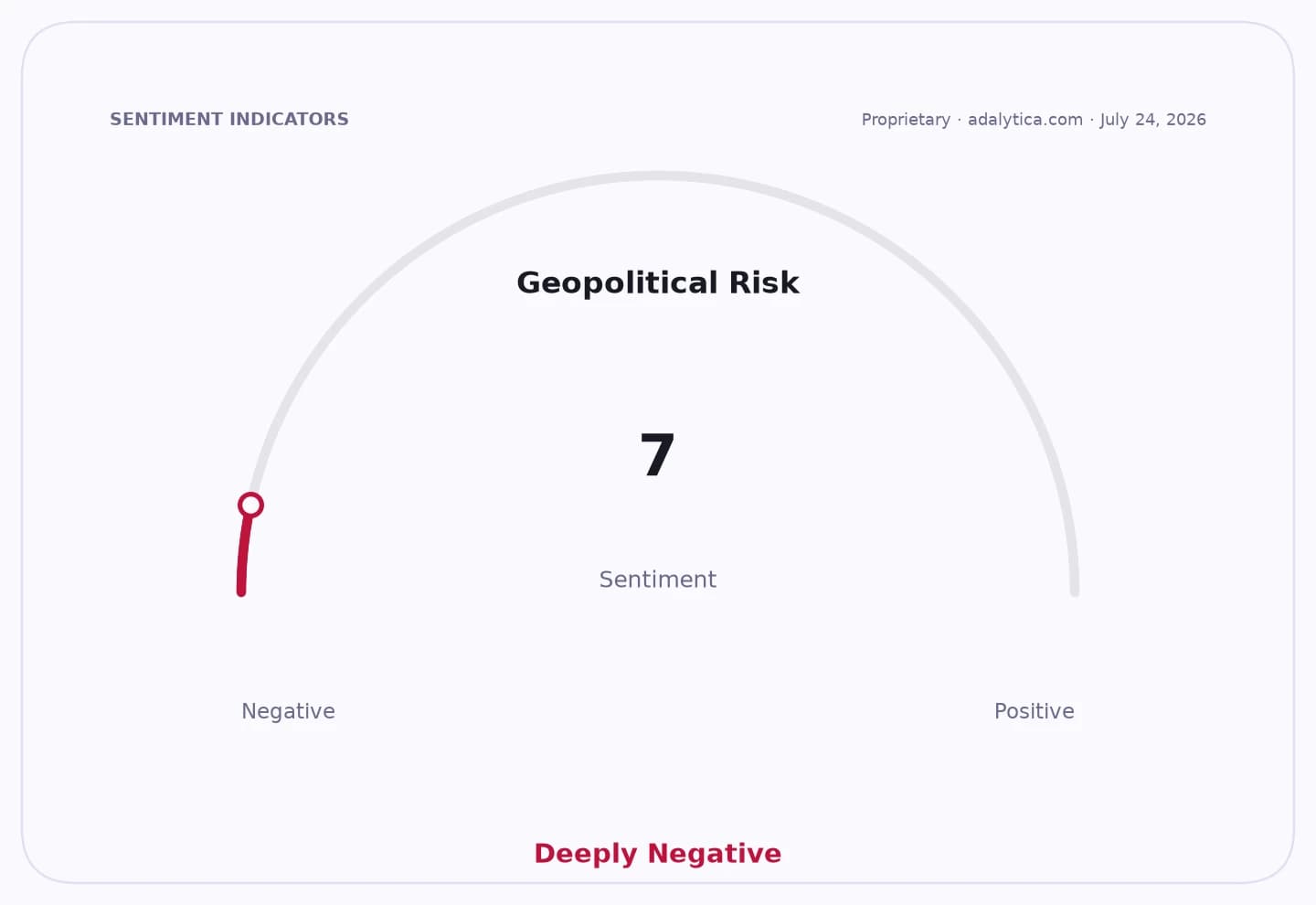
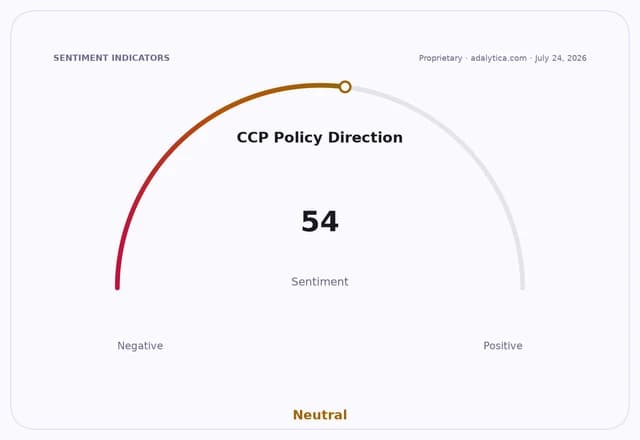
Chinese policy sentiment, as tracked by Adalytica.com, has improved sharply in the very near term, with the China CCP Policy Direction gauge rebounding to 54 from 25 a day earlier. But the broader geopolitical backdrop remains fragile: Adalytica’s US–China Relations Sentiment is still in “Extreme Fear” territory at 4, and global stability sentiment is likewise pinned at 7. In other words, investors are being asked to operate in a market where the immediate mood may be improving, but the structural tension has not gone away.
That tension shows up clearly in China-linked equities. The iShares China Large-Cap ETF, FXI, has been trying to stabilize around the mid-30s after a volatile run, with the latest close at 34.46, just above its 50-day moving average of 34.31. Its relative strength index, or RSI, has climbed to 77.1, which suggests the rally has become stretched in the short run even if the broader thesis remains intact. The ETF still trades well below its 200-day moving average of 37.07, a sign that long-term confidence has not fully returned.
Taiwan-focused exposure has also been choppy. The iShares MSCI Taiwan ETF, EWT, closed at 99.84, below its 50-day moving average of 101.69 and far above its 200-day average of 77.55, showing a market that has recovered strongly over the past year but is losing some short-term momentum. For investors, that is the key point: Taiwan remains strategically important, but it is increasingly being priced not just as a technology hub, but as a geopolitical risk asset.
Thailand’s own market tells a similar story about selective confidence. The iShares MSCI Thailand ETF, THD, ended at 72.41, slightly below its 50-day moving average of 71.56, with an RSI of 54.8 that points to a relatively balanced, undecided trend. That kind of reading is consistent with a market that is not panicking, but is still waiting for clearer policy direction before betting aggressively on foreign capital inflows or trade-linked growth.
For long-term investors, the takeaway is simple: diplomacy in Asia is increasingly an investment variable, not just a foreign-policy footnote. A Thai government that leans more openly toward China may help preserve ties with one of the region’s most important economic partners, but it can also sharpen concerns in Taipei and Washington and keep geopolitical risk premiums elevated across the region.
The best way to approach that reality is with patience and diversification. In an environment where headlines can move ETFs faster than earnings, the durable winners are likely to be companies and funds that can keep compounding through trade friction, shifting alliances and periodic volatility. This is a story worth watching closely, especially for investors building positions over 3 to 10 years, not 3 to 10 days.
| Entity | Gains | Losses |
|---|---|---|
| China | ▲Regional diplomatic support | ▼Taiwan’s goodwill |
| Thailand | ▲Ties with Beijing | ▼Room to balance diplomatically |
| Taiwan | ▲Little from this tilt | ▼International backing |
| Investors in China-linked assets | ▲Short-term policy clarity | ▼Geopolitical premium still elevated |