Thailand’s animal feed industry is warning that a delay in setting 2027 import rules for corn and wheat could choke supplies, disrupt production plans and revive costly port bottlenecks just as domestic feedstock is tightening.
Thailand feed industry warns on 2027 corn rules
The Thai Feed Manufacturers Association said in an open letter it has asked Deputy Prime Minister and Commerce Minister Supajee Suthumpun, who chairs the corn policy committee, to urgently convene a meeting to approve next year’s import framework under the 3:1 rule. The group said mills need three to six months to plan, order and receive imports, and that without a timely decision, inventories could become critically short before the current measures expire.
Sentiment Indicators
The warning matters because feed is a core input for Thailand’s poultry, livestock and aquaculture sectors. If mills cannot secure corn and wheat on time, the squeeze would flow through to meat, egg and farm-gate prices, while also raising working-capital needs for processors forced to draw down strategic stocks. The association said domestic corn arrivals into factories are already falling despite the harvest season, increasing reliance on reserves.
The industry is also trying to avoid a repeat of early 2026, when imported soybeans were left waiting at ports and customs clearance delays drove demurrage charges as high as about 1 million baht per ship per day, according to the association. For feed producers, such costs are not just accounting noise: they compress margins, tie up cash and can quickly erode the benefit of buying grain early.
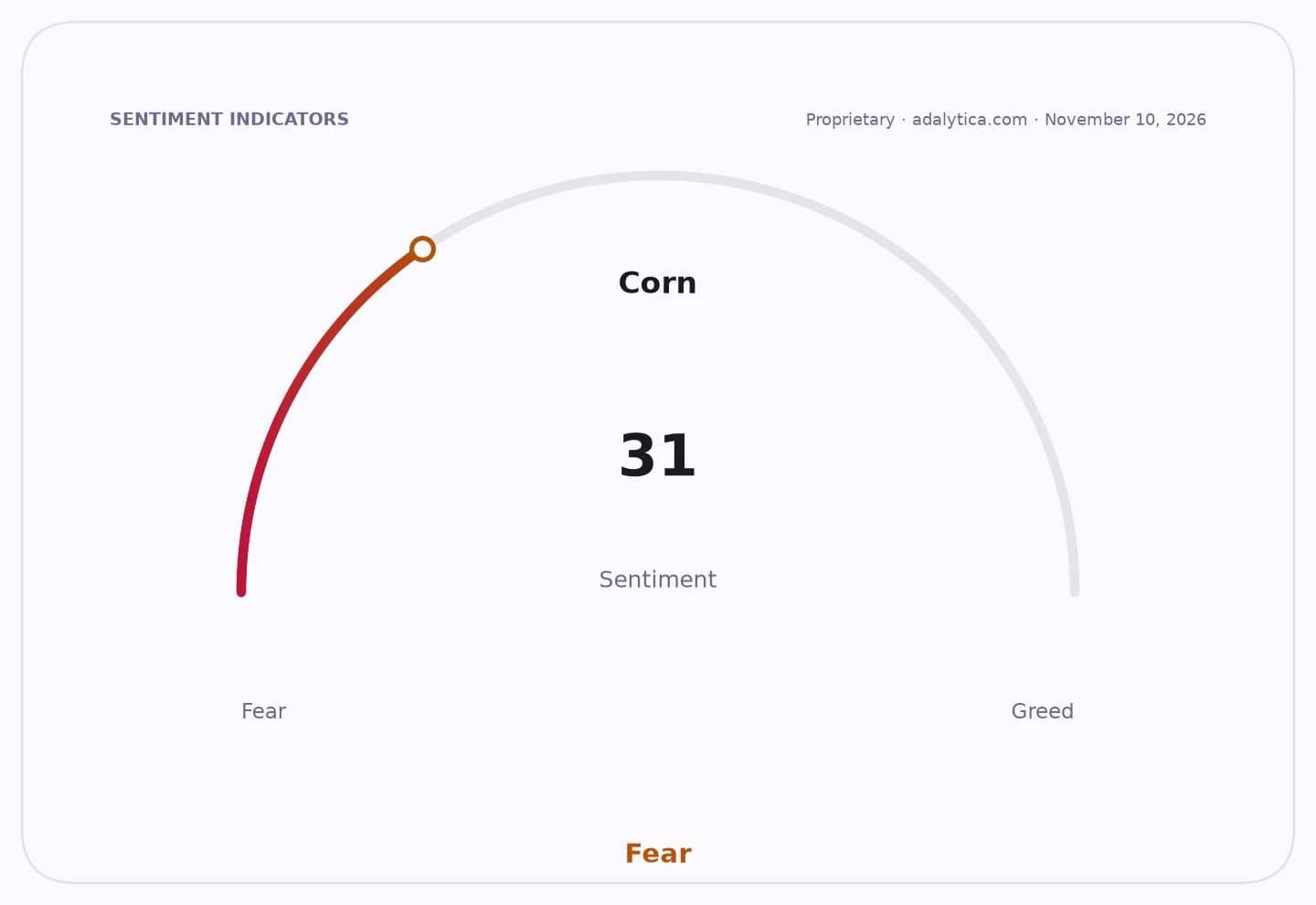
Corn
Global grain and commodity markets are not offering much relief. International corn prices have been volatile, while wheat remains sensitive to weather, logistics and geopolitical risk. Technical readings on corn and wheat futures also show a market that has cooled from earlier highs but remains unstable, with recent U.S.-listed corn and wheat contracts trading below their 50-day moving averages and momentum indicators pointing to renewed weakness even as supply concerns linger. Broader commodity gauges such as the Bloomberg commodity proxy have also eased, suggesting traders are not pricing an outright shortage, but are not dismissing one either.
That leaves Thai policymakers with a narrow window. A late decision would likely benefit importers able to move quickly, but hurt millers, livestock producers and ultimately consumers if feed costs rise or production schedules are interrupted. A prompt approval, by contrast, would support supply security and reduce the chance of another port-side logjam.
For investors, the issue is less about one letter than about Thailand’s ability to manage a vital food-supply chain before the 2027 production cycle begins. The next catalyst is whether the committee meets soon enough to remove policy uncertainty before import orders need to be placed.
| Entity | Gains | Losses |
|---|---|---|
| Feed millers | ▲Clear import rules | ▼Stockout risk |
| Livestock producers | ▲Stable feed supply | ▼Higher input costs |
| Thai consumers | ▲Fewer price shocks | ▼Meat and egg inflation |
| Grain importers | ▲Earlier ordering visibility | ▼Demurrage and delays |