Thailand’s inflation is likely to stay below 2.8% this year, giving the Bank of Thailand room to keep monetary policy accommodative and delaying any urgency to tighten borrowing costs.
Thailand Inflation Keeps Policy Supportive
That matters because subdued price pressures allow policymakers to focus on supporting an economy still leaning on tourism, public spending and private investment rather than fighting inflation. It also helps preserve liquidity conditions for households and companies at a time when the baht has been volatile and growth remains uneven.
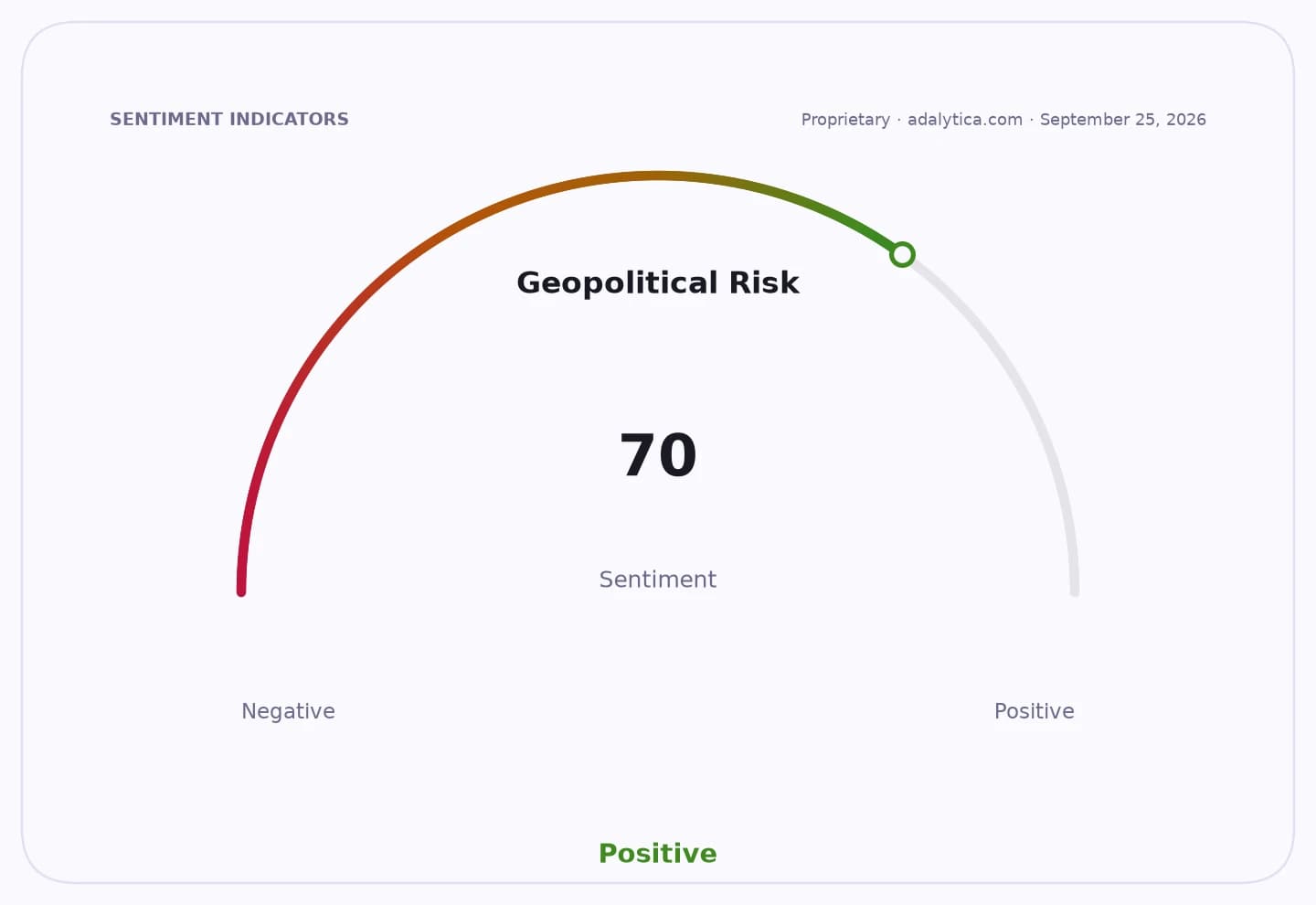
Sentiment IndicatorsⓘProprietary · adalytica.com · July 13, 2026
This is a snapshot — live sentiment, awareness and momentum for 130+ markets update continuously in the dashboard.Open AlphaPulse
The backdrop is consistent with a softer inflation environment across the region, helped by easing oil prices and only patchy domestic demand. In Thailand, that leaves the central bank with flexibility to keep rates supportive even as it watches the currency, which recently hit a 14-month low before stabilizing.
For investors, the policy bias is constructive for rate-sensitive assets and for sectors exposed to domestic consumption, real estate and credit. It also reduces the risk of an abrupt policy shock that could hit consumer spending or squeeze corporate margins just as the government pushes stimulus and infrastructure-related borrowing.
Thai exchange-traded exposure has already reflected that balance of growth support and caution. THD, the iShares MSCI Thailand ETF, was trading at 72.33 on July 13, above its 50-day moving average of 71.02 and well above its 200-day average of 64.22, while RSI readings around 53 point to a market that is not yet stretched.
Regional sentiment is also being shaped by broader Asia policy support and dollar weakness. Adalytica’s US dollar trade signals show fear and extreme fear, while confidence in the Fed’s 2% inflation target remains very low, a combination that can support emerging-market currencies and risk appetite if it persists.
The main near-term risk is that currency weakness or a renewed pickup in imported costs forces officials to sound less dovish. Investors will be watching the next inflation readings and Bank of Thailand comments for any sign that the accommodative stance is nearing its limit.
| Entity | Gains | Losses |
|---|---|---|
| Thai consumers | ▲Lower price pressure | ▼Less urgency for wage gains |
| Thai borrowers | ▲Easier credit conditions | ▼Slower rate-cut urgency |
| THD / Thailand equities | ▲Supportive policy backdrop | ▼Currency-driven volatility |
| Bank of Thailand hawks | ▲Credibility if inflation stays contained | ▼Limited case for tighter policy |