Thailand’s inflation rate accelerated to 2.82% in September, driven by persistently high fuel costs and firmer prices for ready meals and fresh food, while the Commerce Ministry held its 2026 forecast at a 2% midpoint even after acknowledging fourth-quarter inflation is likely to stay near 3%.
Thailand Inflation Rises to 2.82% in September
The reading matters because it points to a slow but broadening rise in consumer prices at a time when households are already facing more expensive transport and food. For investors, the report reinforces expectations that Thailand’s cost pressures are being kept alive by energy markets rather than a one-off spike, limiting room for a quick easing in living costs.
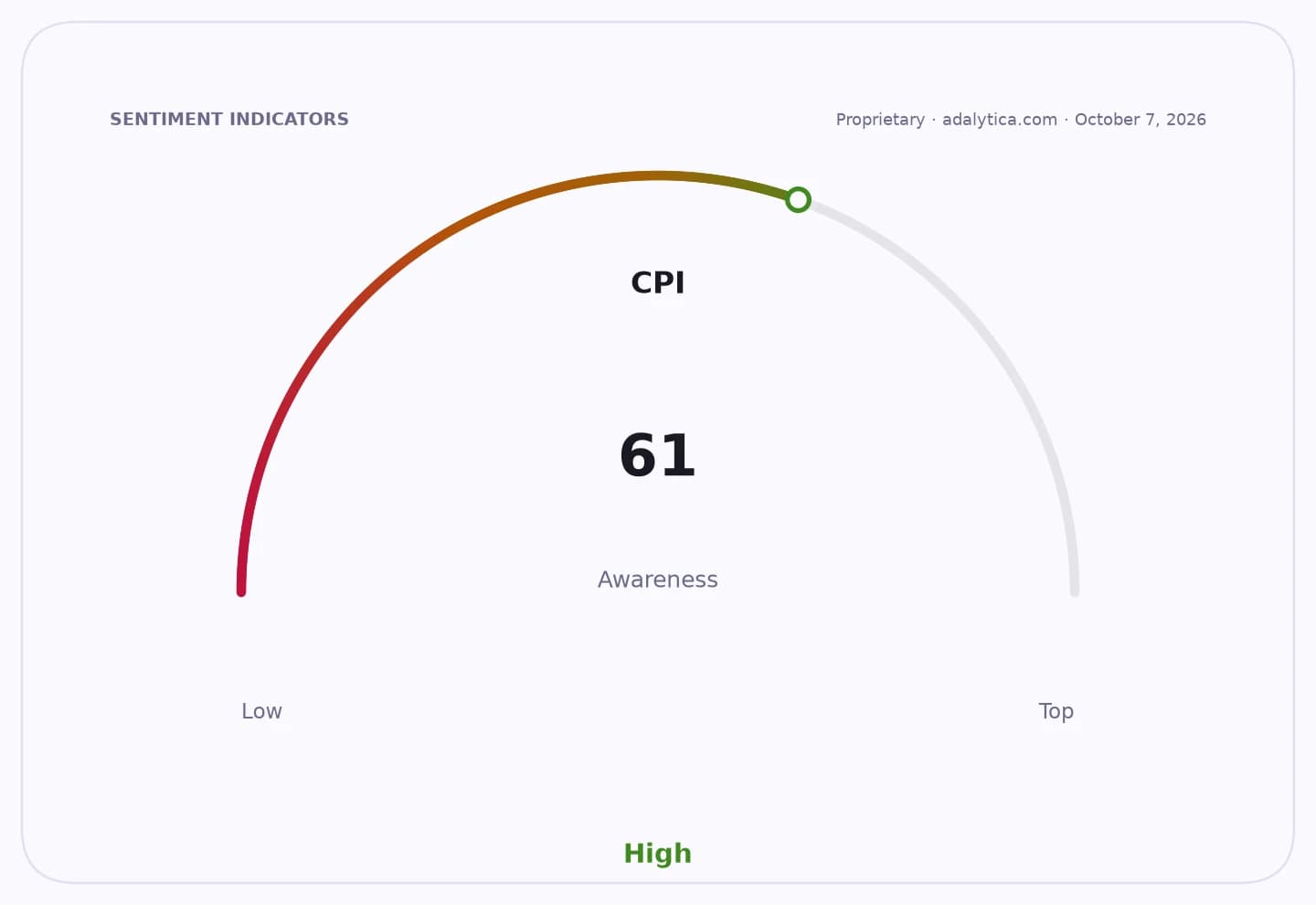
Sentiment IndicatorsⓘProprietary · adalytica.com · October 7, 2026
This is a snapshot — live sentiment, awareness and momentum for 130+ markets update continuously in the dashboard.Open AlphaPulse
The Commerce Ministry said the consumer price index rose 0.25% from August and 1.54% in the first nine months of 2026. Core inflation, which strips out fresh food and energy, increased 1.50%, suggesting underlying price pressure remains contained even as headline inflation firms.
Officials said the main drivers were domestic fuel prices that stayed above a year earlier, along with higher costs for prepared food and several fresh items including eggs, chicken, vegetables and fruit. Inflation in the third quarter rose 2.44% from a year earlier, while the ministry said floods lifted fresh-food prices only modestly overall, adding just 0.1 percentage point to inflation.
The ministry also narrowed its full-year inflation outlook to 1.8%-2.2% from a previous 1.5%-2.5% range, but kept the midpoint unchanged at 2%. It said the fourth quarter should remain close to 3% as fuel prices stay elevated, transport costs rise, and weather-related supply disruptions keep pressure on fresh food.
Electricity prices offer only limited relief, with tariffs set at 3.86 baht per unit for September through December, below the prior 3.95 baht. The ministry also sees lower prices for personal-care goods due to intense competition and ongoing promotions by major retailers.
For investors, the key implication is that Thailand’s inflation profile is becoming more sensitive to imported energy and weather shocks than to broad demand acceleration. That reduces the odds of a policy surprise from a rapid disinflation trend and keeps attention on oil prices, transport costs and the baht’s import bill into year-end.
| Entity | Gains | Losses |
|---|---|---|
| Fuel suppliers | ▲Higher pump-price revenue | ▼Thai consumers |
| Food producers | ▲Pass-through from higher costs | ▼Households on tight budgets |
| Thai Commerce Ministry | ▲Inflation still within target band | ▼Pressure to cut forecasts further |
| Transport operators | ▲Higher fare justification | ▼Commuters and bus riders |