Thailand is trying to put money back into its tourism engine, and the payoff could reach far beyond bus operators and travel agents. The government has launched a domestic travel campaign that will subsidize transport costs for group tours by as much as 40,000 baht per trip, a move aimed at lifting spending across hotels, restaurants, attractions and local communities.
Thailand tourism subsidy boosts domestic travel
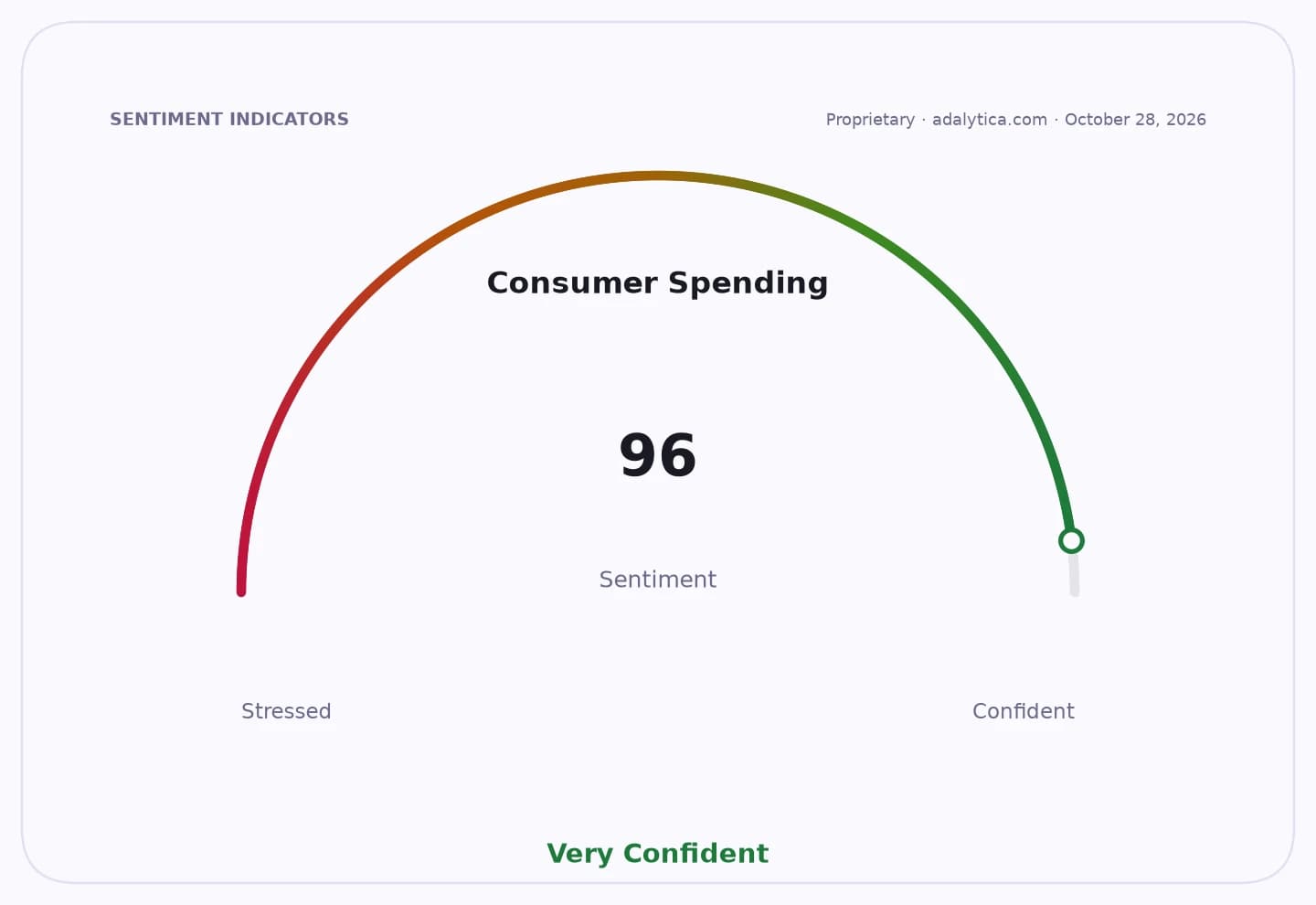
For investors, the significance is simple: when households are cautious and consumer spending is under pressure, targeted tourism support can still keep cash moving through the economy. The program, called “Amazing Thailand: Travel around Thailand with a Tour,” runs from Oct. 15 to Jan. 31 and is designed to encourage cross-province travel at a time when Thailand is leaning hard on its service sector to support growth. Adalytica’s Consumer Spending Sentiment gauge is still in fear territory, underscoring why policymakers are stepping in to stimulate activity rather than waiting for demand to recover on its own.
Sentiment IndicatorsⓘProprietary · adalytica.com · October 22, 2026
This is a snapshot — live sentiment, awareness and momentum for 130+ markets update continuously in the dashboard.Open AlphaPulse
The government has teamed up with nine tourism associations, including tour operators, transport groups and regional travel organizations, to push packaged trips built around religion, culture, history, nature, health, adventure and CSR activities. The structure matters. These are not just leisure excursions; they are designed to spread spending deeper into Thailand’s domestic economy, supporting small businesses that depend on group travel volumes rather than high-end international arrivals.
The subsidy is straightforward. Bus groups with at least 30 travelers can receive 10,000 baht per vehicle per day, up to 40,000 baht per trip. Vans carrying at least six people can receive 2,500 baht per vehicle per day, capped at 10,000 baht per trip. Trips must cross provinces, last at least two days and one night, and include an overnight stay outside the traveler’s home province. That design nudges tourists to spend on lodging and meals instead of just making quick day trips.
Officials expect the campaign to generate at least 208.8 million baht in tourism revenue. That is not a transformative number for Thailand’s overall economy, but it can matter for the margins of operators, hotels and local vendors in the low season. It also fits a broader regional pattern: Southeast Asian governments are using tourism policy as a practical lever to support growth, protect jobs and keep service-sector activity stable while consumers remain cautious.
For listed companies with exposure to Thai travel and domestic tourism, the near-term benefit is likely to show up in volume rather than pricing power. The real question for long-term investors is whether these campaigns can turn one-off spurts in demand into a more durable travel cycle. Subsidies can fill buses for a season, but sustainable gains usually require stronger household incomes, better infrastructure and a compelling destination story that keeps travelers coming back.
Still, the setup is constructive for the sector. If the program succeeds, it could help Thailand’s hotels, tour operators, transport providers and tourist attractions capture incremental demand during the year-end period. For investors with a multi-year horizon, that makes the policy worth watching as a sign that Thailand is not leaving its tourism recovery to chance.
| Entity | Gains | Losses |
|---|---|---|
| Thai tour operators | ▲Higher group bookings | ▼Lower off-season demand |
| Hotels and restaurants | ▲More domestic footfall | ▼Empty rooms and tables |
| Local communities | ▲More visitor spending | ▼Weak tourist circulation |
| Government | ▲Economic activity support | ▼Fiscal outlay on subsidies |