Borrowing conditions are tightening just as South Africa’s financial system is being asked to do more with less, and that matters because credit is still the economy’s transmission belt. When banks, card issuers and insurers pull back on lending, the first hit lands on households and small businesses, but the second-order effect is bigger: slower consumption, weaker loan growth and a more selective market for financial assets.
Tightening Credit Favors Quality Banks
The shift comes into focus against a backdrop of higher funding costs and a still-fragile growth outlook. South Africa’s 10-year government bond yield is sitting around 4.7%, while high-yield credit spreads remain near 2.8%, a sign investors are still pricing risk cautiously rather than cheaply. At the same time, unemployment is forecast at 4.18%, only marginally improved from 4.2% in June, leaving limited room for a broad-based credit boom. That combination is exactly why tighter lending standards matter economically: credit can still expand, but only on stricter terms and to better borrowers.
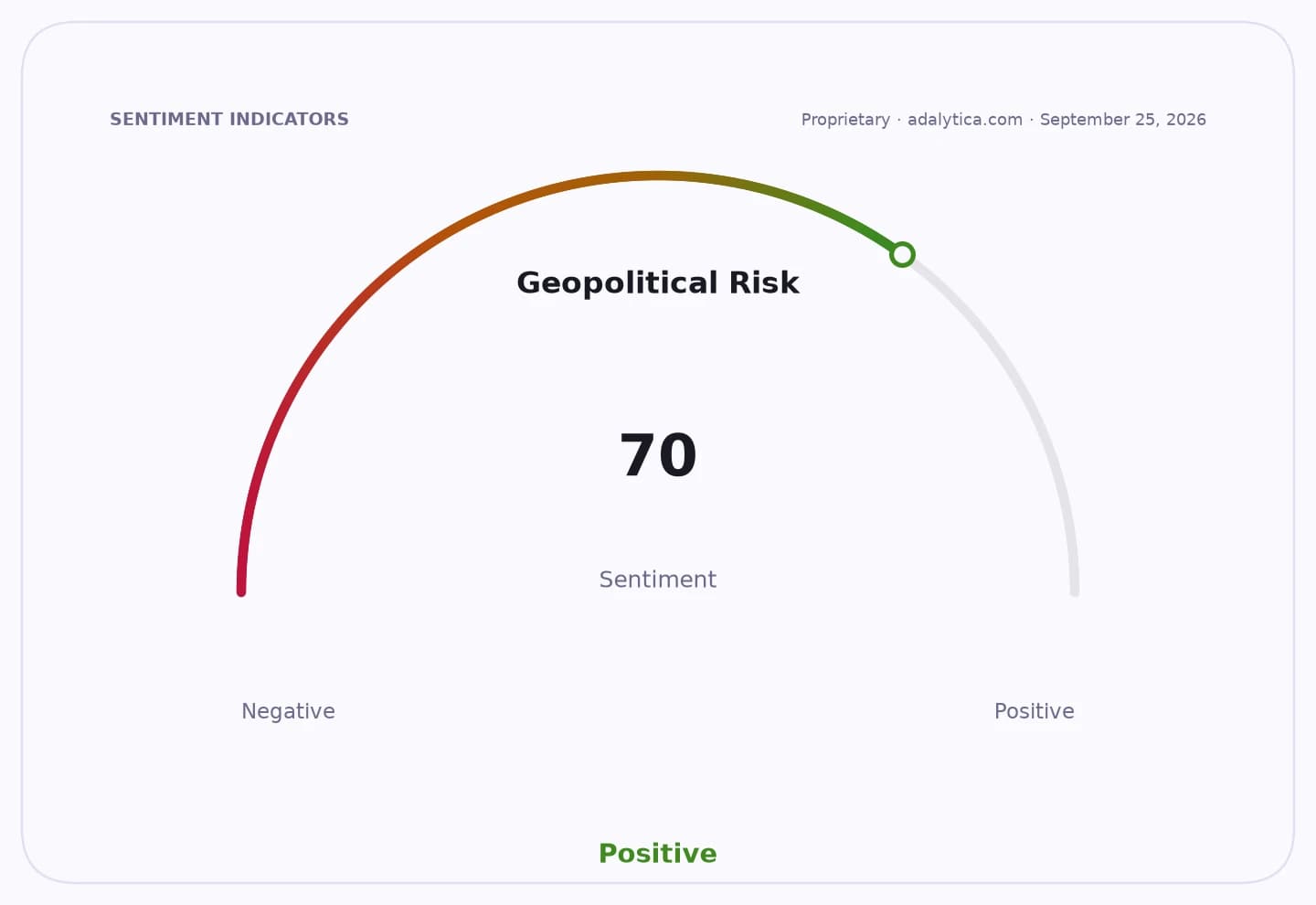
Sentiment IndicatorsⓘProprietary · adalytica.com · July 28, 2026
This is a snapshot — live sentiment, awareness and momentum for 130+ markets update continuously in the dashboard.Open AlphaPulse
For investors, this is a classic barbell setup. The winners are the lenders with scale, pricing power and superior underwriting; the losers are the weakest borrowers and the institutions most exposed to discretionary consumer credit. That is why JPMorgan Chase and Bank of America have been rewarded by the market, with both stocks grinding higher and trading above their 50-day and 200-day moving averages, while Capital One has been far more volatile as the market questions credit sensitivity. Those moves are not random. They reflect a simple truth: in a tightening credit cycle, capital migrates toward balance sheets that can reprice risk faster than they absorb it.
The equity tape is also telling you that investors are leaning into financials as a relative winner, not a broad macro bet. JPMorgan has pushed to fresh highs, and Bank of America has cleared key trend levels, helped by the view that higher-for-longer rates and tighter lending can support net interest income for the strongest banks even as volume growth slows. That is the asymmetry here. A loan tightening cycle is not uniformly bearish for banks; it is bullish for the strongest franchises and punishing for lenders that depend on lower-quality consumer borrowing.
The broader macro story is that the market underestimates how quickly credit discipline can reshape capital flows. As households face tighter access to bank, card and insurance-linked borrowing, demand will shift toward deposit-rich institutions, secured lending and fee-based products. That favors large banks, select payment networks and risk managers, while pressuring weaker consumer lenders and cyclical retail exposure. If credit conditions stay tight, the next leg of the trade is not just “own banks” — it is owning the banks that can win the underwriting war.
The actionable takeaway is clear: buy quality financials on weakness, favor lenders with strong deposits and disciplined credit books, and stay cautious on highly leveraged consumer credit stories. In a tightening loan market, the strongest balance sheets become toll roads.
| Entity | Gains | Losses |
|---|---|---|
| JPMorgan Chase | ▲loan-pricing power | ▼weaker consumer lenders |
| Bank of America | ▲deposit franchise advantage | ▼marginal borrowers |
| Capital One | ▲selective credit demand | ▼higher credit losses |
| Households / small businesses | ▲temporary funding access for prime borrowers | ▼tighter borrowing terms |