TikTok Shop’s latest move to sharpen its assault on Amazon and Walmart underscores how quickly social commerce is becoming a direct challenge to the biggest U.S. retail platforms, with implications for online ad spending, marketplace fees and merchant economics.
TikTok Shop Challenges Amazon and Walmart
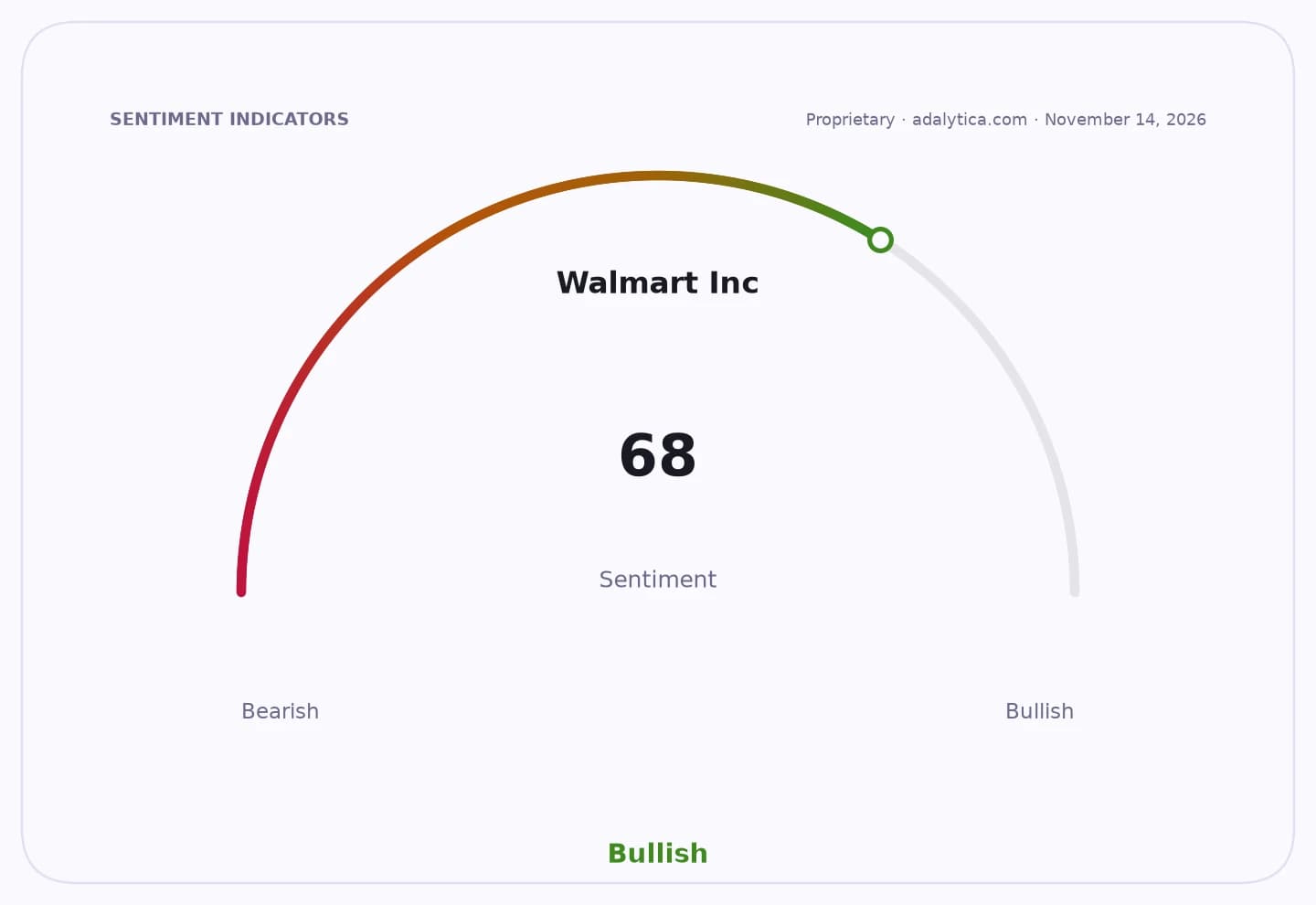
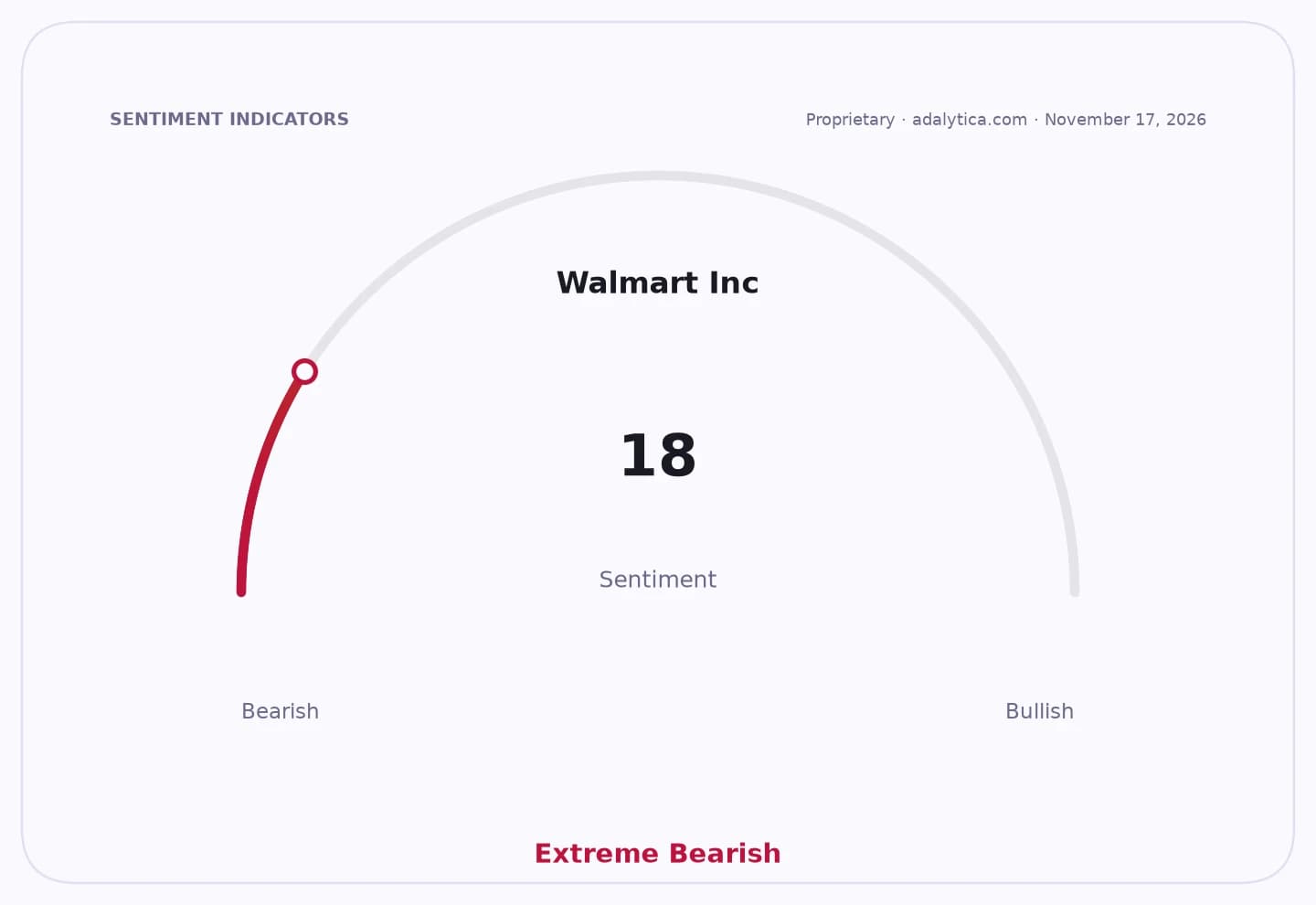
Walmart Inc
The shift matters because it targets the most profitable part of e-commerce: consumer discovery. If TikTok can convert entertainment time into shopping behavior at scale, it could siphon sales from Amazon’s third-party marketplace and Walmart’s expanding omnichannel platform, while forcing both to spend more on traffic, promotions and merchant incentives to defend share.
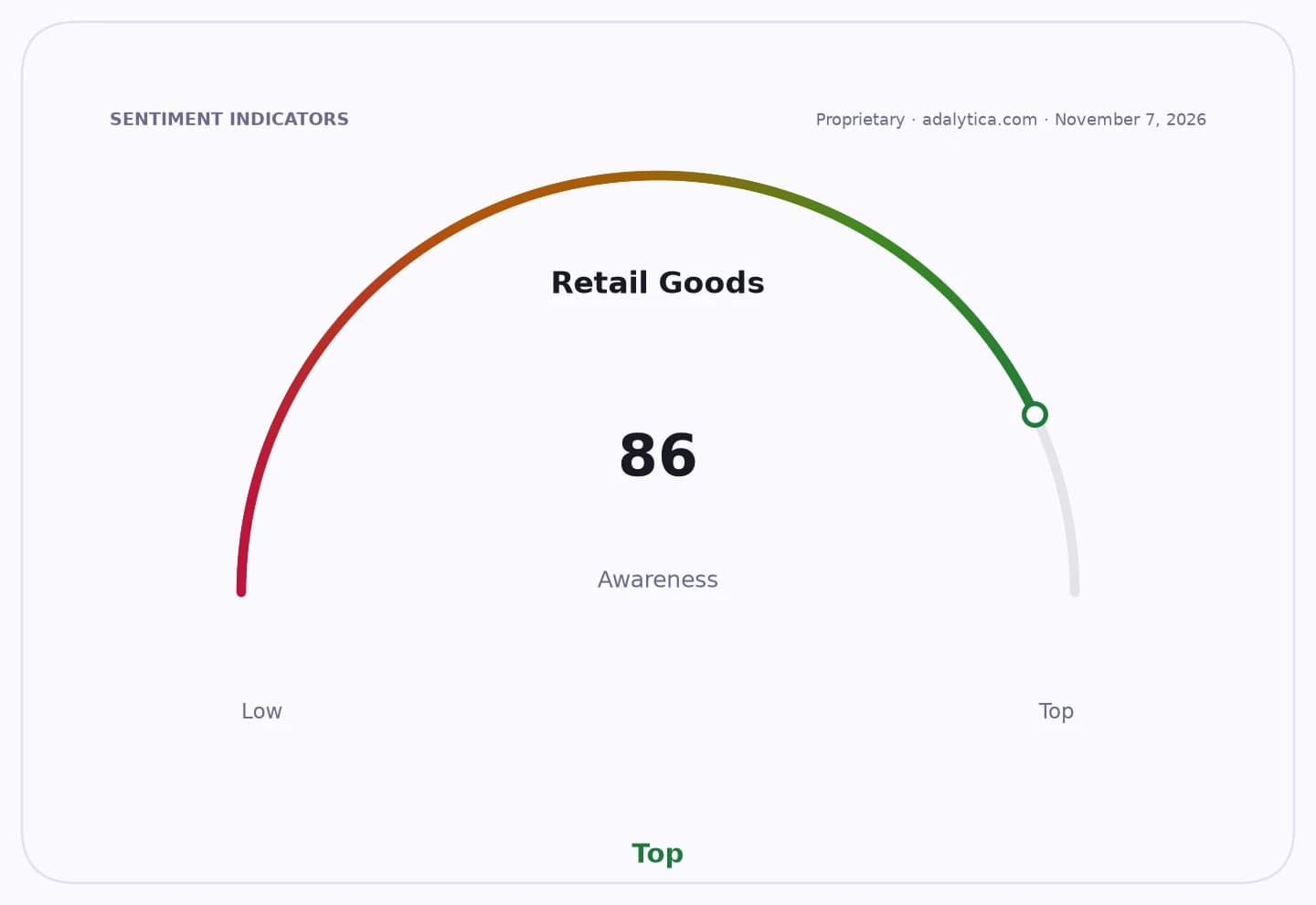
Sentiment Indicators
That is already showing up in market behavior. Amazon shares have recovered to $265.12, above both its 50-day moving average of $255.07 and 200-day average of $244.89, suggesting investors still believe the company can absorb competitive pressure. Walmart, meanwhile, is at $126.43, also above its 50-day and 200-day moving averages, but its recent price action has been choppy as investors weigh growth against margin discipline. Shopify, the key commerce enabler sitting between merchants and marketplaces, has been more volatile, with shares down to $140.70 from an October peak near $178, reflecting uncertainty over how much social platforms can redirect merchant demand and checkout volume.
For Amazon, the competitive threat is not just lost transactions but a potentially higher customer-acquisition cost environment. Its latest filings already flag intense competition across e-commerce, physical retail and omnichannel channels. The company’s stock remains technically firm, with the relative strength index at 65.1 and positive MACD momentum, but it is still well below its August high above $280, indicating the market has not fully priced in a renewed pricing or marketing battle.
Walmart faces a different risk. It is less exposed than Amazon to marketplace take rates, but more dependent on broad consumer spending patterns and grocery-led traffic. Adalytica’s Walmart Earnings Sentiment snapshot is neutral at 36, even as awareness is elevated at 89, a sign that investors are watching the name closely without a clear bullish consensus. The stock has retreated from its November level near $128, and its RSI at 61.6 suggests momentum is positive but no longer overheated.
The bigger narrative is that social platforms are not merely sending traffic to retailers anymore; they are trying to own the purchase decision itself. That is why TikTok Shop matters beyond its own sales figures. It pressures Amazon to defend its marketplace moat, challenges Walmart’s push into digital engagement and gives brands a new channel that may be cheaper to test but harder to control.
There is still a case that the incumbents win. Amazon retains unmatched logistics, breadth of assortment and customer trust, while Walmart has scale, low-price credibility and a rapidly improving digital stack. TikTok Shop’s advantage lies in impulse and discovery, but converting that into repeat, high-value purchasing is a harder business. Even so, every point of share it takes from the established players raises the cost of defending the e-commerce customer.
| Entity | Gains | Losses |
|---|---|---|
| TikTok Shop | ▲More buyer conversion | ▼Merchant pushback risk |
| Amazon | ▲Prime ecosystem resilience | ▼Higher competition costs |
| Walmart | ▲Omnichannel scale advantage | ▼Traffic share pressure |
| Shopify merchants | ▲New sales channel | ▼Dependence on platform algorithms |