Tomsk scientists say they have reduced the energy cost of turning coal into liquid fuel by 4.3 times, a development that could improve the economics of coal-to-liquids production at a moment when governments and companies are looking for alternative fuel sources and more efficient ways to use domestic coal reserves.
Tomsk scientists cut coal-to-liquid energy cost 4.3 times

The breakthrough matters because coal-to-liquid technology has long been constrained less by chemistry than by cost. High power consumption, complex processing and capital intensity have kept it uncompetitive with crude oil in most markets. A 4.3-fold cut in energy spending does not make coal-derived fuel cheap, but it can materially narrow the gap, especially when oil prices are elevated and when energy security matters more than emissions concerns.
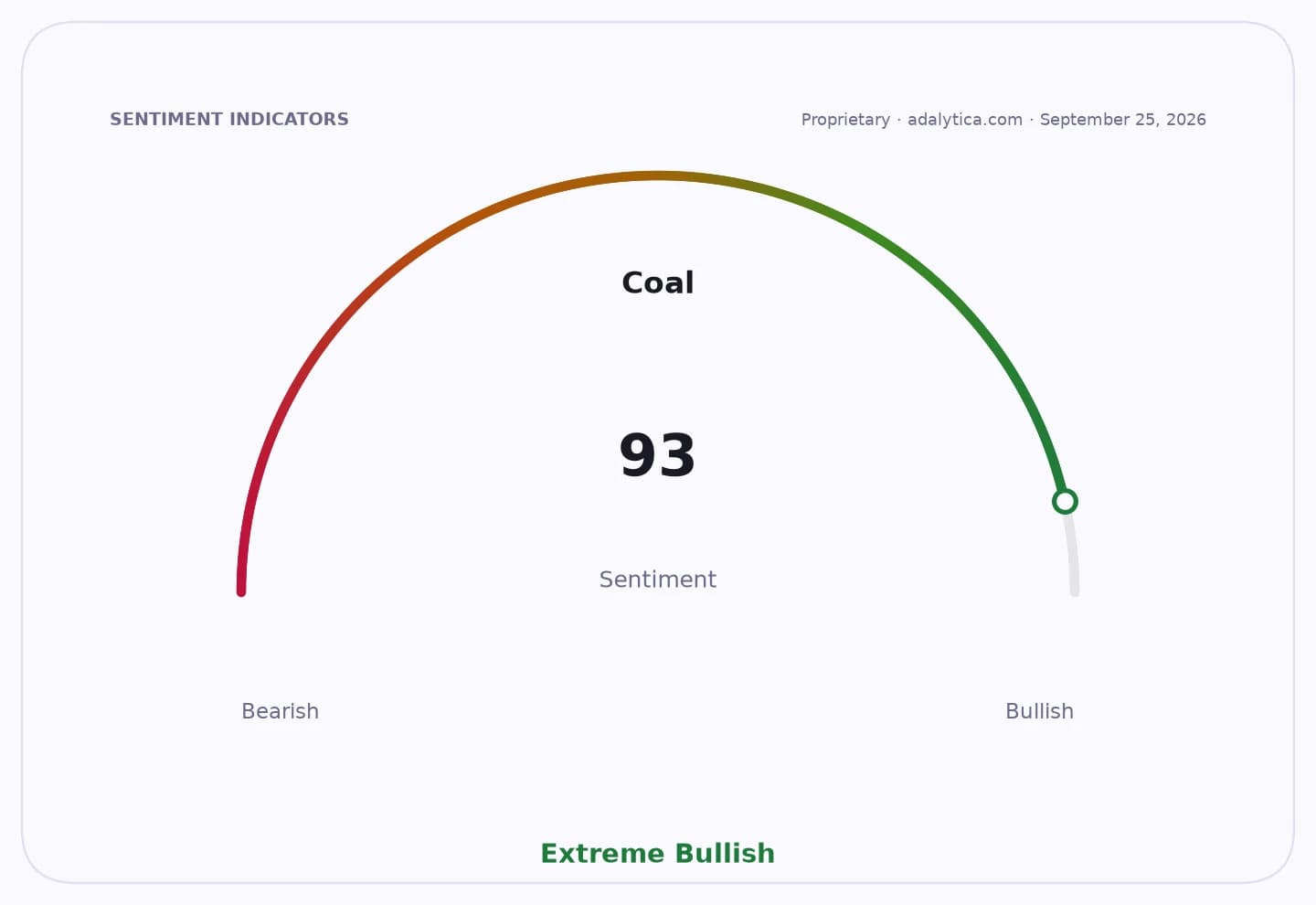
Sentiment IndicatorsⓘProprietary · adalytica.com · August 4, 2026
This is a snapshot — live sentiment, awareness and momentum for 130+ markets update continuously in the dashboard.Open AlphaPulse
That economic backdrop is important. US benchmark crude has been trading in the high-$80s a barrel in recent projections, after touching above $100 earlier in the period, while industrial production is still expanding only modestly. For coal producers and industrial users, a cheaper conversion process can create a new demand channel for a commodity that is increasingly under pressure from decarbonization policy in many regions. It also gives governments that control large coal endowments another lever to turn domestic minerals into liquid transport fuel or petrochemical feedstock.
For investors, the implication is less about an immediate earnings uplift than about optionality. If the process can be scaled, it could support higher valuations for coal reserves with favorable geology and logistics, particularly in countries that want to reduce exposure to imported oil. It may also draw interest from engineering, chemicals and energy-transition investors looking for lower-cost conversion technologies. But the bear case remains substantial: synthetic fuel projects still face carbon constraints, financing hurdles and the possibility that oil and refined-product prices retreat before the technology reaches commercial scale.
The timing also aligns with policy support for coal in some markets. In Indonesia, officials have signaled a push to prioritize large coal deposits under relaxed mine-work plan rules, underscoring how resource security is still shaping coal policy even as global investors favor cleaner energy. That does not change the long-term climate case against coal, but it does show why any technical advance that lowers the cost of coal processing can attract attention from both miners and states seeking cheaper domestic fuel.
The key question now is whether Tomsk’s work can move from laboratory or pilot-stage gains to industrial-scale deployment. If it can, the winners would be coal holders, synthetic fuel developers and countries with abundant reserves; the losers would be competing crude-linked fuels and, in a broader sense, the climate narrative that has been steadily narrowing coal’s role in the energy system.
| Entity | Gains | Losses |
|---|---|---|
| Coal reserve holders | ▲New fuel monetization path | ▼Lower dependence on thermal coal alone |
| Synthetic fuel developers | ▲Better project economics | ▼Higher commercialization risk if scaling fails |
| Oil-linked fuel suppliers | ▲— | ▼Potential competition from cheaper coal liquids |
| Climate-focused investors | ▲— | ▼Longer coal lifespan in energy policy |