Consumers are still spending, but they are doing it more selectively, and that is helping Walmart while pressuring Amazon as households hunt for cheaper groceries, gas and basics.
Trade-Down Spending Favors Walmart Over Amazon

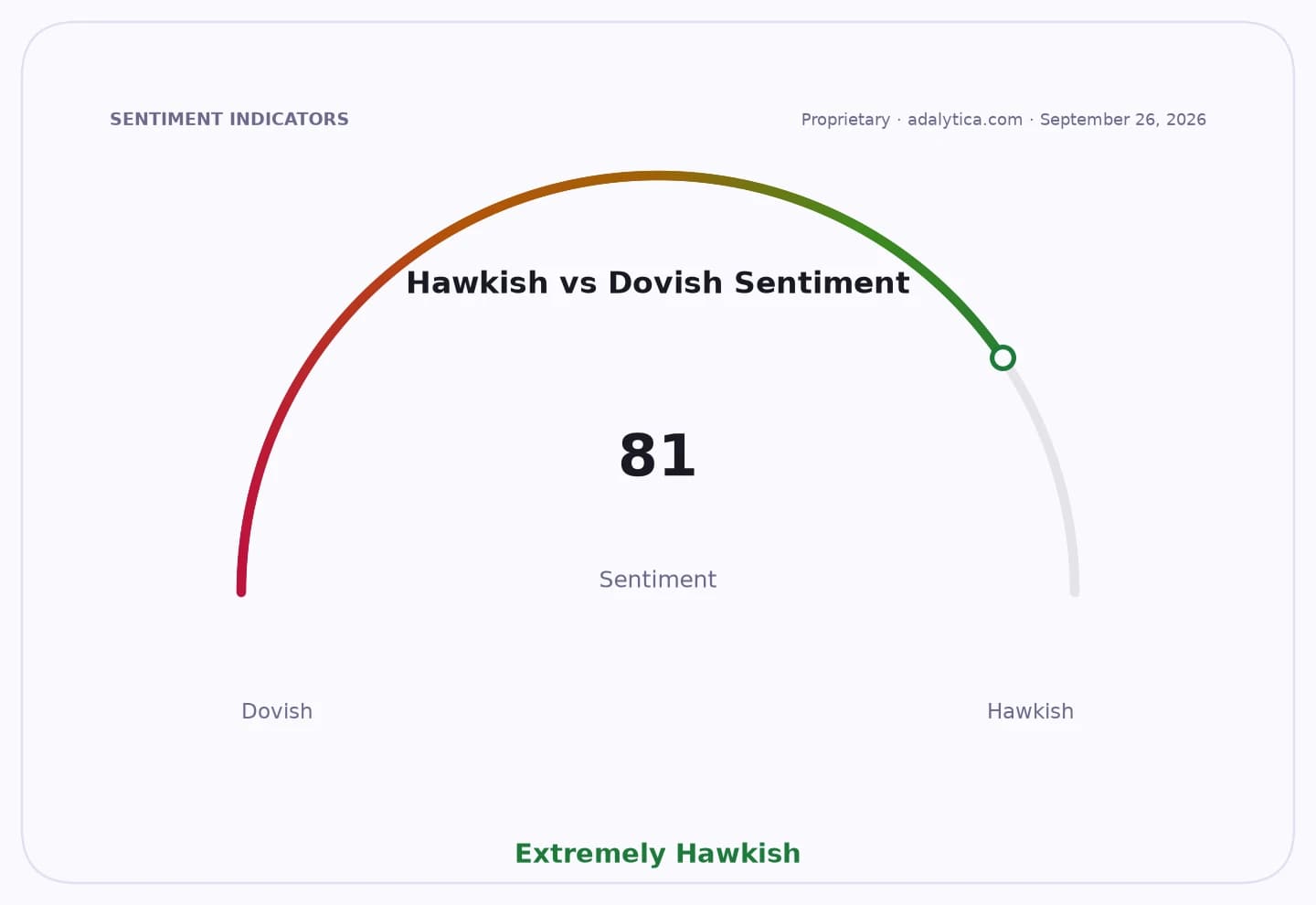
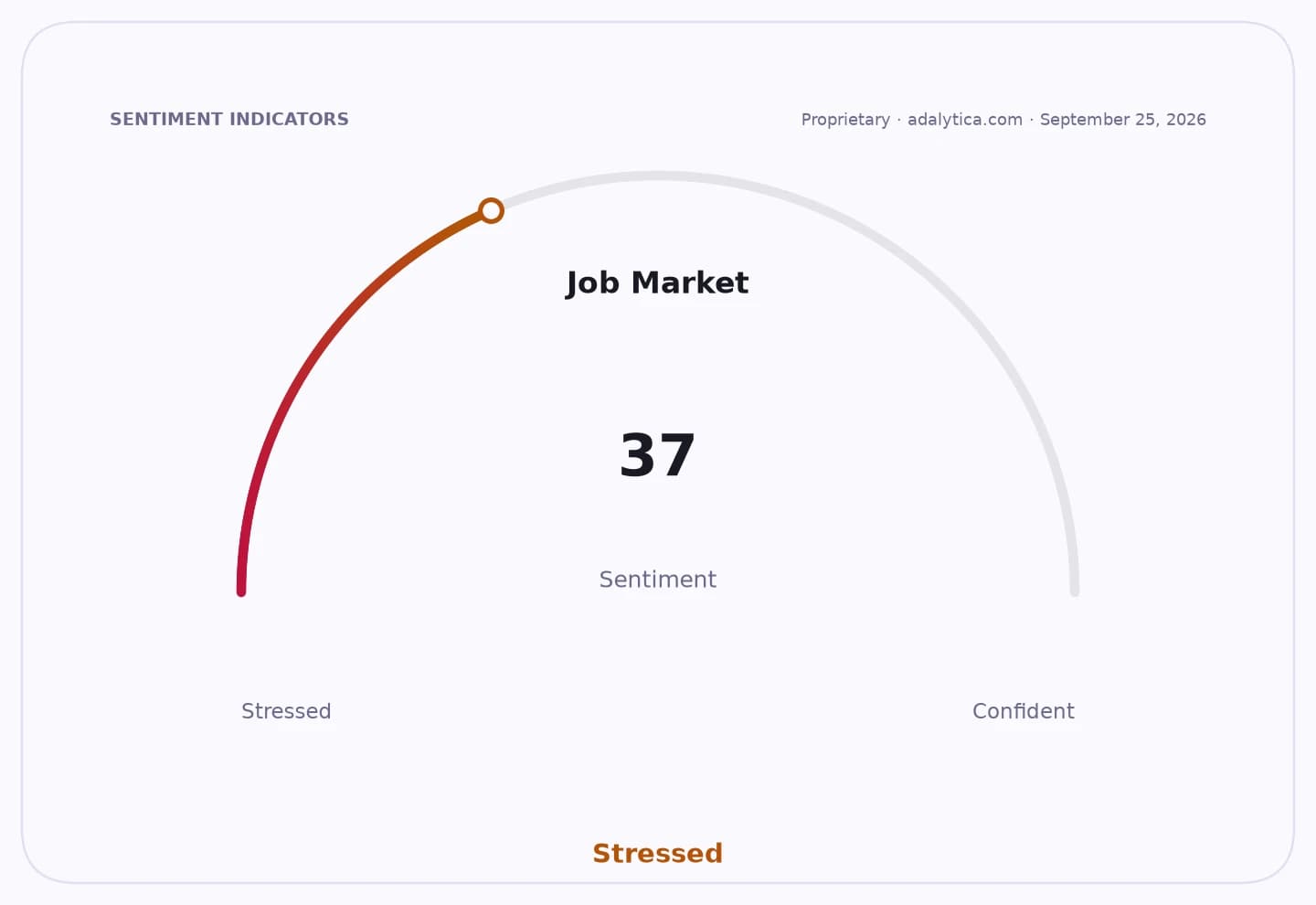
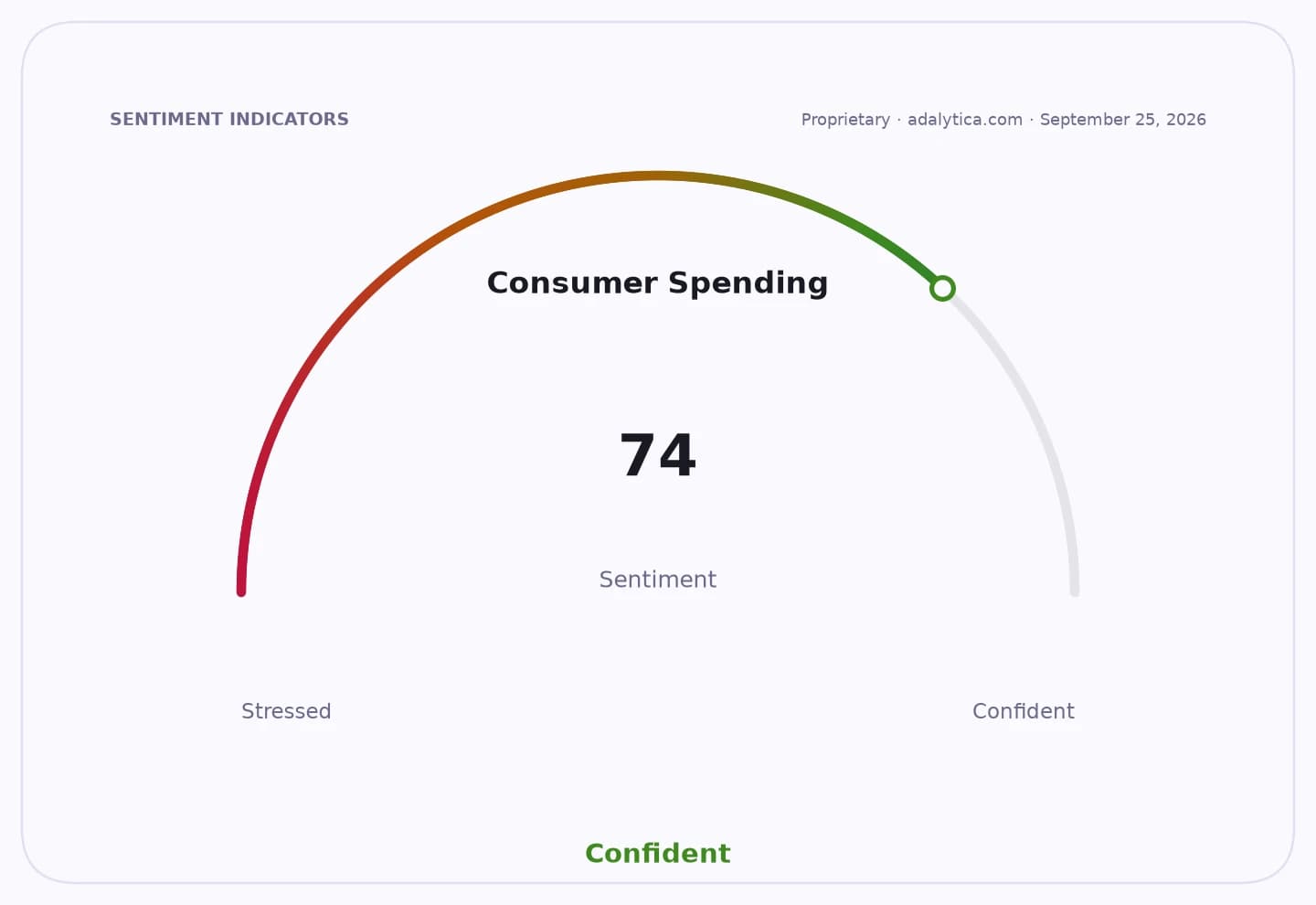
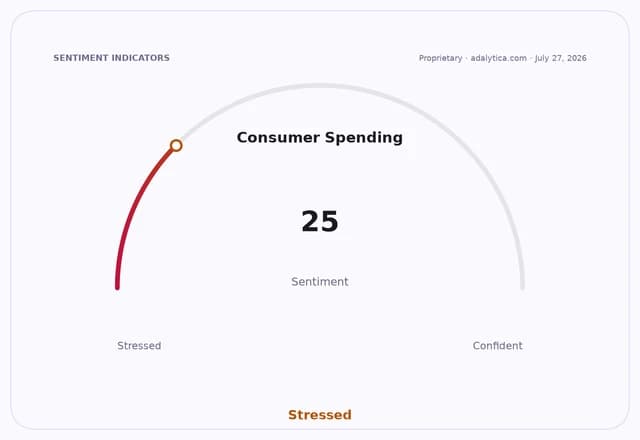
The shift matters because inflation is still leaving a mark on the real economy even as headline confidence improves. Adalytica’s Consumer Spending Sentiment gauge sits in Fear at 25, with awareness at Extreme Fear, underscoring how fragile shoppers remain when food, housing and fuel stay elevated.
Walmart is the clearest beneficiary of that behavior. The stock has risen to $111.74 from $99.81 in mid-September, even after a sharp pullback from an early-February peak near $130, and it has recently clawed back above its 50-day and 200-day moving averages. That rebound lines up with the company’s core pitch as a lower-price destination for necessities when consumers are trying to stretch paychecks.
Amazon has moved the other way. Its shares have dropped to $231.39 from a July 15 close of $254.96 and sit below both the 50-day and 200-day moving averages, a sign investors are rotating away from the stock even as it remains a dominant e-commerce and cloud franchise. The stock’s recent weakness suggests the market is less willing to pay up for discretionary online spending when shoppers are prioritizing essentials.
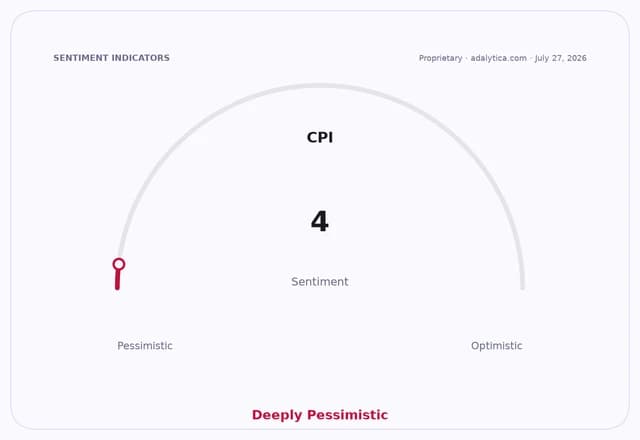
The macro backdrop is consistent with that split. CPI and PCE are still forecast to rise in July and June, respectively, and the latest price levels remain far above pre-pandemic norms. That means households may be getting nominal wage gains, but many are still facing higher costs for staples, which pushes traffic toward value retailers and private-label-heavy chains.
Costco is also telling the same story, though with a more volatile price pattern. Its shares have bounced back to $951.58 after sliding from a May peak above $1,092, and the stock is now trying to regain its footing near the 50-day average. The membership club’s resilience fits the broader consumer trade-down theme, even if investors remain wary about margin pressure from pricing competition.
For investors, the message is that the consumer is not collapsing — it is narrowing. That favors chains with food, consumables and price leadership, while leaving more room for pressure at retailers dependent on higher-margin discretionary baskets and online spending.
The next test is whether July inflation data and consumer-spending trends confirm that households are still prioritizing essentials over everything else. If groceries, housing and fuel stay sticky, Walmart’s positioning should keep resonating — and Amazon’s relative outperformance may have more to prove.
| Entity | Gains | Losses |
|---|---|---|
| Walmart | ▲Trade-down traffic | ▼Margin pressure from low prices |
| Amazon | ▲High-income shoppers | ▼Discretionary spending slowdown |
| Costco | ▲Value-seeking members | ▼Investors worried about volatility |
| Consumers | ▲Lower-cost essentials | ▼Higher bills for food, housing, gas |