Holiday-makers heading to the Alps may still be booking the trip, but the bigger story for travel investors is that household spending is losing momentum just as the summer season peaks. New consumer gauges point to softer intent in discretionary categories, while unemployment remains low and the U.S. travel industry is still benefiting from resilient booking volumes.
Travel demand holds as spending sentiment weakens
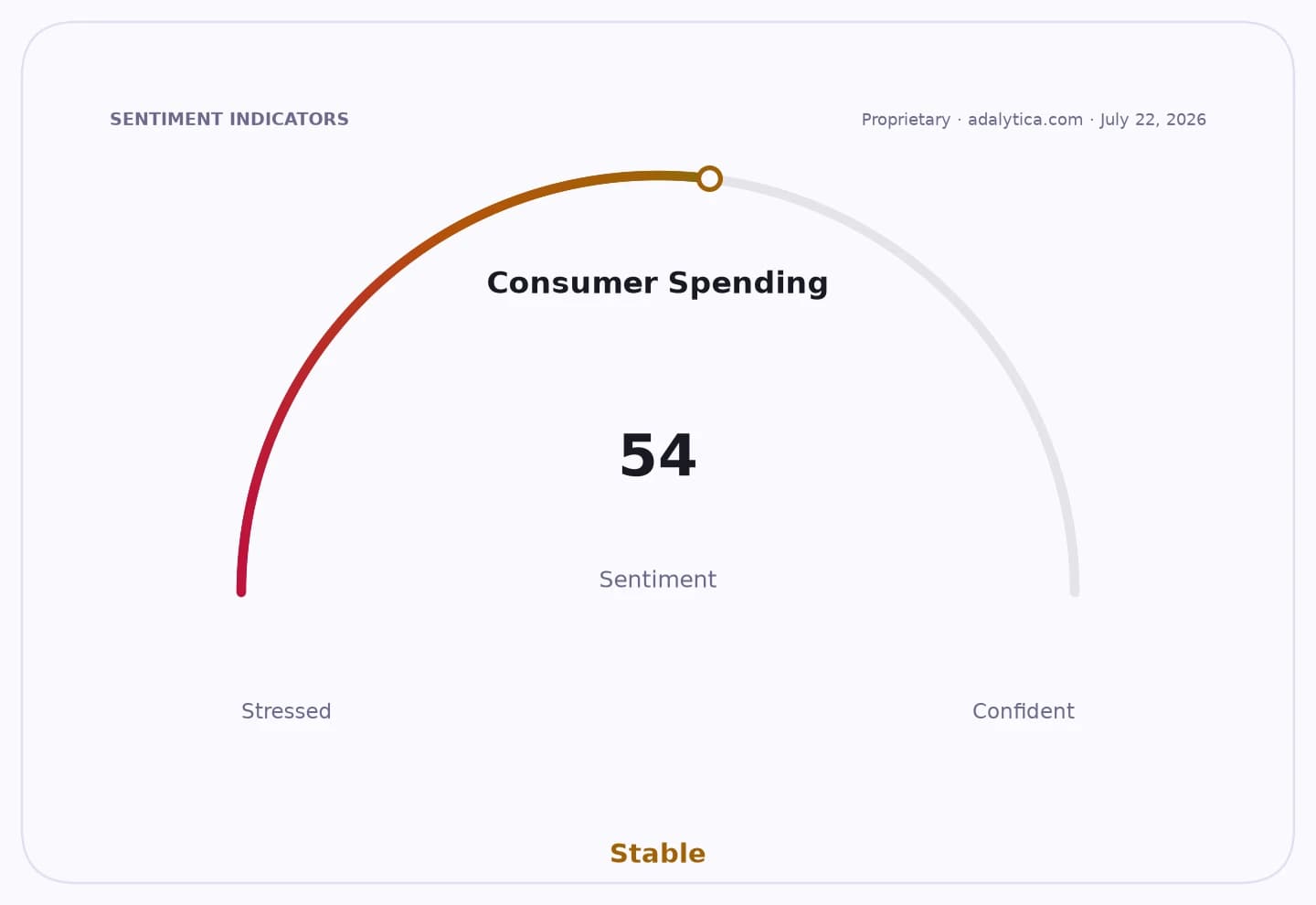
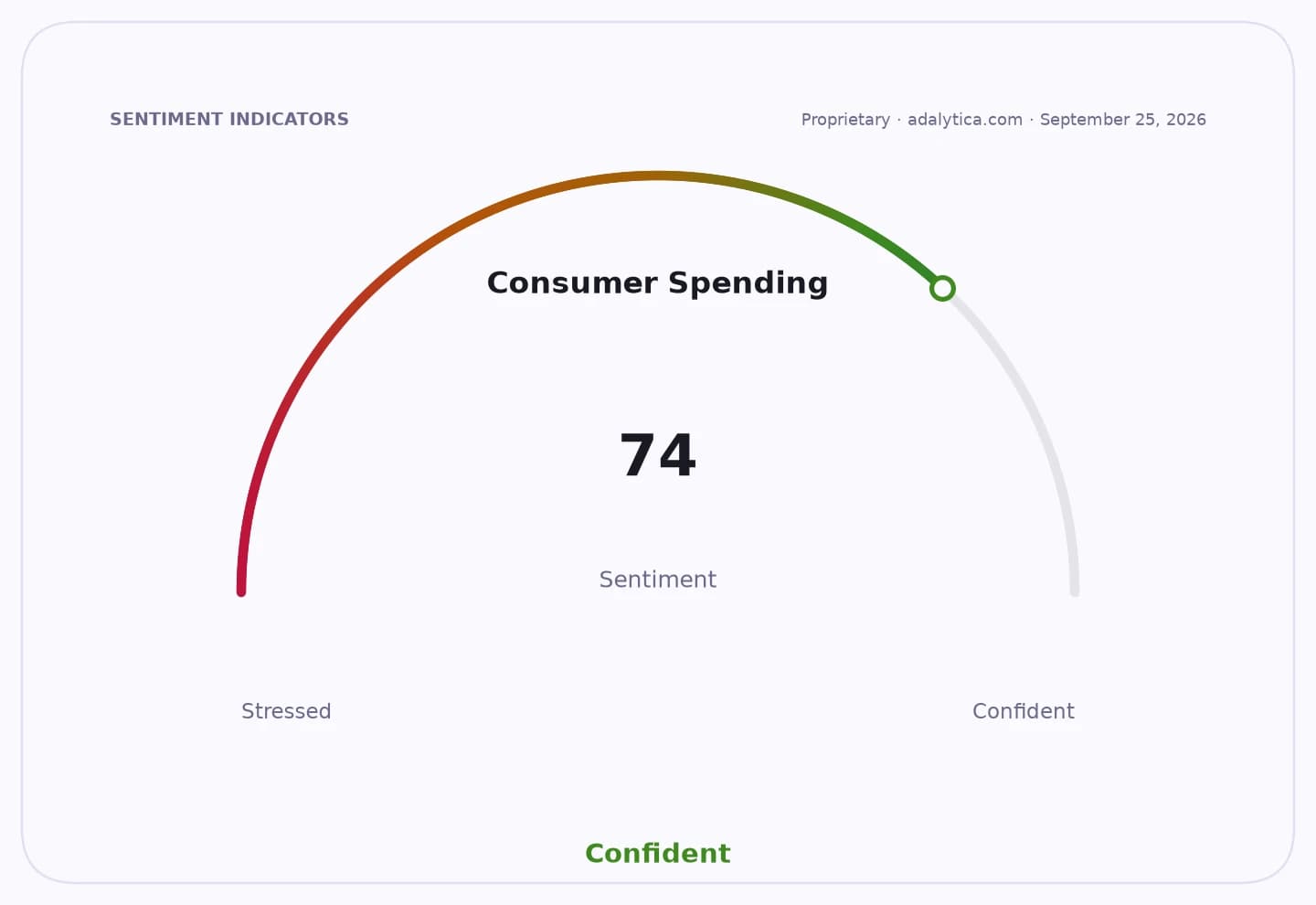
That combination matters because travel is one of the first areas where consumers stretch — or cut — when they feel pressure. The latest readings from Adalytica’s Consumer Spending Sentiment gauge fell sharply to 54, with awareness in “fear” territory, suggesting shoppers are becoming less comfortable with broad discretionary outlays even if they are still traveling. Retail-goods spending sentiment is also subdued at 43, underscoring that the softness is not isolated to tourism but part of a wider caution in household behavior.
Sentiment IndicatorsⓘProprietary · adalytica.com · July 22, 2026
This is a snapshot — live sentiment, awareness and momentum for 130+ markets update continuously in the dashboard.Open AlphaPulse

For booking platforms and online travel agencies, that is a mixed setup. Expedia and Airbnb shares have both recovered from earlier volatility, but the price action shows investors remain sensitive to any sign that demand is cooling or becoming more price-driven. Expedia, which had traded as high as 298.69 in January before slumping below 190 in February, has rebounded to about 260, while Airbnb has climbed back from a February trough near 116 to roughly 140. Booking Holdings has also recovered from a sharp selloff earlier in the year, though its latest close near 178 still sits below its 200-day average, suggesting the market is not fully convinced the demand cycle has stabilized.
The operating backdrop is still constructive on paper. The U.S. unemployment rate is 4.2%, and consumer confidence readings are improving from recent lows, which helps explain why travel demand has not rolled over outright. But macro support is not the same as strong discretionary spending. If holiday schedules, heat waves and destination choices encourage shorter, cheaper trips rather than higher-margin bookings, that can still pressure average daily rates, ancillary spend and platform take rates even when unit volumes hold up.
Consumer Spending — 30-day sentimentadalytica.com
Explore this data interactively — full history, time series and cross-market comparisons.Open AlphaPulse

That is where the narrative around Orcières-Merlette fits. The mountain resort is the kind of “ideal location” travelers may still seek out, but the market implication is that consumers are shopping more carefully for value and experience, not simply opening their wallets. In practice, that tends to favor destinations and platforms that can capture price-sensitive demand without sacrificing occupancy, while punishing operators that depend on premium room rates or luxury mix.
For investors, the key question is whether the current travel season proves that demand is merely rotating — from expensive city breaks to cooler, better-value destinations — or whether it marks the start of a broader pullback in discretionary spend. If spending sentiment keeps sliding, booking growth may hold up longer than margins, especially for firms with heavy exposure to promotions, rate compression or weaker ancillary purchases. If confidence stabilizes, the recent selloff in travel stocks may look overdone.
Either way, the market is signaling that the consumer is still traveling, but with a tighter grip on the wallet.
| Entity | Gains | Losses |
|---|---|---|
| Value destinations like Orcières-Merlette | ▲More demand | ▼Less premium pricing |
| Travel platforms | ▲Booking volume resilience | ▼Margin pressure |
| Consumers | ▲Cheaper holiday choices | ▼Less discretionary confidence |
| Premium hotels and leisure operators | ▲Occupancy support | ▼ADR and mix pressure |