U.S. bonds are back at the center of global portfolio decisions as the 10-year Treasury yield sits near 4.6%, forcing investors to reprice income, duration and equity valuations around a higher-for-longer rates regime.
Treasury Yield Near 4.6% Resets Bond Allocation

The move matters because it is not just a short-term spike in borrowing costs; it reflects a broader reset in what investors can expect from fixed income after years in which near-zero yields distorted asset allocation. The 10-year benchmark closed most recently around 4.69%, while the two-year Treasury yielded about 0.46 percentage point less, leaving the curve modestly steeper than in the deeply inverted episodes that have dominated the post-pandemic cycle. At the same time, the federal funds rate remains at 3.63%, underscoring that policy is still restrictive enough to keep real returns in bonds attractive without signaling an imminent easing cycle.
That combination is helping restore the case for holding duration. Exchange-traded funds tracking longer Treasuries and broad investment-grade debt have held up better than they did during the 2022 rate shock, even if price action in the past week has been choppy. TLT, the iShares 20+ Year Treasury Bond ETF, was last around $82.76, below its 50-day moving average and 200-day moving average, but not in the kind of dislocation that characterized the worst of the bond selloff. IEF and AGG have been steadier, with the intermediate-term Treasury ETF near $93.17 and the broad aggregate bond fund around $97.60, both roughly flat to modestly lower around recent levels.
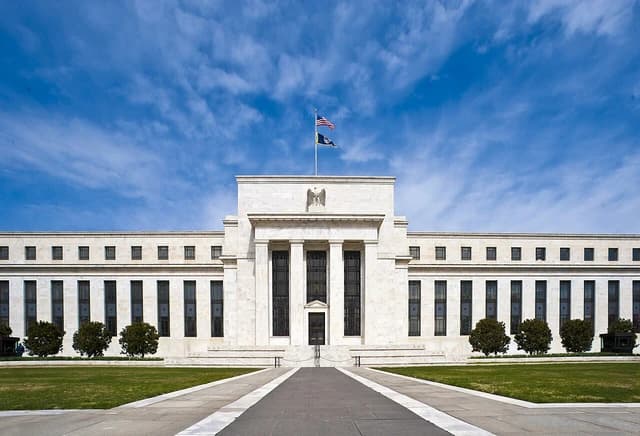
For investors, the significance is twofold. First, Treasury yields in the mid-4% range materially improve the prospective return on cash-plus and core bond allocations relative to the past decade, making bonds once again a viable source of portfolio income rather than a drag on returns. Second, a 10-year yield near 4.6% raises the discount rate applied to equities, real estate and private assets, tightening financial conditions even if the Federal Reserve is on hold. That is particularly important for growth stocks, levered balance sheets and sectors whose valuations depend on distant cash flows.

The narrative behind the reset is that the bond market is no longer pricing a simple disinflation story. Instead, it is accepting a world of sticky nominal growth, a still-restrictive Fed and a term premium that has rebuilt from the ultra-low-rate era. The 10-year yield has not only risen sharply from the 2020 trough near 0.73%, it is now sitting well above the levels that prevailed through much of the 2010s, when investors were conditioned to treat bonds as return-challenged assets. That regime is gone.
There is still a bull case for bonds. If growth slows faster than expected or inflation cools more convincingly, yields could fall and bond prices could rally, especially if positioning is still underweight duration. But the bear case remains that the market has not seen enough evidence to justify a sustained drop in yields, particularly with the Fed funds rate still elevated and fiscal issuance keeping pressure on long maturities. That leaves fixed income investors with better income than in the past, but also with more volatility than the “safe haven” label implies.
What matters now is whether the market accepts this as the new normal or treats it as another stop in a longer adjustment. For now, the evidence points to a durable reset: bonds are back, but they are back in a higher-yield world that rewards discipline, not complacency.
| Entity | Gains | Losses |
|---|---|---|
| Bond investors | ▲Higher running yield | ▼Greater price volatility |
| Treasury buyers | ▲Better income | ▼Duration risk |
| Equity valuations | ▲— | ▼Higher discount rates |
| Borrowers | ▲— | ▼Higher financing costs |