U.S. interest rates remain high enough that a $2 million fixed-term placement can still generate meaningful short-dated income, but the real market story is that investors are being paid to stay in cash while longer-duration bonds struggle to rally. With the two-year Treasury yield at 4.23% and the 10-year at 4.68% on July 30, short-term money remains attractive even as bond funds such as TLT and IEF trade below their 50-day moving averages.
Treasury Yields 4.23% and 4.68% Keep Cash Attractive
At those yield levels, a $2 million investment locked for 30 days would earn roughly $7,050 at the current two-year Treasury rate and about $7,800 if priced off the 10-year yield, before taxes and fees. That helps explain why fixed-term deposits, Treasury bills and other cash-like instruments remain a core allocation for conservative capital: the carry is still positive, the duration risk is limited and investors can earn income without taking much credit exposure.
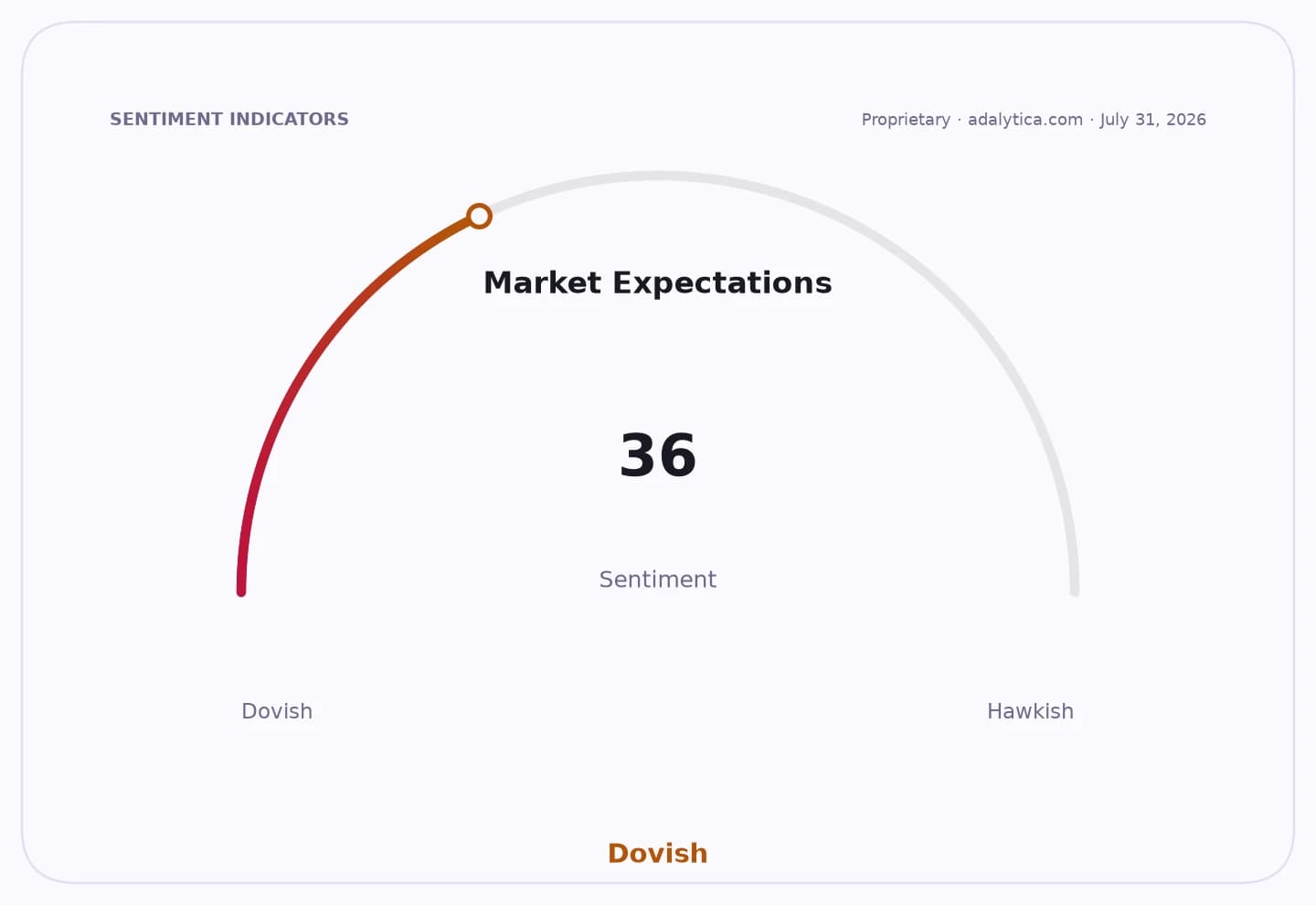
Sentiment IndicatorsⓘProprietary · adalytica.com · July 31, 2026
This is a snapshot — live sentiment, awareness and momentum for 130+ markets update continuously in the dashboard.Open AlphaPulse
The broader significance is that the policy backdrop has not yet normalized enough to force a wholesale move out of short-term instruments. The federal funds rate is around 3.63%, the market-implied path still points to only modest near-term easing, and overnight rates have fallen sharply to about 1.3% in the interbank market, suggesting abundant liquidity at the very front end. But loan pricing has not followed as quickly, underscoring how slowly monetary easing transmits through the banking system and the real economy.
For investors, that creates a clear split between winners and losers. Cash buyers, treasury ladder investors and deposit-heavy savers continue to benefit from elevated nominal returns. Duration buyers, by contrast, are still waiting for a decisive decline in yields that would lift bond prices. TLT closed at 82.25 on July 31, below its 50-day moving average of 84.78 and 200-day average of 85.87, while IEF finished at 92.95, also beneath both longer-term trend gauges. The technical picture suggests bond bulls have not yet regained control.
DGS2 vs DGS10 — macro contextadalytica.com
Explore this data interactively — full history, time series and cross-market comparisons.Open AlphaPulse
Adalytica’s market-expectations gauge for Fed rate decisions shows sentiment at 36, neutral, while awareness remains at an extreme-greed reading of 100, a combination that points to high investor attention but little consensus. In practical terms, that means the market is still pricing a path where yields may ease later, but not fast enough to make waiting in cash look irrational today.
The investment decision, then, is less about whether fixed-term income exists and more about the opportunity cost of locking in for only 30 days versus staying liquid. If rates drift lower from here, today’s short-term yields may look generous in hindsight; if inflation remains sticky and the Fed stays cautious, the front end will keep paying and bond holders may continue to lag. For now, fixed term still makes sense for capital preservation and carry, while duration remains a bet on policy relief that has yet to arrive.
| Entity | Gains | Losses |
|---|---|---|
| Cash investors | ▲High short-term carry | ▼Miss upside if yields fall |
| Treasury ladder buyers | ▲Lower duration risk | ▼Limited price appreciation |
| Bond funds (TLT, IEF) | ▲Potential rebound if cuts deepen | ▼Underperform while yields stay high |
| Banks/borrowers | ▲Stable deposit funding for banks | ▼Borrowers face slower rate relief |