The U.S. bond market is again flashing a warning to policymakers, with the 10-year Treasury yield holding near 4.7% and signaling that deficits, inflation risk and geopolitical shocks are no longer being priced as temporary nuisances.
Treasury Yields Signal Persistent Inflation Risk

That matters because higher borrowing costs are the market’s way of forcing discipline on governments that keep spending, borrowing or stoking inflation without a credible offset. When the 10-year yield rises, it ripples through mortgage rates, corporate debt, fiscal math and equity valuations, making it harder for Washington to finance expansionary policy cheaply.
Sentiment IndicatorsⓘProprietary · adalytica.com · July 26, 2026
This is a snapshot — live sentiment, awareness and momentum for 130+ markets update continuously in the dashboard.Open AlphaPulse
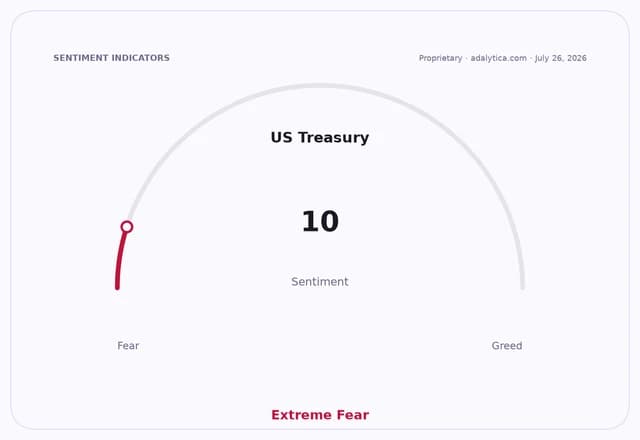
The benchmark 10-year yield was last seen at 4.71% on July 23, with a forecast of 4.749% for July 24, close to levels not seen since early 2025. The curve remains only modestly steep, with the 10-year/2-year spread at 36 basis points, suggesting markets are not buying a clean growth boom, but rather pricing persistent inflation pressure and heavier term premia.
That is exactly the kind of backdrop that can punish risk assets. The S&P 500 was last at 738.93, below its recent high of 747.41 on July 22, while Adalytica’s U.S. equity trade signals show “Extreme Fear” with sentiment at 9 and awareness at 0. Investors are also showing little appetite to chase duration: TLT, the iShares 20+ Year Treasury Bond ETF, closed at 83.25 on July 24, well below its 50-day moving average of 84.79 and 200-day average of 85.96, with RSI at 20.9, a level that reflects an oversold bond market rather than comfort about the outlook.
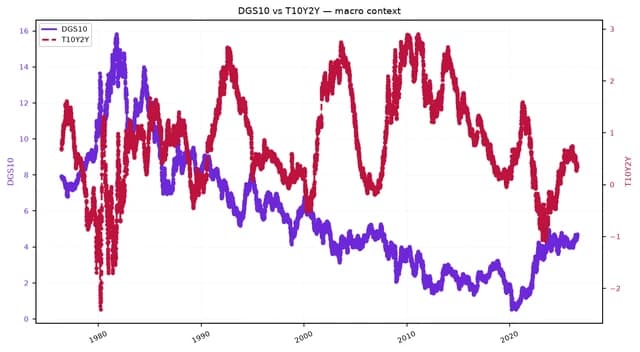
The pressure is not isolated to the U.S. Russia’s finance ministry failed to sell federal loan bonds for the third time in July as buyers demanded higher yields, while Japan has also seen yields move higher amid the same global repricing of sovereign risk. Oil’s surge has added to the strain, pushing up inflation expectations and tightening conditions for importers and emerging markets.
For investors, the message is straightforward: the market is demanding a bigger premium to hold government debt, and that premium can spread into everything from bank funding costs to earnings multiples. The dollar, which Adalytica shows in “Extreme Fear” on its trade signal snapshot, remains sensitive to the yield backdrop, but rising Treasury rates are also a headwind for equities if they keep climbing faster than growth.
The next catalyst is inflation data and Federal Reserve guidance. If price pressures stay sticky, the bond market is likely to keep doing what it does best — making policymakers pay for fiscal complacency.
| Entity | Gains | Losses |
|---|---|---|
| Treasury buyers | ▲Higher yields | ▼Price volatility |
| U.S. government | ▲Short-term funding flexibility | ▼Higher borrowing costs |
| Equity investors | ▲None | ▼Lower valuation support |
| Dollar holders | ▲Yield support | ▼Policy uncertainty |




