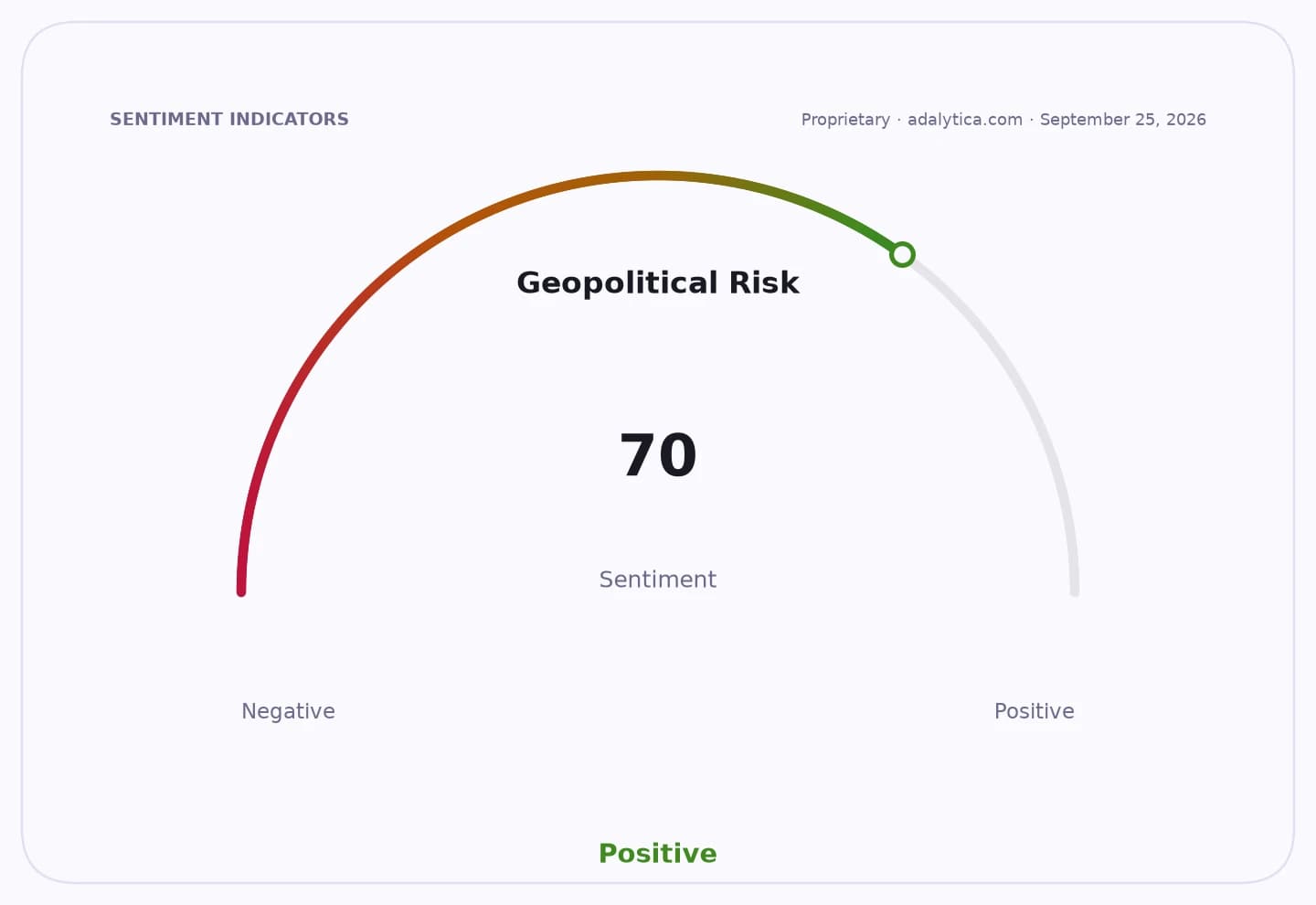
President Donald Trump is seeing his popularity deteriorate at a politically sensitive point in his second term, with more than 60% of Americans disapproving of his handling of the Iran war and support softening even inside his Republican base.
Trump Approval Slips, Raising Market Volatility Risk
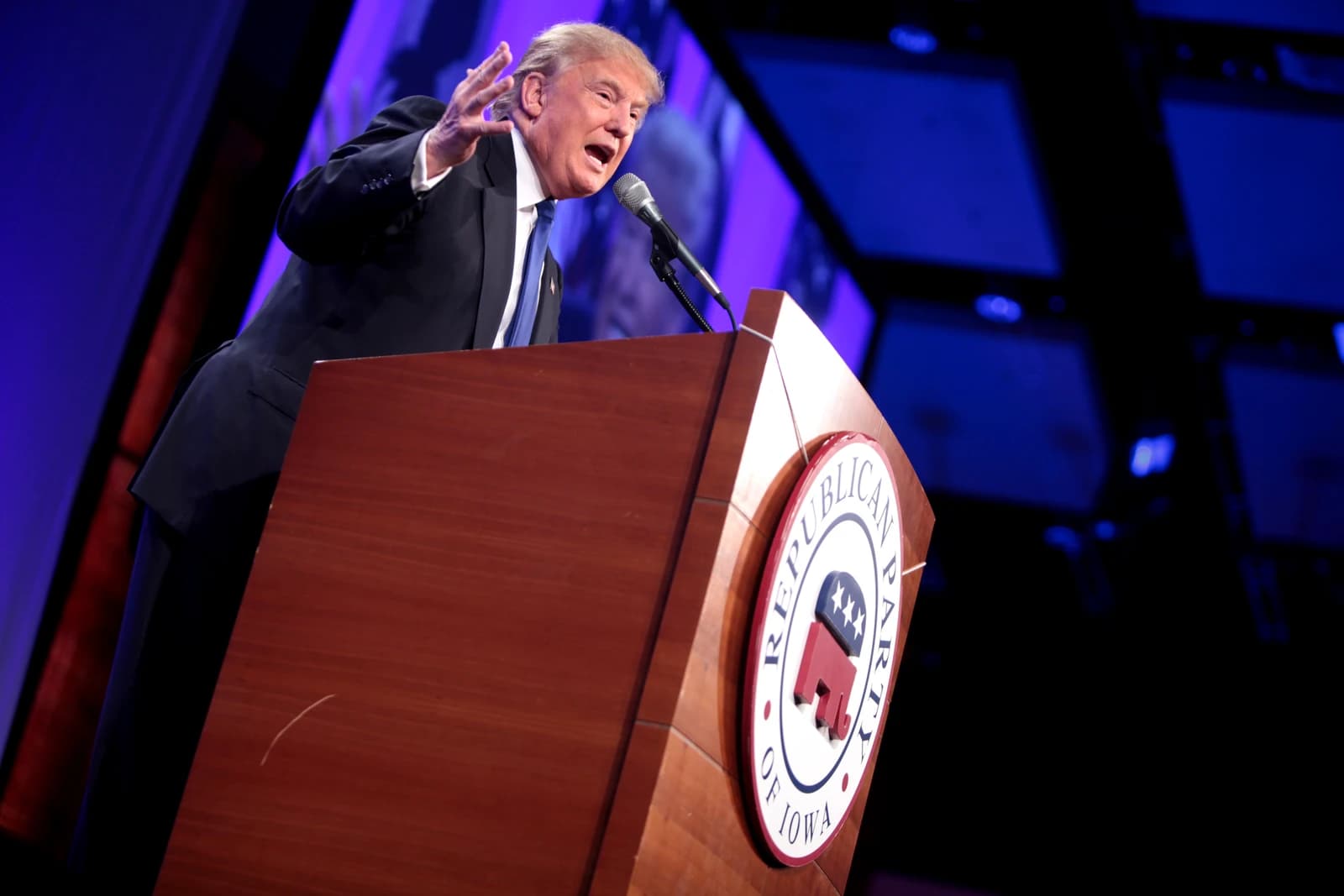
That matters because a president’s approval is not just a political vanity metric: it affects how much room he has to push Congress, how much credibility his foreign policy commands and how much market volatility his next move can trigger. The decline comes as Washington is also weighing tougher sanctions on Russia after Trump backed the idea, underscoring how his foreign policy is testing party unity rather than reinforcing it.

The slump in Trump’s standing arrives alongside a broader deterioration in the risk backdrop. Adalytica’s Global Stability Sentiment gauge is pinned at 4, or “Extreme Fear,” while the US White House Policy Direction Sentiment is neutral at 56 but has fallen 30 points over the past week, suggesting investors and policymakers are struggling to price the administration’s next steps.
Markets have already started to reflect the strain. Trump-linked DJT shares have retreated sharply from the mid-December spike, closing at $9.66 in the latest session after trading as high as $16.09 late last year. The stock is still above its 50-day moving average, but it remains well below its 200-day average of $11.20, showing how quickly enthusiasm can fade when political momentum weakens.
White House Policy Direction vs DJTadalytica.com
Explore this data interactively — full history, time series and cross-market comparisons.Open AlphaPulse

The bond market is not offering much comfort either. TLT, the iShares 20+ Year Treasury Bond ETF, has been stuck near $84.50, with its 200-day moving average at $86.03, a sign that investors remain cautious about growth, fiscal and geopolitical risks even as they rotate between safety trades.
For investors, the key issue is whether Trump’s eroding approval narrows his ability to sustain an aggressive foreign policy stance or forces a more constrained approach on Iran, Russia and other flashpoints. That would have implications for defense stocks, energy prices, the dollar and Treasurys, all of which tend to react quickly when Washington’s policy direction becomes less predictable.
The next catalyst is political, not corporate: any escalation in Iran, a new sanctions push on Russia or fresh polling showing further erosion in Trump’s core support could intensify volatility across equities, rates and currency markets.
| Entity | Gains | Losses |
|---|---|---|
| Trump critics | ▲Political leverage | ▼Trump approval |
| GOP leadership | ▲Flexibility to distance | ▼Party unity |
| Defense and energy traders | ▲Volatility opportunities | ▼Policy clarity |
| Long-duration Treasury holders | ▲Safe-haven demand | ▼Inflation/risk stability |