Donald Trump is trying to turn his Asia trip into proof that Washington is back on stronger footing diplomatically, even as the real market and economic stakes lie in whether the journey produces lasting trade concessions from China, fresh export demand for U.S. manufacturers and a clearer path on energy and Iran.
Trump Asia Trip Targets Trade Deals with China
US-China Relations
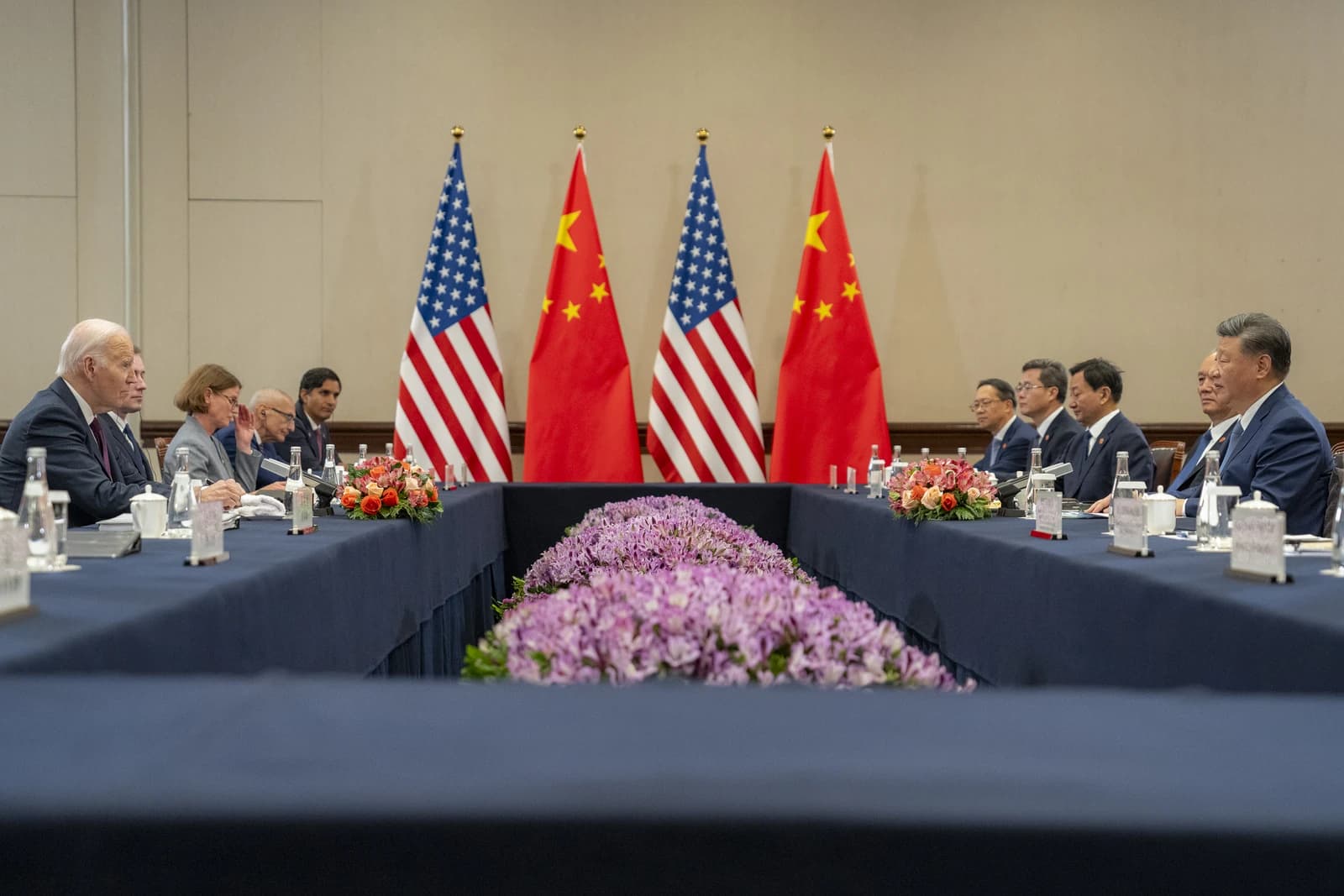
At a White House briefing after returning from meetings with Xi Jinping and Vladimir Putin, Trump said the trip delivered two new trade deals and as many as 10 more that could follow soon, while claiming the U.S. regained international respect and secured agreements that would benefit farmers, aircraft maker Boeing and broader American industry. The president’s pitch matters because it frames the administration’s foreign policy less as a security exercise than as a commercial one: market access, tariff relief, energy prices and industrial supply chains are all being linked to the diplomacy.
Sentiment Indicators
CCP Policy Direction
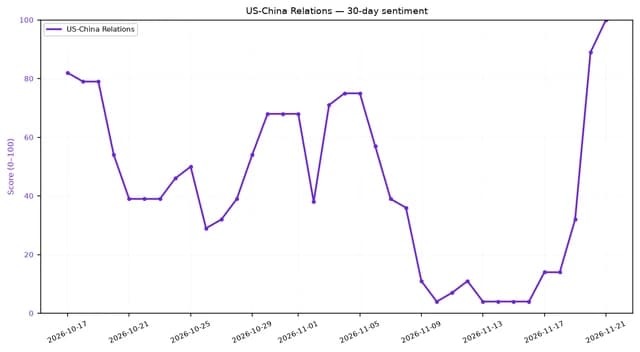
For investors, the most consequential thread is whether the apparent thaw with Beijing can translate into reduced trade friction at a time when China’s export machine remains powerful and U.S. companies are still exposed to tariff, technology and investment restrictions. Trump said he and Xi discussed Iran’s nuclear program and that the Chinese leader showed respect by greeting him at the airport, but there was no sign of a breakthrough on the larger structural issues that have defined the relationship for years. The Adalytica U.S.–China Relations Sentiment gauge was at 100, or “Extreme Greed,” underscoring how sharply expectations have swung toward a more constructive tone after recent volatility.
The White House is also using the trip to sell tangible economic wins. Trump said Thailand would eliminate tariffs on U.S. goods and buy $2.6 billion of American agricultural products a year, while the Philippines would buy 20 Boeing 787 Dreamliners, supporting what he said were 47,000 U.S. jobs. Such pledges matter because even modest trade openings can support industrial output, farm income and earnings visibility for exporters at a time when global demand is uneven.
But the market reaction will depend on execution, not rhetoric. Trump offered few details on what Washington conceded in return, and the broader backdrop is still one of large imbalances and selective decoupling. China has continued to post a record trade surplus, topping $1 trillion for a second straight year, reinforcing the view that Beijing retains leverage in any negotiations. That makes any U.S. attempt to secure more imports, more aircraft orders or lower tariffs potentially useful for politically sensitive sectors, but not necessarily enough to reset the bilateral relationship.
The president also used the same appearance to press several domestic economic themes with direct implications for markets. He said he wanted to block U.S. companies from building data centers overseas and threatened very high taxes on firms that do so, a warning that would be especially relevant for cloud, chip and AI infrastructure companies with cross-border buildout plans. He renewed criticism of the Federal Reserve for keeping rates too high, arguing that monetary policy is slowing growth, and linked future oil-price declines to the outcome of talks with Iran, which he said would never be allowed to obtain a nuclear weapon.
That mix of trade optimism, energy diplomacy and monetary pressure reflects a wider attempt to lower costs for U.S. consumers while bolstering domestic production. It also signals more policy uncertainty for multinationals that depend on overseas capacity, open capital flows and predictable tariff regimes. Companies tied to Boeing, agriculture, semiconductors and data infrastructure will watch closely for formal follow-through; currency and bond investors will focus on whether lower energy prices and easier trade terms can offset a more interventionist U.S. policy stance.
For now, Trump’s Asia trip reads as a political and market narrative in search of hard implementation. If the agreements with Thailand, the Philippines and potentially China become binding and durable, they could support U.S. exporters and ease some supply-chain pressure. If they remain largely declaratory, the bigger story will be the same one that has defined recent global trade: selective détente wrapped around persistent strategic rivalry.
| Entity | Gains | Losses |
|---|---|---|
| U.S. exporters, Boeing, farmers | ▲New orders, market access | ▼— |
| Thailand and Philippines | ▲Better U.S. ties, tariff relief | ▼Greater import commitments |
| China | ▲Diplomatic engagement | ▼Pressure to concede on trade |
| Multinationals building abroad | ▲— | ▼Higher tax and policy risk |