President Donald Trump’s decision to keep Brazil under a U.S. “emergency” regime, while recycling his public defense of former president Jair Bolsonaro, turns a bilateral political dispute into a broader economic risk for Latin America’s largest economy.
Trump Brazil Move Raises Geopolitical Risk
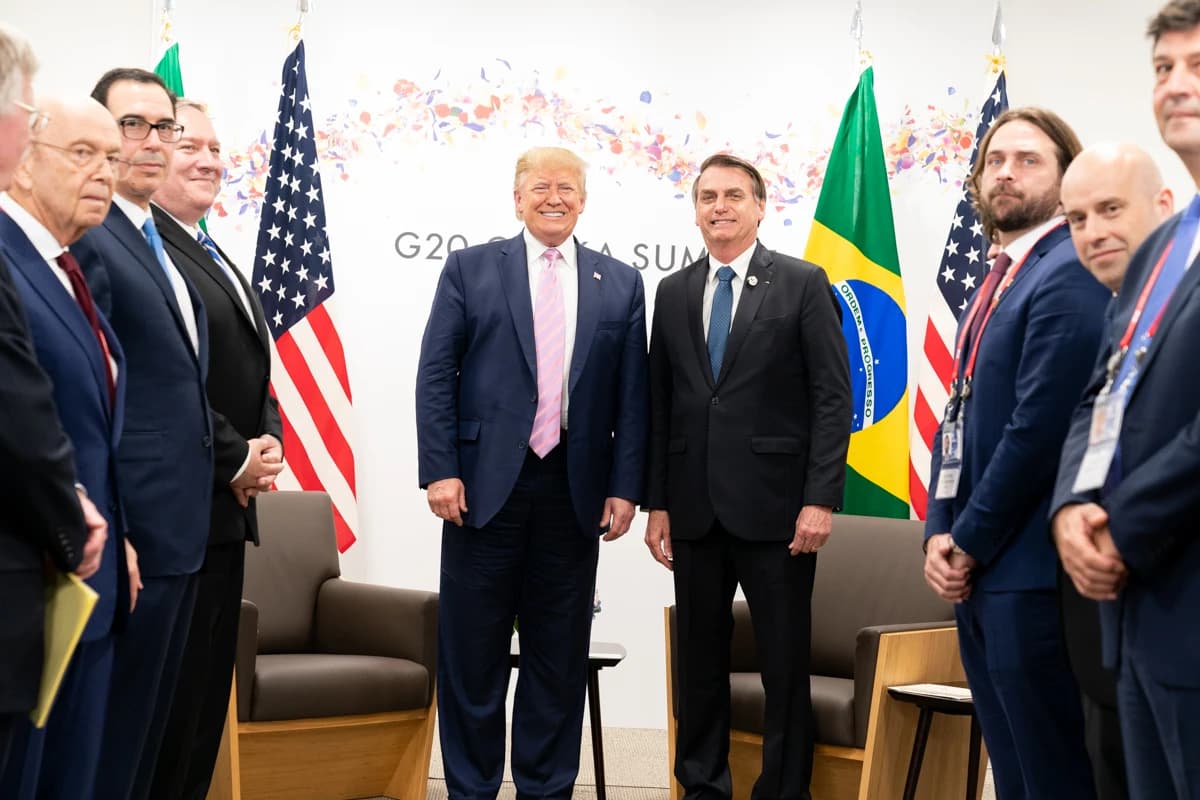
The move matters because it keeps the threat of sanctions, tariff pressure and diplomatic escalation hanging over Brazil at a time when investors are already sensitive to trade fragmentation and geopolitical shocks. For markets, the immediate issue is not ideology but policy optionality: an emergency designation gives Washington room to tighten restrictions or widen them beyond the current political fight, and that uncertainty can filter into Brazilian assets, the real and exporters’ risk premiums.
Sentiment IndicatorsⓘProprietary · adalytica.com · July 28, 2026
This is a snapshot — live sentiment, awareness and momentum for 130+ markets update continuously in the dashboard.Open AlphaPulse

Brazilian authorities have already responded by denying visas to two U.S. officials who sought meetings with election authorities, a sign that the confrontation is widening beyond rhetoric. That raises the probability of retaliatory measures, more public friction over election integrity and less room for quiet negotiation. The escalation also lands as Brazil tries to protect access to the U.S. market while managing domestic political polarization and a slower-growth global backdrop.
Investors are unlikely to price this as a direct macro shock unless it spills into tariffs or financial sanctions, but the channels are clear. Brazil’s large exporters, especially those with U.S. exposure, face headline risk. Multinationals with supply chains tied to Brazilian commodities and industrial inputs could face delays or policy surprises. More broadly, an extended dispute can weigh on foreign appetite for Brazilian risk even if domestic fundamentals remain intact.
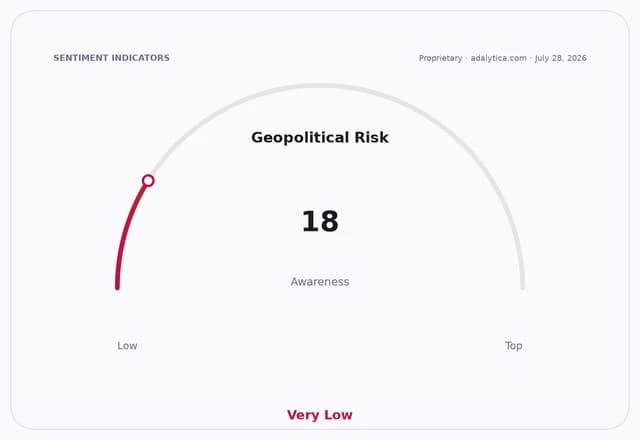
Geopolitical Risk vs EWZadalytica.com
Explore this data interactively — full history, time series and cross-market comparisons.Open AlphaPulse
The market data for the Brazil ETF EWZ suggests investors have not abandoned the story, but they are also not chasing it aggressively. The fund closed at 36.05, above both its 50-day and 200-day moving averages, while RSI readings near 63 point to firm but not euphoric momentum. That leaves room for gains if tensions ease, but it also leaves the ETF vulnerable if Washington broadens the dispute or Brasília responds in kind.
Vale, one of Brazil’s most important globally traded names, shows a more cautious tone. The stock has recovered from its spring lows and sits above its 200-day average, but it remains below its 50-day trend and has not fully rebuilt momentum. That pattern fits a market that sees Brazil as investable, but with geopolitical discount still attached.
The bull case is that this is mostly political theater: Trump’s emergency language and Bolsonaro defense may keep headlines noisy without changing the commercial relationship in a lasting way. The bear case is that the emergency footing becomes a platform for broader restrictions, especially if the White House wants leverage in a politically charged moment. Either way, the episode confirms that Brazil’s investment story is no longer just about rates, commodities and domestic politics; it now includes an added layer of U.S.-Brazil geopolitical risk that investors will have to watch closely.
| Entity | Gains | Losses |
|---|---|---|
| Trump/Bolsonaro camp | ▲Political leverage | ▼Diplomatic credibility |
| Brazilian government | ▲Domestic nationalist support | ▼U.S. relations |
| Brazilian exporters | ▲Potential rally on easing | ▼Tariff/sanction risk |
| EWZ holders | ▲Upside if tensions cool | ▼Volatility from escalation |