The Trump administration is pressing ahead with plans to block Chinese equipment from U.S. data centers, a move that could reshape the economics of artificial intelligence infrastructure even as Amazon, Microsoft, Google and other hyperscalers warn it may take a decade to comply.
Trump administration targets Chinese data center gear
That matters because the biggest beneficiaries of the AI buildout are also the companies most exposed to its supply chain. Data centers need huge volumes of optical transceivers to move data at fiber speed, and China controls about two-thirds of that global market, according to Counterpoint Research. For U.S. operators already spending aggressively on servers, networking gear and power, forcing a rapid swap away from Chinese parts could raise costs, delay deployments and tighten margins just as the AI race is demanding ever more capital.
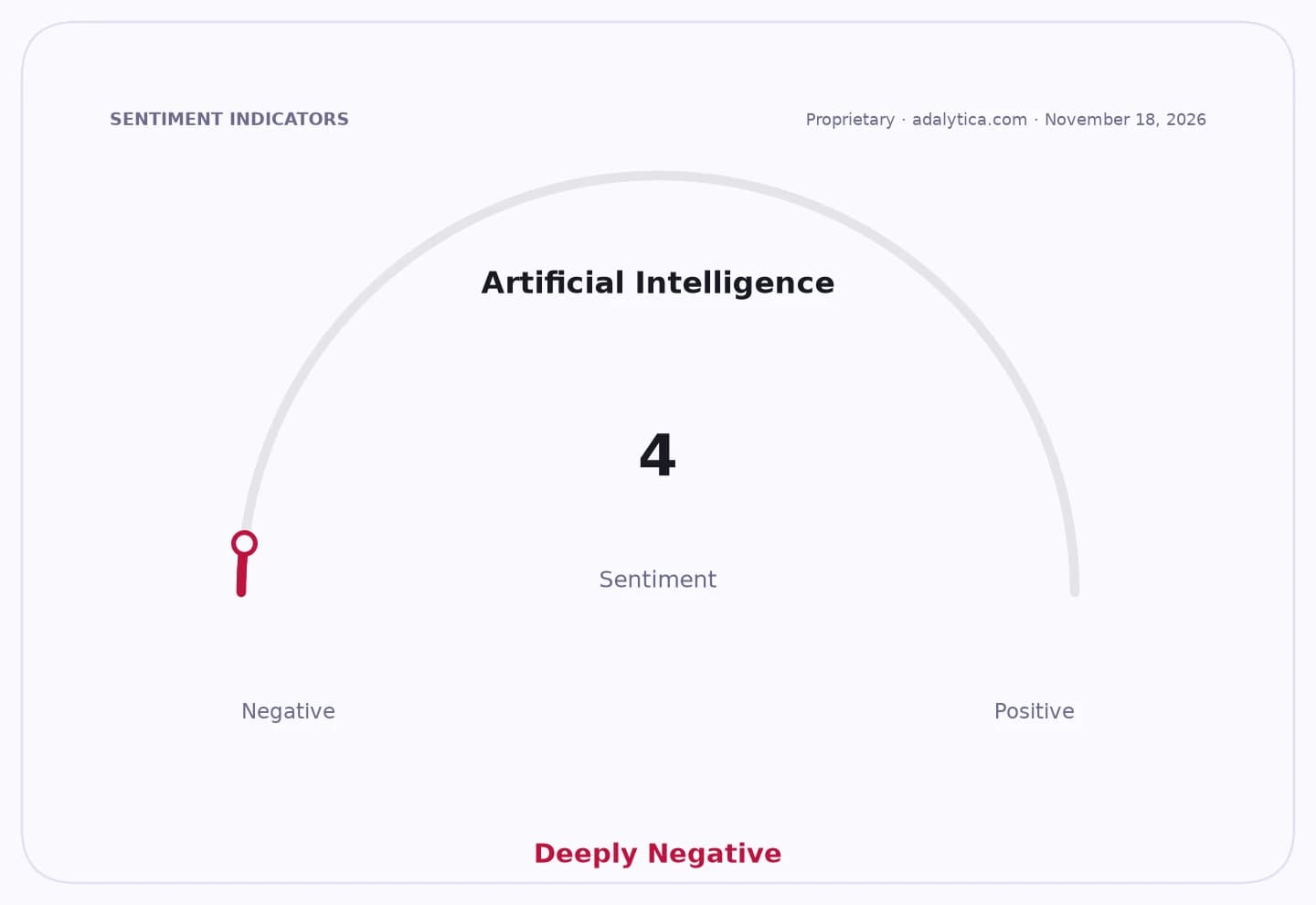
Sentiment Indicators
The proposal, which Reuters reported the FCC is considering, would bar imports of newer Chinese optical transceivers on national security grounds. Washington hawks argue the devices could be used to steal data, insert malware or disrupt service inside critical infrastructure. The policy push has gained momentum even after a private White House meeting in which Amazon, Google, Meta, CoreWeave, Cisco and Microsoft argued that existing supply chains cannot be unwound quickly and that U.S. firms may need up to 10 years to comply.
For investors, the immediate question is not whether data center demand is slowing — it is not — but who pays for the security premium. If the ban proceeds, hyperscalers may have to absorb higher procurement costs or pass some of them on to customers. That could make cloud and AI infrastructure a little less efficient, at least in the near term, while potentially creating a larger long-term market for U.S.-based suppliers such as Coherent and Lumentum, which compete with Chinese vendors but do not yet have the same scale.
There is also a geopolitical tradeoff. U.S. restrictions may accelerate domestic manufacturing and please China hawks in Washington, but they could invite retaliation from Beijing, including a possible ban on exports of indium phosphide, a critical material used in optical transceivers. That would add another layer of risk for chip and networking supply chains already navigating tariffs, export controls and reshoring pressures.
Microsoft, which has been among the loudest opponents of the proposed curb, stands out because its AI and cloud strategy depends on rapid data center expansion. The stock has still held well above its 200-day moving average, but recent technical weakness shows investors are already reassessing how much capital intensity the AI boom can support. Amazon and Alphabet face a similar balancing act: keep building fast enough to stay competitive, while managing a policy shift that could make each new facility more expensive to equip.
The bigger story is that Washington is no longer treating data center hardware as a neutral input. If the Trump administration finalizes the restrictions, investors should expect a slower, pricier, more localized AI infrastructure buildout — one that favors companies with domestic supply chains and punishes those most dependent on Chinese components. For long-term investors, it is a reminder that the AI opportunity is still huge, but the winners will be the firms that can compound growth without relying on fragile global inputs.
| Entity | Gains | Losses |
|---|---|---|
| U.S. domestic suppliers | ▲Bigger addressable market | ▼Need time to scale |
| Amazon, Microsoft, Google | ▲Supply security over time | ▼Higher equipment costs |
| Chinese transceiver makers | ▲None | ▼Lost U.S. demand |
| Data center builders | ▲National-security clarity | ▼Longer compliance timeline |