President Donald Trump’s renewed push to force lower interest rates — including an attempt to remove Federal Reserve Governor Lisa Cook — raises the stakes in a policy battle that now carries clear market consequences for the dollar, Treasury yields and rate-sensitive assets.
Trump Fed pressure lifts focus on 10-year yield 4.65%

The immediate economic issue is not just whether the Fed cuts at the next meeting, but whether investors begin to price a less independent central bank. That matters because central bank credibility is a pillar of US financial pricing: it anchors inflation expectations, shapes the Treasury curve and supports the dollar’s reserve-currency premium. Trump’s pressure campaign comes as the federal funds rate sits at 3.63%, while the 10-year Treasury yield is around 4.65% and the 10-year minus 2-year curve is modestly positive at 0.47 percentage point, a combination that suggests markets still expect policy to stay restrictive enough to keep inflation contained.
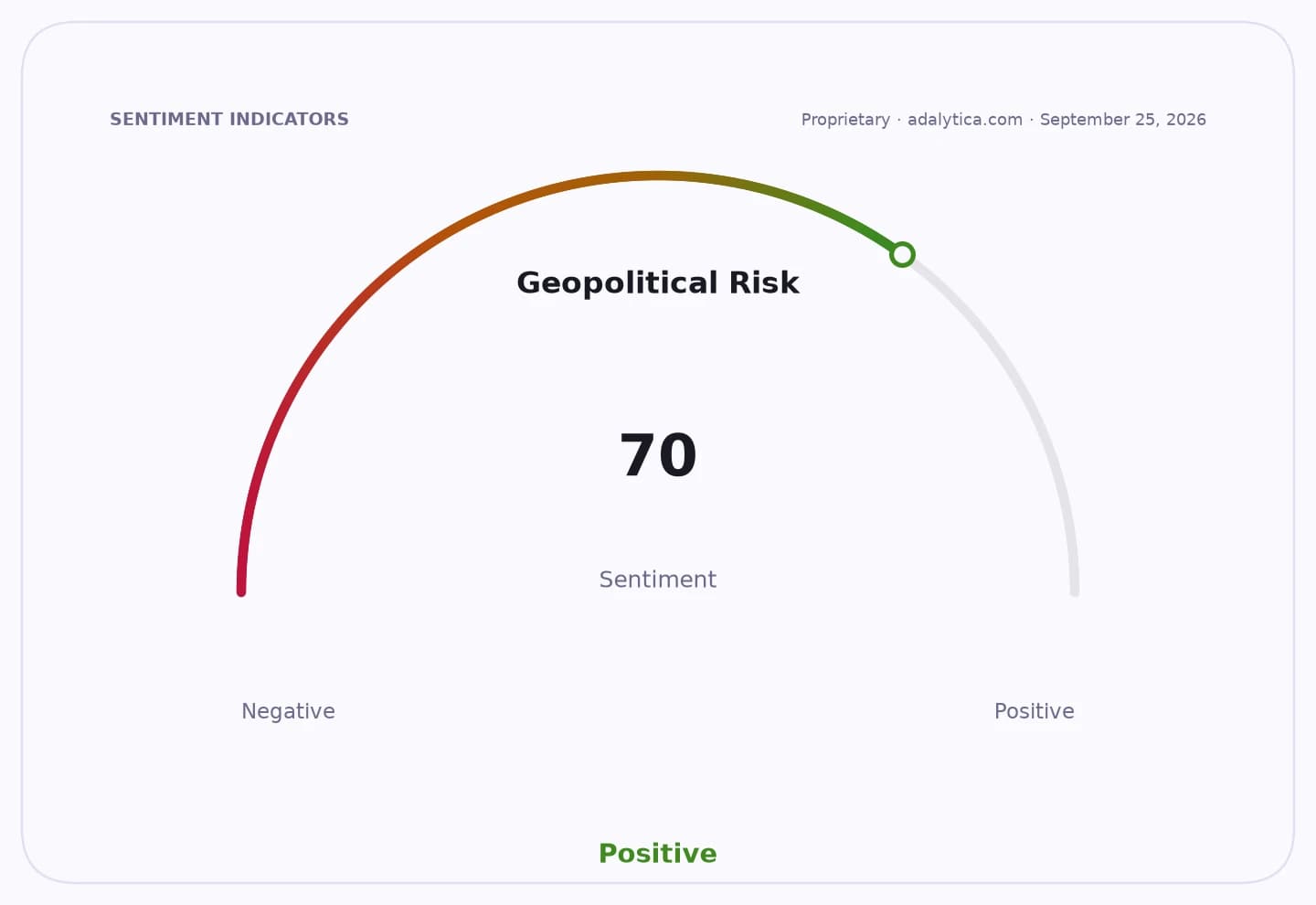
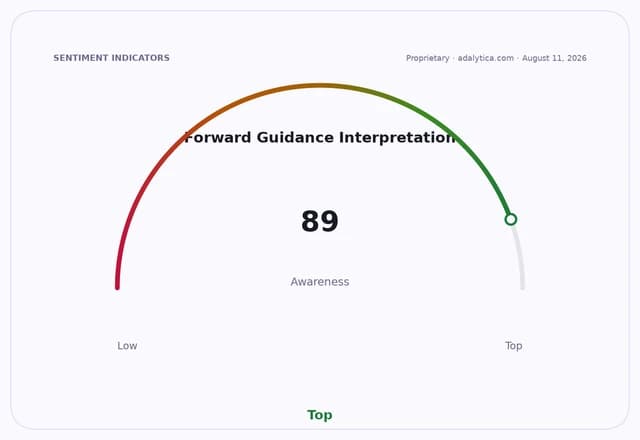
Sentiment IndicatorsⓘProprietary · adalytica.com · August 11, 2026
This is a snapshot — live sentiment, awareness and momentum for 130+ markets update continuously in the dashboard.Open AlphaPulse
Markets have already started to reflect the policy tension. Long-dated Treasuries, as measured by the TLT exchange-traded fund, have been volatile but remain below both the 50-day and 200-day moving averages, a sign investors are still cautious about locking in duration despite hopes for eventual easing. The S&P 500 proxy SPY, meanwhile, is near record territory, implying equities are currently treating the Fed fight as a macro headline rather than a near-term earnings shock. But that balance could change quickly if political interference begins to look institutional rather than rhetorical.
The issue matters most for rates because the Fed’s ability to set policy independently is what allows markets to price forward guidance with confidence. Adalytica’s Federal Reserve policy credibility sentiment is at 89, while its market expectations gauge for Fed rate decisions has dropped to 25, showing fear that political pressure is distorting the policy outlook even as awareness remains high. The dollar has also strengthened, with Adalytica’s US dollar trade signals at 100 for sentiment, underscoring that investors may be seeking safety amid uncertainty rather than betting immediately on easier US money.
FEDFUNDS vs DGS10 — macro contextadalytica.com
Explore this data interactively — full history, time series and cross-market comparisons.Open AlphaPulse
For investors, the core question is whether Trump’s intervention changes the distribution of outcomes for rates. A more dovish Fed, if markets believe it is still data-driven, would support duration, high-multiple equities and housing-sensitive sectors. But if rate policy is seen as politically directed, the bear case is higher term premia, a weaker credibility premium for US assets and more volatility across bonds, equities and foreign exchange. That would be especially painful for financials, which manage large books of interest-rate-sensitive assets and liabilities, and for long-duration growth stocks whose valuations are most exposed to discount-rate changes.
There is also a broader policy risk. Attempting to oust a governor adds a legal and constitutional dimension to a rates debate that normally plays out through inflation data and Fed statements. Even if the effort fails, it can chill investor confidence by making the succession and governance structure of the central bank part of market pricing. The result would be a Fed that still sets the policy rate, but under a heavier political shadow — a scenario that could keep Treasury volatility elevated and make every future rate decision harder for markets to trust.
For now, the bond market is not pricing a break with the Fed’s inflation-fighting mandate. But Trump’s renewed pressure suggests the next catalyst for yields, the dollar and risk assets may come less from economic data than from whether the central bank’s independence holds.
| Entity | Gains | Losses |
|---|---|---|
| Trump and political allies | ▲More pressure on rates | ▼Credibility if push fails |
| Borrowers and rate-sensitive sectors | ▲Chance of lower rates | ▼Uncertainty over policy process |
| Treasury bulls | ▲Easier path to duration rally | ▼Higher term-premium risk |
| Fed independence advocates | ▲Clearer defense of institutional norms | ▼Political noise and market volatility |