Donald Trump’s return to the impeachment debate is getting more attention than the math behind it deserves, and that math still says removing a sitting president is extraordinarily hard even if Democrats do gain ground in Congress.
Trump impeachment debate and market implications

That matters because impeachment is not just a political drama. It is a test of how much leverage the opposition really has over policy, executive power and the market-friendly certainty investors crave. If Democrats win the House and even the Senate, they could launch investigations, block legislation and turn Trump into a lame duck. But ousting him would still require an almost impossible level of bipartisan defection in the Senate.
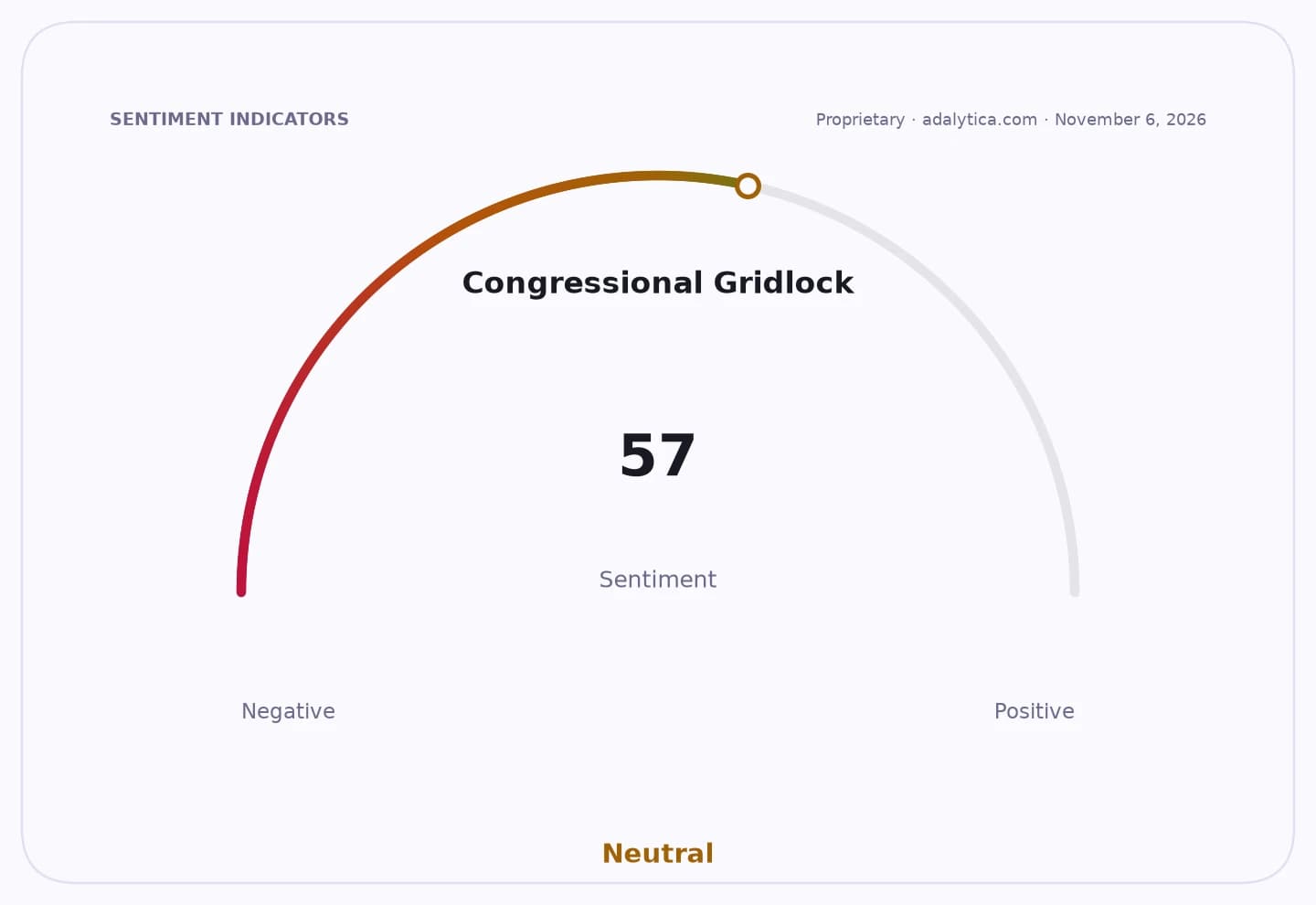
Sentiment Indicators
The hurdle is steep by design. The House can approve articles of impeachment by a simple majority, but conviction in the Senate takes 67 votes. In practical terms, that means Democrats would need not only control of Congress but also substantial Republican support to remove Trump from office. That is why the more realistic outcome is not impeachment as a clean endpoint, but impeachment as a prolonged source of gridlock.
And gridlock has economic consequences. Markets generally prefer predictability, and a White House facing a hostile Congress tends to govern more through executive action, litigation and stop-start policymaking. That can complicate trade, taxes, spending and regulation. It also raises the odds that Trump leans even harder on executive orders if lawmakers resist him, which would keep policy swings alive rather than settling them.
The political backdrop is not especially friendly to Republicans. The data cited in the Polish report point to Democratic leads in national polling and a strong chance of taking the House, with a narrower path in the Senate. The same report points to the issues that are hurting Trump’s party: the cost of living, unpredictable tariff policy and the perception that promised industrial gains have not fully arrived. Those are exactly the kinds of pressures that can reshape a midterm result.
For investors, the bigger issue is not whether impeachment succeeds. It is whether the process becomes a catalyst for a weaker Trump presidency and a more fractured Republican Party. If MAGA loyalists start looking beyond Trump, names like J.D. Vance could matter more. That kind of succession talk is important because markets do not just price policy, they price continuity and control of a governing coalition.
Adalytica’s US White House Policy Direction sentiment gauge sits at 71, with “Extreme Greed” awareness, suggesting investors are already highly focused on the policy path ahead. The S&P 500’s trade-signal snapshot is neutral on sentiment but still shows extreme awareness, a sign that the market is watching Washington closely even if it has not yet made a decisive macro bet on impeachment risk.
Trump, for his part, is trying to flip the narrative by arguing that impeachment would hurt Democrats more than him. History says that is often the case when an opposition party overreaches. But history also says that even failed impeachment fights can leave a president politically weakened and a Congress more willing to challenge him. For long-term investors, that means this is less a near-term removal story than a months-long contest over power, policy and succession — one worth watching, but not a reason to abandon a diversified portfolio or try to trade every headline.
| Entity | Gains | Losses |
|---|---|---|
| Democrats | ▲Oversight power, possible House control | ▼Risk of overreach backlash |
| Trump | ▲Uses impeachment as rallying cry | ▼Political leverage if Congress turns hostile |
| Republicans | ▲Rally around base, blame opposition | ▼Internal succession strain, weaker White House control |
| Investors | ▲More clarity once power balance settles | ▼Policy volatility and headline risk |