President Trump’s declaration that the South Korea-U.S. alliance is an “alliance of freedom” and his anti-communist message on the 73rd anniversary of the Armistice underscore a sharper strategic framing of one of Washington’s key Asia partnerships at a time when Seoul is trying to deepen ties with the U.S. on both security and technology.
Trump-Korea Alliance Rhetoric Boosts Strategic Sectors
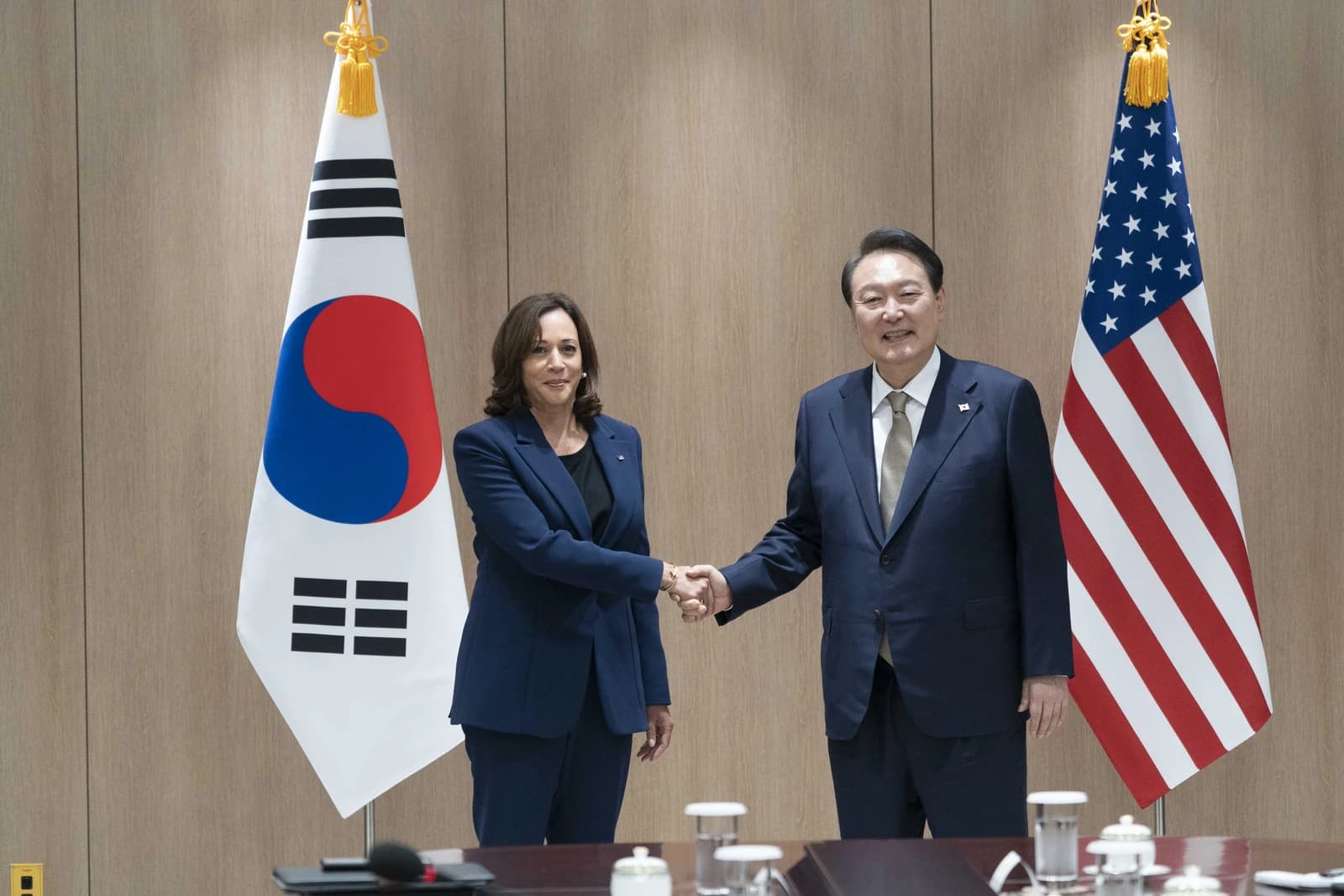
The political symbolism matters because alliance language is now carrying economic weight. For South Korea, the message helps reinforce a bilateral relationship that underpins access to U.S. markets, defense cooperation and the kind of advanced industrial collaboration that Seoul is pushing in artificial intelligence and semiconductors. For Washington, it signals continuity in a region where the balance between deterrence, trade and technology policy is increasingly intertwined.
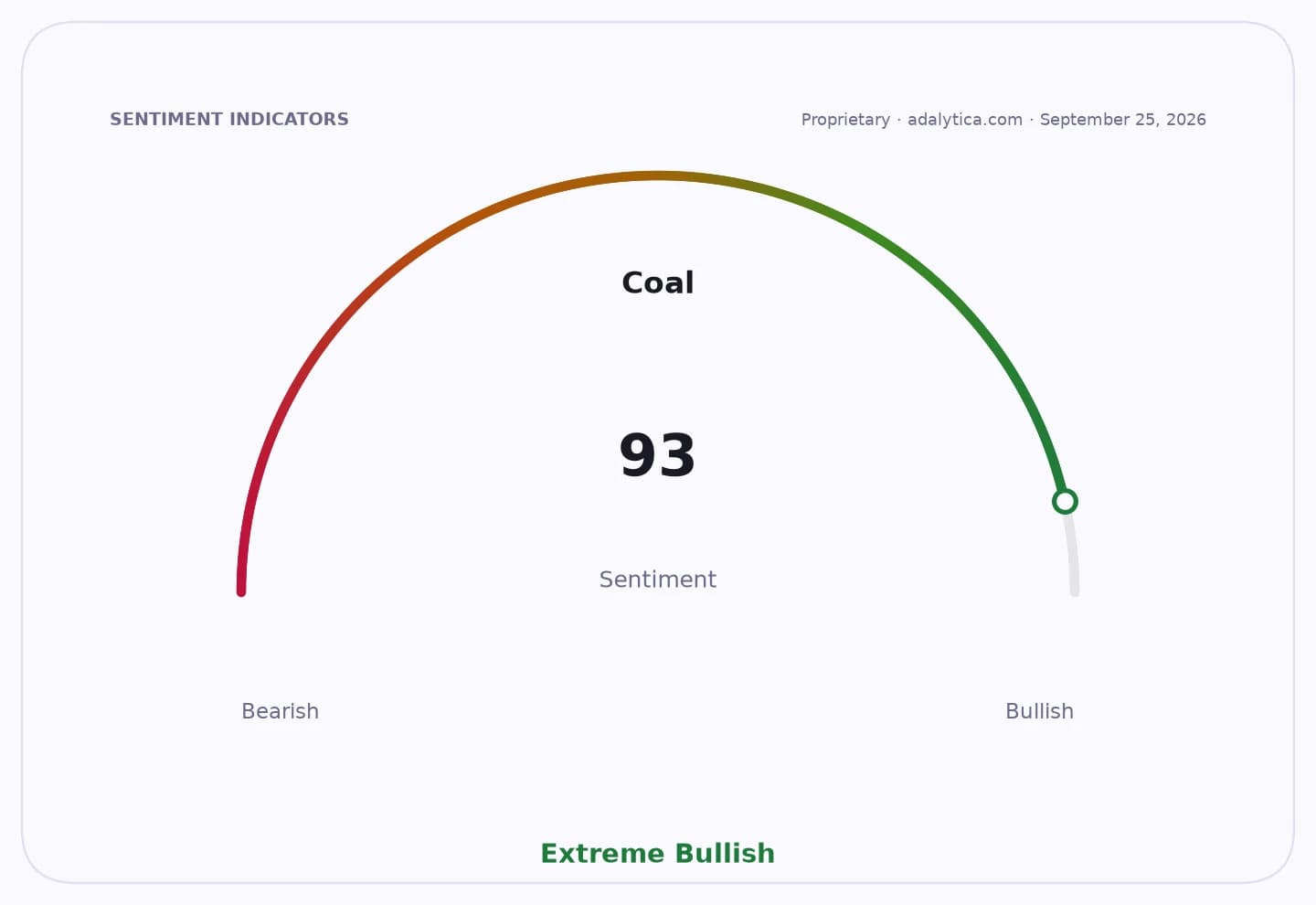
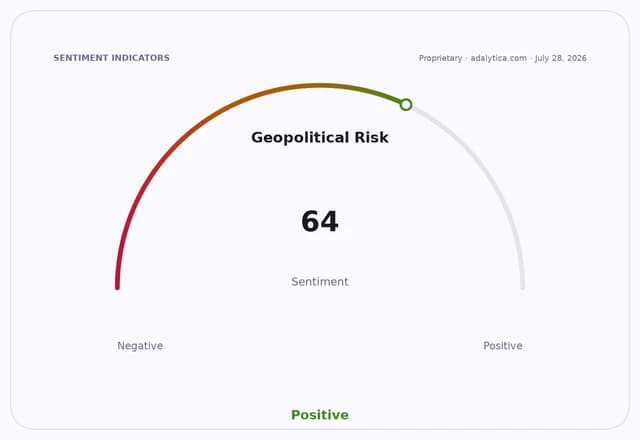
Sentiment IndicatorsⓘProprietary · adalytica.com · July 28, 2026
This is a snapshot — live sentiment, awareness and momentum for 130+ markets update continuously in the dashboard.Open AlphaPulse
That backdrop helps explain why President Lee Jae-myung’s U.S. trip has been centered not only on diplomacy but also on industrial strategy. Lee’s meetings with Jensen Huang and Sam Altman in San Francisco, and his announcement of a “San Francisco AI Declaration,” point to Seoul’s effort to position South Korea as a critical node in the AI supply chain. The reported $950 billion semiconductor cooperation involving Samsung and SK adds an economic dimension that goes well beyond ceremonial alliance rhetoric.
Investors are likely to read the Trump message as supportive for Korean strategic sectors rather than as a direct market catalyst. A stronger alliance narrative tends to favor names tied to defense, semiconductors and AI infrastructure, especially if it lowers the perceived geopolitical discount on Korean assets. That said, the market response remains mixed: the Korea Fund, KF, has fallen sharply in recent sessions, with the fund closing at 54.46 on July 28 after trading as high as 77.54 in mid-June, while its 50-day moving average has been slipping and RSI readings have dropped to 24.2, a level that suggests the recent selloff has been technically stretched. By contrast, Alibaba has steadied around 115.69 after a deep earlier correction, highlighting how capital is still discriminating between U.S.-aligned strategic exposure and China-linked risk.
The broader narrative is that alliance politics are increasingly being used to shape economic geography. South Korea is seeking a place in U.S.-led technology and security supply chains just as global risk sentiment remains fragile and China-related policy indicators show extreme fear. That makes Washington’s language on Korea relevant not only for diplomacy but for capital allocation, industrial policy and valuations across Asian tech and defense-linked assets.
For investors, the key question is whether the rhetoric turns into durable policy support for Korea’s technology exporters and defense suppliers, or whether it remains mostly symbolic. The next catalysts will be follow-through on AI and semiconductor cooperation, any signs of expanded defense integration, and whether the alliance narrative can translate into a narrower risk premium for Korean equities after a volatile summer.
| Entity | Gains | Losses |
|---|---|---|
| South Korea | ▲Stronger U.S. backing | ▼Geopolitical ambiguity |
| U.S. alliance partners | ▲Security reassurance | ▼Policy drift risk |
| Korean tech exporters | ▲AI supply-chain access | ▼China exposure |
| China-linked assets | ▲None | ▼Higher strategic discount |