Trump’s renewed call for the Federal Reserve to lower interest rates comes just as the central bank is expected to keep policy unchanged, underscoring the political pressure building around a hold decision that would leave borrowing costs near 3.63% while inflation remains elevated and long-term yields stay firm.
Trump Pressure Won’t Move Fed Decision
The timing matters because the Fed is meeting with little room to look dovish without risking its inflation credibility. Consumer prices have climbed to 332.568 on the CPI index, up sharply from pre-pandemic levels, while the 10-year Treasury yield is around 4.7%, keeping financial conditions tight even as the policy rate has eased from the cycle peaks. That combination argues for caution: cut too soon and the Fed risks reigniting price pressure; wait too long and it risks tightening the economy more than intended.
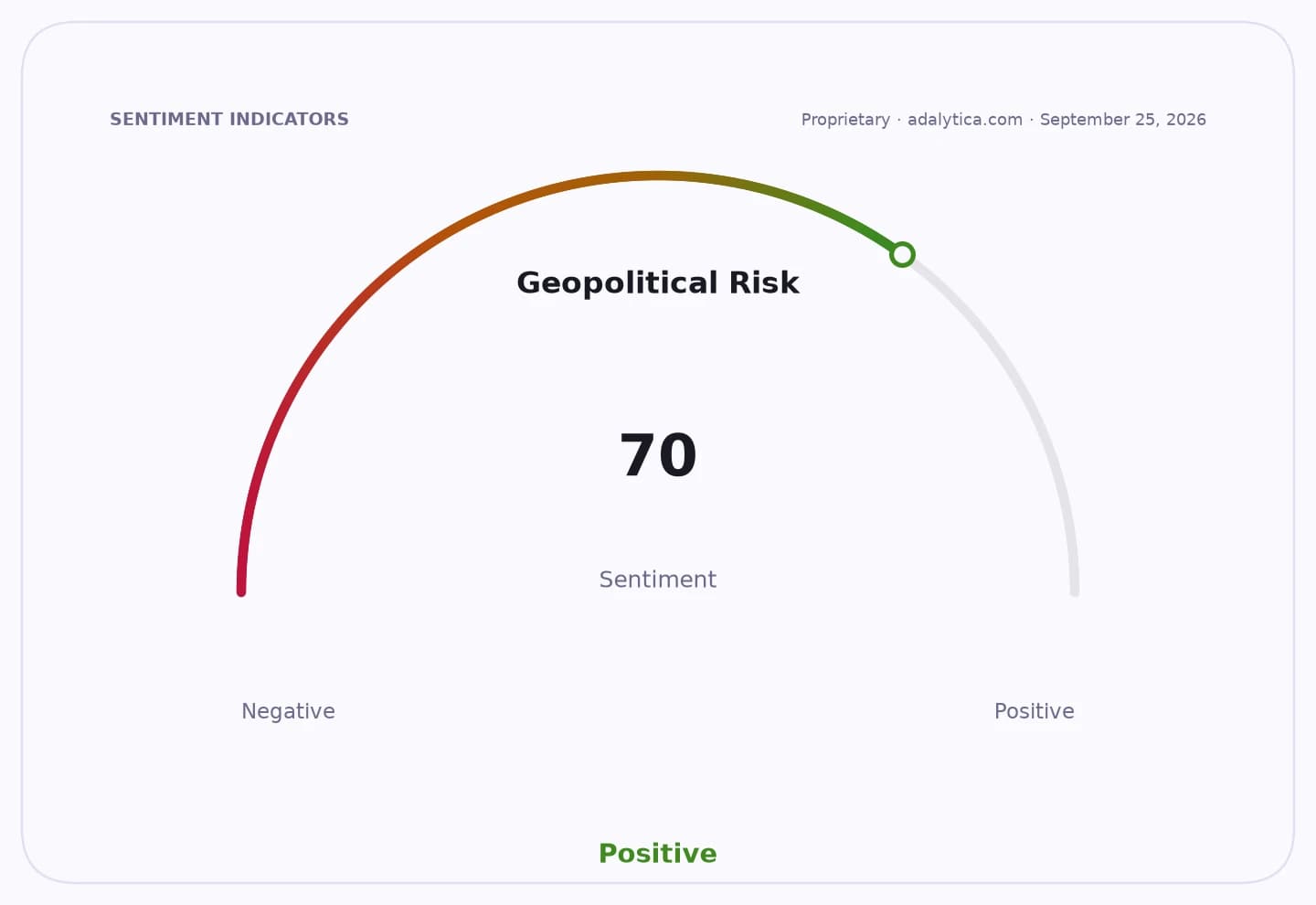
Sentiment IndicatorsⓘProprietary · adalytica.com · July 28, 2026
This is a snapshot — live sentiment, awareness and momentum for 130+ markets update continuously in the dashboard.Open AlphaPulse

For investors, the immediate issue is not whether Trump can force policy — he cannot — but whether the pressure campaign reinforces the market’s view that rate cuts are coming later rather than sooner. The Fed funds rate forecast of 3.627% for July points to an essentially steady stance, and market pricing has reflected that restraint. The dollar has weakened sharply in trade-signal gauges, while Treasury bonds and rate-sensitive assets have been more volatile as traders position for any shift in forward guidance.
Equities are also telling a more nuanced story. The S&P 500 has held near 739, above its 200-day moving average, suggesting the broader uptrend remains intact, but the 50-day average sits above the latest close, a sign momentum has cooled. On conventional technical indicators, RSI readings have slipped from overheated levels, implying investors are less willing to chase risk into the Fed meeting. That leaves room for a relief rally if policymakers sound more open to easing, but also exposes the market if Chair Jerome Powell pushes back on cut expectations.
Market Expectations — 30-day sentimentadalytica.com
Explore this data interactively — full history, time series and cross-market comparisons.Open AlphaPulse

The bigger narrative is that Trump is trying to frame easier policy as pro-growth, while the Fed is likely to frame steady rates as necessary to finish the inflation fight. That tension is economically important because it shapes financing costs for households, companies and the government alike. Mortgage rates, corporate borrowing costs and Treasury issuance all key off the Fed’s stance and the market’s read-through from it.
The bull case for a cut is that growth has moderated enough to justify support, and real rates remain restrictive if inflation continues to cool. The bear case is that inflation is still too sticky, long yields have already backed up, and a premature pivot could undermine confidence in the Fed’s resolve. Investors will focus less on Trump’s comments than on whether the central bank opens the door, however slightly, to a September move.
| Entity | Gains | Losses |
|---|---|---|
| Trump/White House | ▲Political pressure on Fed | ▼Little control over policy |
| Borrowers | ▲Lower financing costs eventually | ▼Higher-for-longer rates now |
| Bondholders | ▲Potential capital gains if cuts come | ▼Yield volatility from uncertainty |
| Dollar bulls | ▲— | ▼Weaker USD trade setup |