Donald Trump said Russia and Ukraine are moving toward a settlement “for the first time,” putting the next round of US-brokered talks in Abu Dhabi at the center of a fragile diplomatic push even as the war escalates on the ground.
Trump says Russia, Ukraine moving toward settlement
The remarks matter because they suggest Washington is trying to turn battlefield pressure and back-channel contacts into a negotiated framework before winter deepens the strain on Ukraine’s energy system. Trump said there had been “a lot of progress” and called the emerging deal potentially “big,” extending beyond Ukraine and possibly touching wider European security. But the message landed alongside fresh Russian strikes on Ukraine’s infrastructure and new Ukrainian attacks deep inside Russia, underlining how far the two sides remain from a ceasefire.
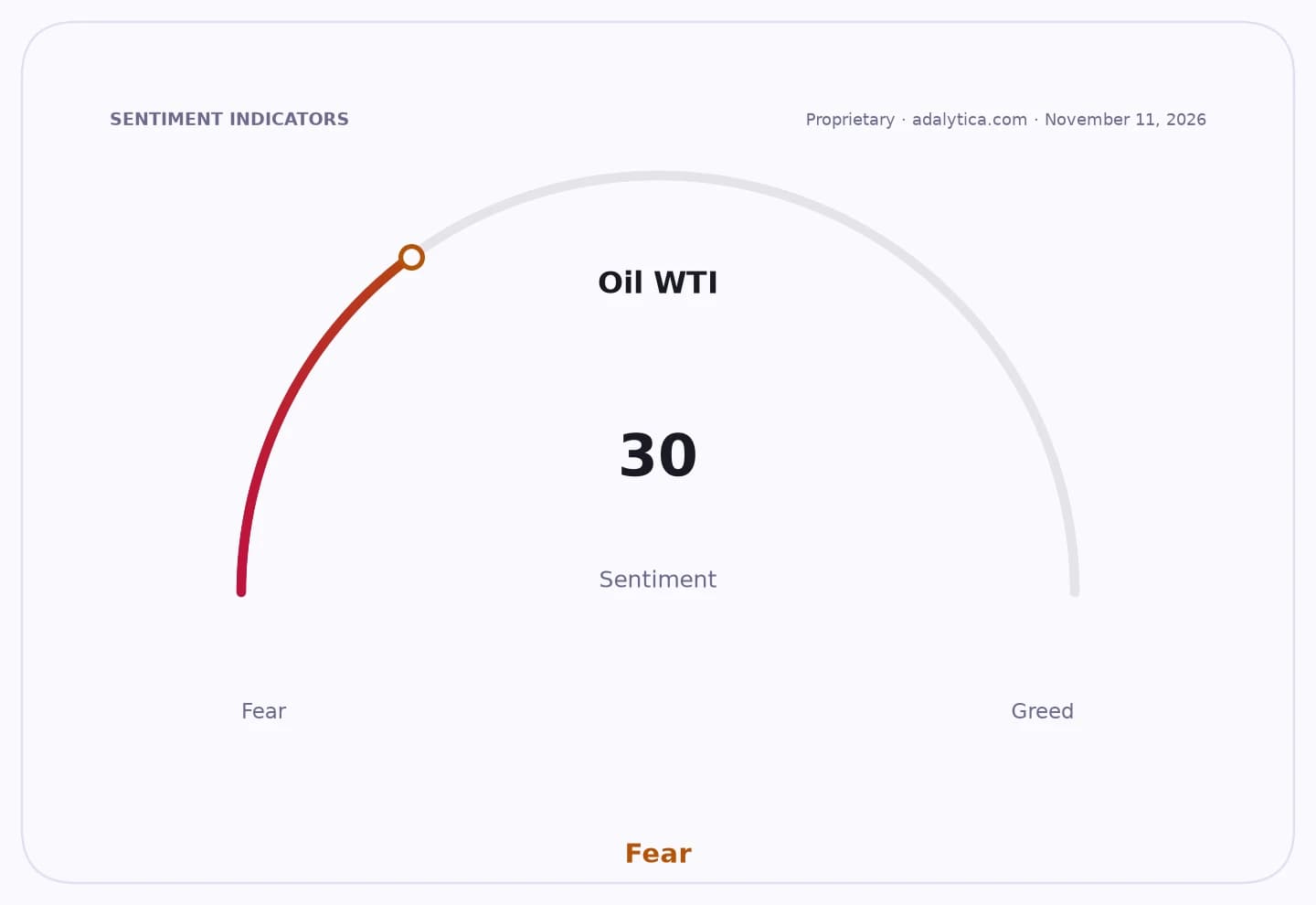
Sentiment Indicators

The planned talks next week are set to bring together US, Ukrainian and Russian representatives in Abu Dhabi on Nov. 10 and 11, with parallel meetings in Brussels involving European allies, NATO and the World Bank. Ukraine says the agenda includes security guarantees, an energy-sector truce and a Black Sea ceasefire. Germany’s Friedrich Merz and other European leaders have pressed Moscow to show it is serious about negotiations, while the European Commission has framed the Brussels meeting as part of support for postwar security and reconstruction.
For markets, the immediate significance is not a peace dividend but a possible shift in geopolitical risk pricing. Oil traders are watching for any sign of reduced supply disruption, yet Russia’s latest campaign against Ukraine’s power grid has kept that premium alive. USO, tracking US oil, has been volatile and technically weak, closing at 146.07 on Nov. 12 after an overbought run earlier in the year, with its 14-day RSI at 27.1 and the price still above both the 50-day and 200-day moving averages. That points to a market that remains sensitive to headlines but is not yet pricing a durable de-escalation.
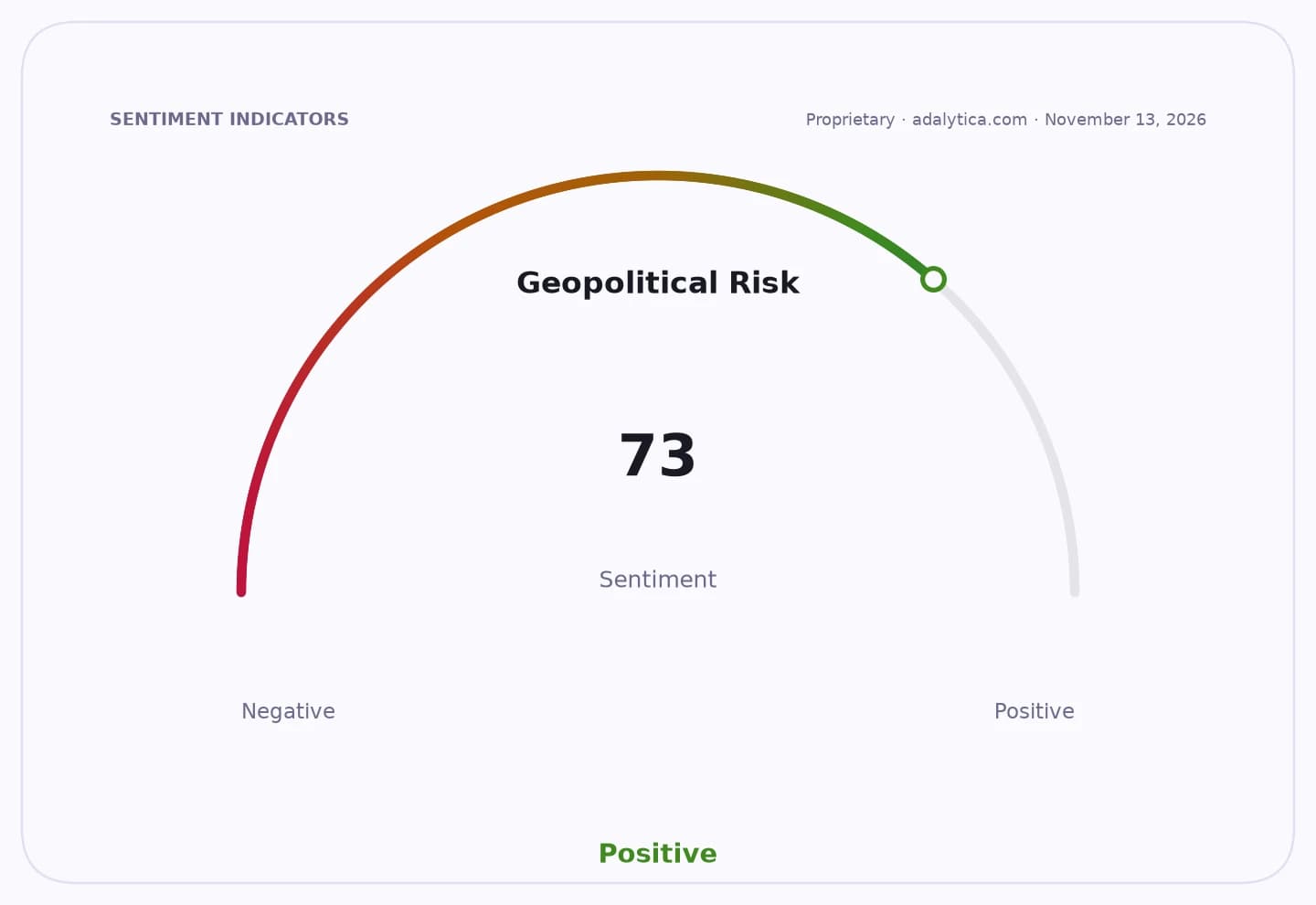
Geopolitical Risk
Gold is also reflecting the tension between negotiation hopes and war risk. GLD slipped to 354.89 on Nov. 12, but the fund remains far above its long-term trend line, with the 50-day average at 382.0 and the 200-day at 409.12. The move suggests investors are still using bullion as a hedge against policy uncertainty, even as the latest peace overtures have eased some short-term demand. Adalytica’s Global Stability Sentiment gauge showed greed at 73, while awareness remained in extreme fear territory, a combination that usually points to complacency about tail risks rather than a clean resolution.
The hardest part of any deal remains the gap between diplomacy and the battlefield. Russia has intensified strikes on Ukraine’s energy network, leaving more than 180,000 customers without power in Zhytomyr and damaging facilities in Odesa and elsewhere. Ukraine, meanwhile, has hit Russian oil infrastructure, including a refinery in Yaroslavl, deep in the Russian interior. That escalation gives both sides leverage, but it also makes any ceasefire harder to lock in.
For investors, the key question is whether Abu Dhabi produces a credible path to de-escalation or simply another round of optics. A genuine breakthrough would ease pressure on energy prices, improve sentiment toward European assets and support reconstruction-related trades. A failure, especially if accompanied by a harsher winter campaign, would keep oil, defense and safe-haven assets bid and prolong the drag on regional growth.
| Entity | Gains | Losses |
|---|---|---|
| US diplomats | ▲Negotiating leverage | ▼Credibility if talks fail |
| Ukraine and Europe | ▲Security guarantees | ▼Time if war escalates |
| Oil bears | ▲Lower geopolitical premium | ▼Supply-risk rally |
| Gold bulls | ▲Safe-haven demand | ▼Peace-driven de-risking |