Donald Trump’s decision to suspend enforcement of the Lindsey Graham sanctions law removes, for now, a fresh layer of pressure on Russia at a moment when oil, diplomacy and geopolitical risk are all priced for further volatility.
Trump suspends Lindsey Graham sanctions enforcement
That matters because the law was designed to make sanctions on Moscow harder to unwind and easier to refresh, while also widening Washington’s leverage over Russia’s trading partners. By freezing implementation, the White House has bought time for talks and avoided an immediate escalation that could have tightened energy flows, complicated global trade and forced investors to reprice another round of supply risk.
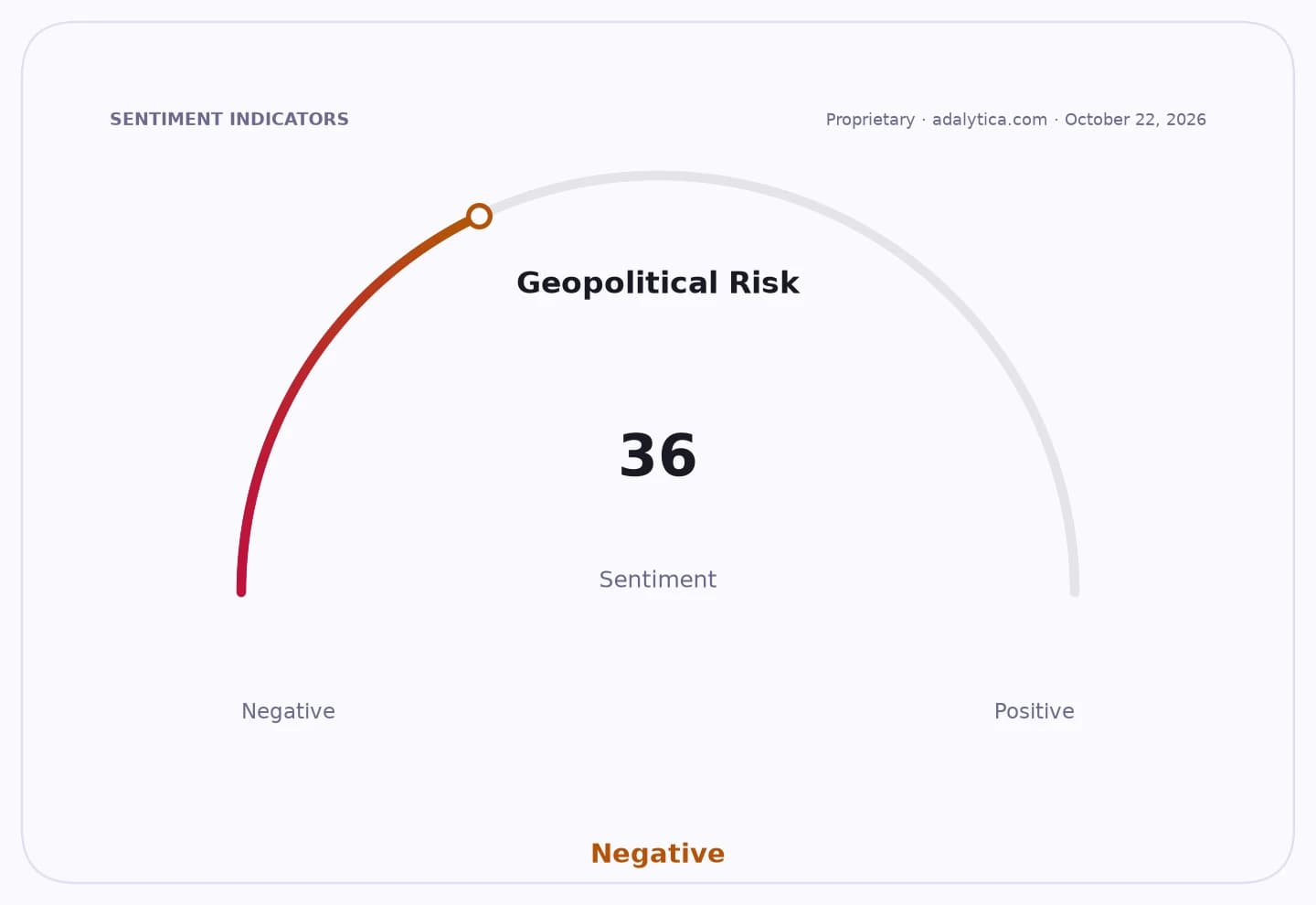
Sentiment IndicatorsⓘProprietary · adalytica.com · October 25, 2026
This is a snapshot — live sentiment, awareness and momentum for 130+ markets update continuously in the dashboard.Open AlphaPulse
For markets, the clearest read-through is to crude and other Russia-sensitive assets. USO has already been in a powerful uptrend, closing at 169.53 in the latest data, far above its 50-day moving average of 146.47 and 200-day average of 121.61. The ETF’s RSI of 90.6 points to an overbought market, but the bigger signal is that energy investors are still treating geopolitics as a live price driver. A sanctions pause reduces the odds of an immediate supply shock, yet it also keeps the premium in place because the policy path remains uncertain.
Gold is sending the opposite message. GLD slipped to 366.61, below both its 50-day and 200-day moving averages, as the metal’s fear gauge in Adalytica’s data sat at 22, or “Fear,” with awareness in “Extreme Fear.” That suggests investors are not fleeing into havens on this headline alone, but the policy reversal still underscores how quickly sentiment can turn if Washington shifts back toward pressure. Zelensky has warned that delaying sanctions only helps Vladimir Putin, while Europe remains committed to keeping restrictions in place until the war ends.
The economic significance goes beyond one bill. Graham’s framework was meant to institutionalize a more durable sanctions regime, including tougher rollback rules and broader tariff penalties on Russia’s trade partners. Suspending it signals that sanctions remain a bargaining chip, not a fixed rule set, and that gives the administration more flexibility in negotiations but less certainty for markets trying to handicap energy supply, shipping routes and cross-border trade.
For investors, the message is straightforward: the sanctions overhang is not gone, it is deferred. That keeps a bid under oil-linked assets, defense names and other geopolitical hedges, while leaving room for volatility if talks fail and Washington snaps back to a harder line. In the near term, the trade is to stay long the beneficiaries of uncertainty and cautious on assets that need a stable Russia policy to rally.
| Entity | Gains | Losses |
|---|---|---|
| Russia | ▲Sanctions relief | ▼Immediate pressure |
| Trump administration | ▲Negotiating flexibility | ▼Policy credibility |
| Oil bulls | ▲Geopolitical premium | ▼Supply shock fear eases |
| Ukraine/EU hawks | ▲Less sanctions pressure | ▼Hard-line leverage |