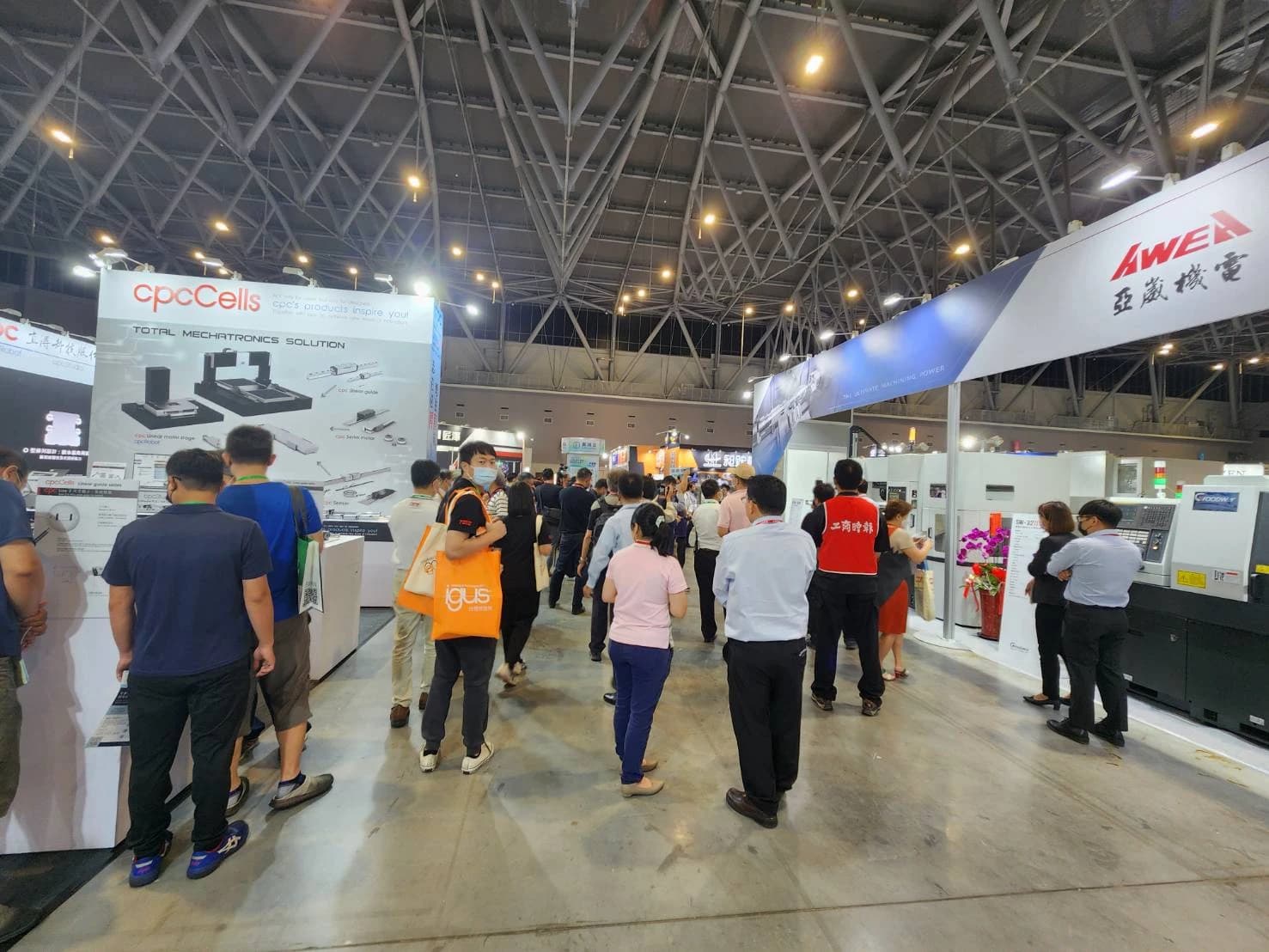
Taiwan’s biggest military drills of the year, a reported $14 billion U.S. arms package and China’s stepped-up activity around the island are all pointing to the same conclusion: the Taiwan Strait is becoming harder to ignore, not easier to control.
TSMC closes at $420.04 as Taiwan tensions rise
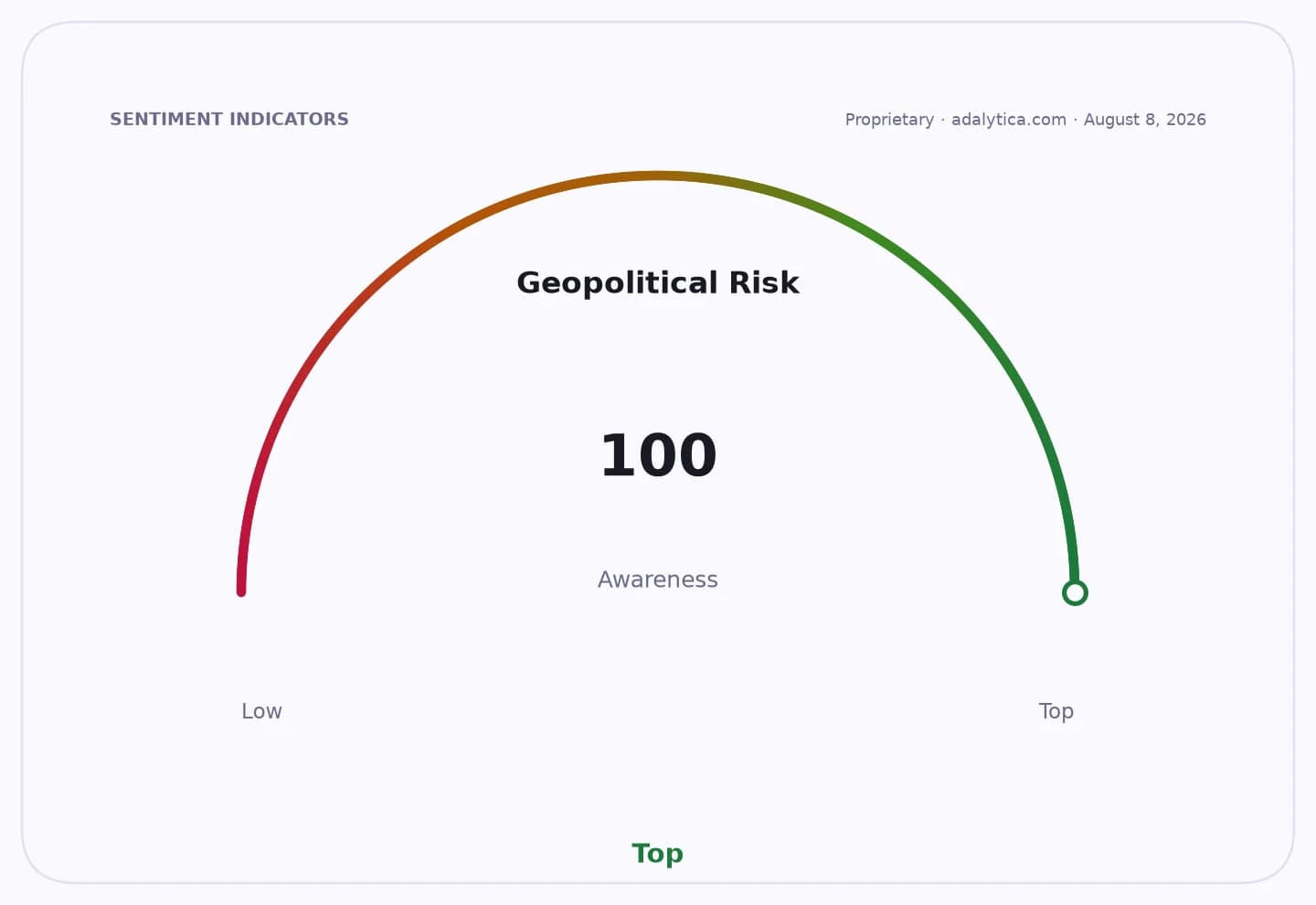
That matters because Taiwan is not just a geopolitical flashpoint. It sits at the center of the global semiconductor supply chain, and anything that raises the odds of disruption can ripple through electronics, AI hardware, autos and industrial production. For investors, the question is not whether Beijing can keep applying pressure — it clearly can — but whether it has actually achieved a strategic outcome that looks like victory.
Sentiment IndicatorsⓘProprietary · adalytica.com · August 8, 2026
This is a snapshot — live sentiment, awareness and momentum for 130+ markets update continuously in the dashboard.Open AlphaPulse
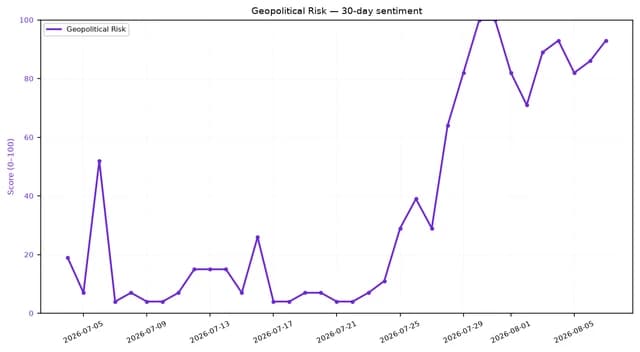
The answer, for now, looks far less certain than the rhetoric suggests. Taiwan’s drill posture shows a government and military preparing for the worst, while the U.S. weapons package underlines that outside support for the island is still very much alive. At the same time, China’s repeated maneuvers are trying to normalize coercion and wear down confidence without crossing the line into open conflict. That creates a dangerous middle ground: no peace dividend, but no clean resolution either.
The market has been willing to live with that tension so far. Taiwan Semiconductor Manufacturing Co., the company most investors instantly associate with Taiwan risk, has climbed sharply this year despite a bout of volatility. Its shares closed at $420.04 on Aug. 7, more than 16% above the 50-day moving average and well above the 200-day average of $358.97. The stock’s relative strength index was 57.2, a sign the recent rebound has eased from overheated levels without breaking the broader uptrend.
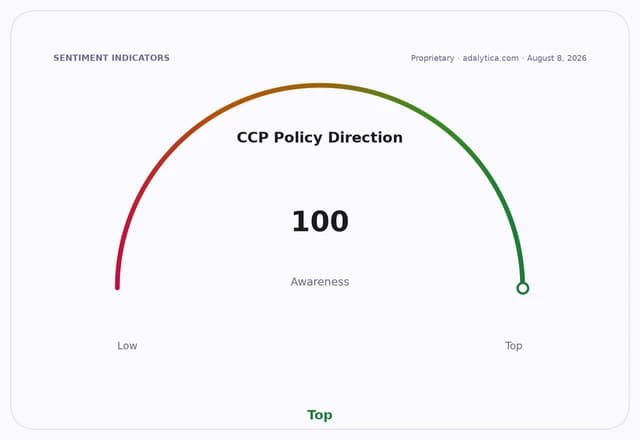
That matters because it tells you what investors are really pricing in: not a collapse in Taiwan’s strategic importance, but continued demand for the chips that power AI, cloud computing and advanced electronics. TSMC remains the beating heart of that ecosystem, and its long-term appeal is rooted in scale, customer relationships and manufacturing expertise that would be extraordinarily difficult to replicate elsewhere. In other words, geopolitical risk may create volatility, but it also reinforces how valuable that moat is.
Still, investors should not confuse resilience with invulnerability. A prolonged blockade risk, tighter sanctions, or a sharper military miscalculation could hit supply chains, insurance costs and capital spending plans across Asia. China, for its part, would also absorb economic damage in any serious escalation, which is why its current strategy appears designed to pressure Taiwan while preserving flexibility. That is not victory in the traditional sense; it is leverage.
For long-term investors, the better takeaway is to separate headlines from fundamentals. Taiwan remains a critical node in global technology, and TSMC remains one of the most important companies in the world. The situation is too unstable to call “resolved,” but it is also not a reason to abandon a business tied to secular demand that can compound for years. Worth watching closely — and, for patient investors, still one to keep on the long-term list.
| Entity | Gains | Losses |
|---|---|---|
| TSMC and chip buyers | ▲Continued AI chip demand | ▼Geopolitical volatility |
| Taiwan government | ▲More U.S. backing | ▼Higher defense burden |
| China’s leadership | ▲Pressure without open war | ▼Credibility if deterrence fails |
| Global investors | ▲Clearer awareness of risk | ▼Lower tolerance for supply shocks |