China’s protest to Italy and the European Union over a visit to Rome by Taiwan Vice President Hsiao Bi-khim is another reminder that Europe is becoming a more active front in the Taiwan standoff — and that investors are still underpricing how quickly diplomatic friction can spill into supply chains, tech stocks and cross-border capital flows.
TSMC, ASML and Alibaba After China Protest to Italy

Beijing said it lodged “serious protests” after Hsiao’s trip, underscoring how aggressively it responds when Taiwan expands its political exposure in Europe. That matters because the fight over Taiwan is no longer just a regional sovereignty dispute; it is the central geopolitical fault line for the semiconductor industry, the AI buildout and the broader contest between Western governments and China over strategic technology.
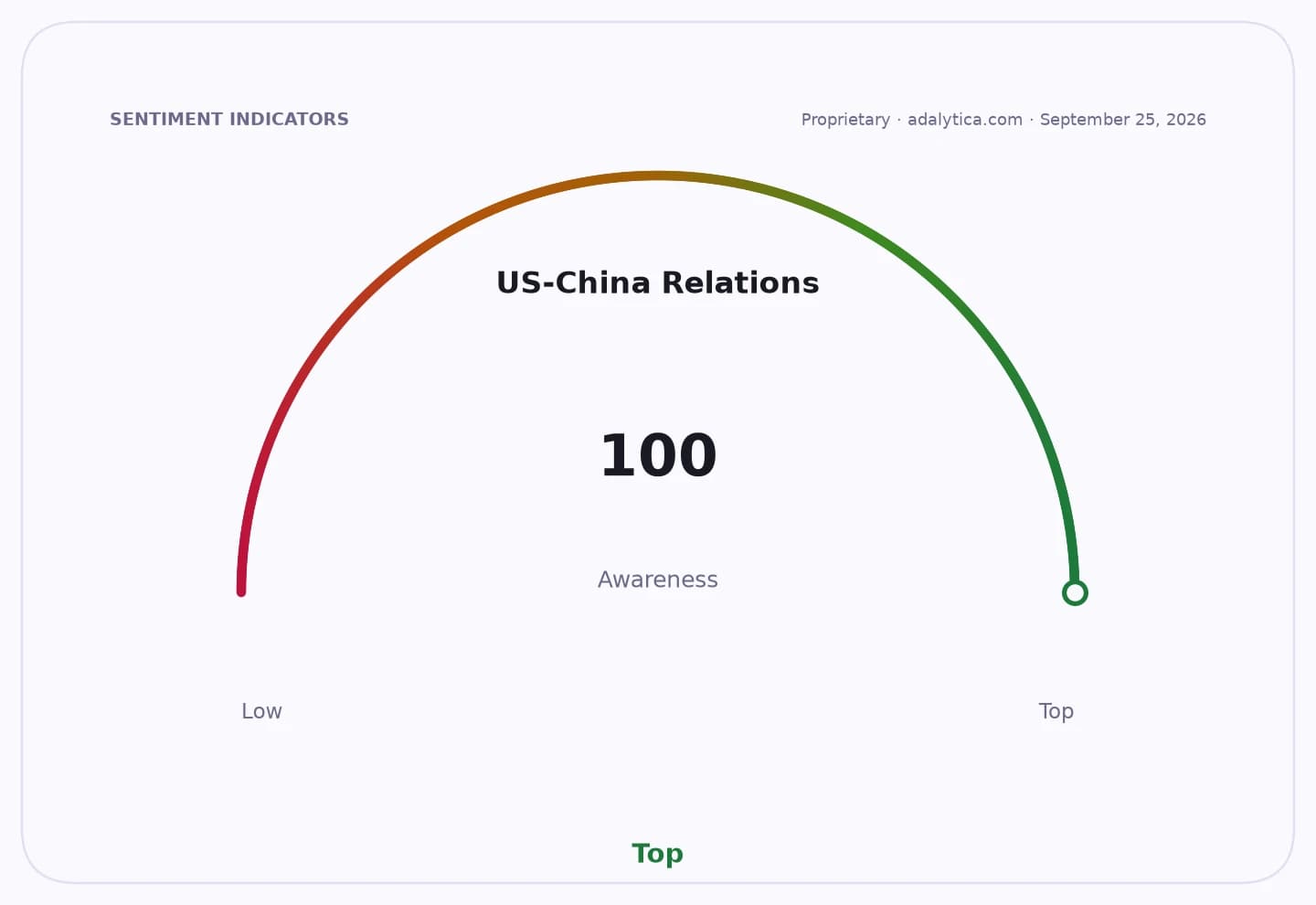
Sentiment IndicatorsⓘProprietary · adalytica.com · September 13, 2026
This is a snapshot — live sentiment, awareness and momentum for 130+ markets update continuously in the dashboard.Open AlphaPulse

The immediate market implication is not a direct revenue hit, but a higher risk premium for assets tied to the Taiwan ecosystem. Taiwan Semiconductor Manufacturing Co. remains the clearest single-company beneficiary of the world’s chip dependence on the island, and its shares have held well above long-term trend levels even after recent volatility, with the stock closing at $433.24 on Sept. 11, above its 200-day moving average of $374.99. That tells you investors still want exposure to the AI supply chain despite the geopolitical overhang. In my view, that exposure is warranted — but it should be paired with an understanding that every diplomatic flare-up reinforces the strategic value of the very assets the market fears.
The second-order winners are the picks-and-shovels names that make advanced chip production possible. ASML, whose extreme ultraviolet lithography machines remain indispensable for leading-edge manufacturing, closed at 1,698.3 euros on Sept. 11, still above its 200-day moving average of 1,491.52. Any escalation in Taiwan tensions tends to strengthen the long-term case for redundant capacity, domestic chip subsidies and capital spending by governments and manufacturers trying to de-risk supply chains. That is bullish for the equipment layer even when it creates headlines that rattle the broader market.

Alibaba is a different story. China’s internet and cloud champions face a more complicated investment backdrop when diplomatic disputes harden into broader trade or regulatory pressure. Alibaba’s U.S.-listed shares closed at $109.30 on Sept. 11, far below its 200-day moving average of $133.64, reflecting a market that still discounts China-linked equities for policy and geopolitical risk. If tensions with Europe deepen, the discount on Chinese assets can widen again.
The broader message is that the market underestimates how much Taiwan diplomacy now intersects with the AI trade. A visit to Italy may look symbolic, but symbolism is exactly how great-power competition starts to price itself into equities. The Adalytica US-China Relations Sentiment gauge sits at 93, or “Extreme Greed,” even as the Global Stability Sentiment gauge is at 30, or “Fear,” a reminder that complacency around geopolitical risk can coexist with aggressive positioning in the same tape. That is usually when investors should pay attention.
For investors, the playbook is clear: own the structural beneficiaries of chip scarcity and AI capex, keep exposure to Taiwan-linked leaders such as TSMC and ASML, and be selective on China-facing names that remain vulnerable to another round of diplomatic retaliation. The dispute itself may fade quickly, but the investable theme — a fragmented tech world where geopolitics drives capital spending — is only getting stronger.
| Entity | Gains | Losses |
|---|---|---|
| TSMC | ▲AI chip demand premium | ▼Geopolitical risk discount |
| ASML | ▲Advanced fab capex | ▼Supply-chain disruption risk |
| EU/Italy | ▲Diplomatic leverage | ▼Trade pressure from Beijing |
| Alibaba | ▲None immediate | ▼China risk premium widens |