TSMC’s latest earnings suggest the AI chip boom is still young, and that matters because the world’s most important foundry sits at the center of nearly every advanced semiconductor supply chain.
TSMC Earnings Rise on AI Chip Demand

For investors, the key takeaway is not just that Taiwan Semiconductor Manufacturing beat expectations in the third quarter. It is that the company is seeing growth accelerate again, margins expand, and pricing power improve just as the market has started to worry that the artificial intelligence build-out may be getting too expensive.
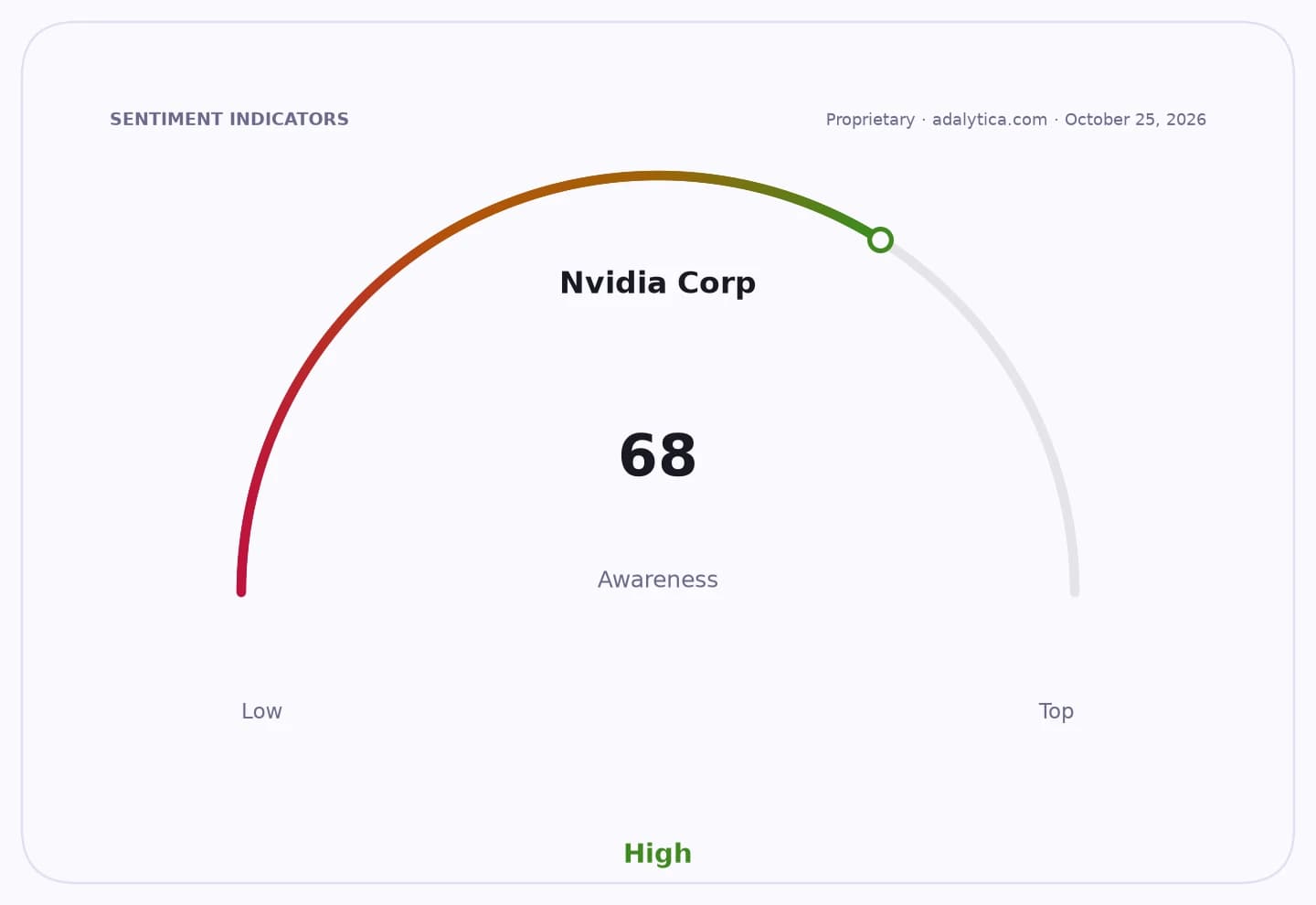
Sentiment IndicatorsⓘProprietary · adalytica.com · October 26, 2026
This is a snapshot — live sentiment, awareness and momentum for 130+ markets update continuously in the dashboard.Open AlphaPulse
TSMC said third-quarter revenue rose 41% from a year earlier to $46.7 billion, while net profit margin widened to 51.1% from 45.7%. Earnings per share climbed 57% to $4.60. More important for the long run, management guided fourth-quarter revenue to about $53.3 billion at the midpoint, which would imply 58% growth from a year earlier, with operating margin expected to improve to 57.5%.
That is exactly the kind of operating momentum that can compound into major stock gains over time. TSMC is not a story about one good quarter. It is a story about demand for AI infrastructure, advanced chips, and the company’s ability to charge more for the most sophisticated manufacturing it offers.
The mix is getting better too. TSMC said 69% of revenue last quarter came from 2-nanometer, 3-nanometer and 5-nanometer nodes, up from 60% a year earlier. The company has begun recognizing revenue from its 2-nanometer process and plans to ramp output aggressively. That matters because the newest nodes carry higher margins, and reports indicate the 2-nanometer process can command a 50% premium over 3-nanometer wafers.
Pricing is another quiet but powerful driver. TSMC is reportedly preparing 5% to 10% price increases on advanced nodes next year, along with 10% to 15% increases in advanced packaging. In a capital-intensive business, that kind of pricing power can translate directly into earnings growth, especially when demand is being fueled by AI servers, networking gear and inference chips.
The broader narrative is simple: while AI stocks have pulled back on rate worries and financing concerns, TSMC’s numbers show the infrastructure build-out is still working its way through the economy. If AI spending continues to deepen across data centers, server CPUs and networking, TSMC remains one of the cleanest ways to own that trend.
The stock has already had a volatile year, and the technical picture shows that investors have been digesting recent gains rather than racing ahead. But the long-term setup is still compelling if earnings keep compounding at a high rate. Analysts are modeling strong growth through the end of the decade, and if TSMC maintains its earnings trajectory, a $1,200 share price by 2030 is not far-fetched.
The risk, as always, is execution: capital spending is huge, the semiconductor cycle can cool, and geopolitical tensions around Taiwan never disappear from the background. Still, for patient investors willing to think in years rather than months, TSMC looks like a high-quality AI leader worth keeping on the watchlist or accumulating on weakness.
| Entity | Gains | Losses |
|---|---|---|
| TSMC | ▲Higher margins, stronger earnings | ▼Heavy capital spending |
| AI chip customers | ▲More capacity, leading-edge supply | ▼Higher wafer and packaging costs |
| Long-term shareholders | ▲Earnings compounding potential | ▼Near-term volatility |
| Short-term traders | ▲Trading opportunities | ▼Fading momentum risk |