Taiwan Semiconductor Manufacturing Co is lifting equipment purchases far above its original plan as the AI boom keeps pulling forward demand for advanced chips and the factories needed to make them.
TSMC Raises Equipment Spending for AI Capacity
The world’s largest contract chipmaker has raised its quarterly equipment procurement estimate to about 1.9 times the level it forecast last December, a stark sign that hyperscalers, AI developers and data-center operators are still adding capacity faster than the supply chain can comfortably absorb. For an industry that lives and dies by capital intensity, the move points to a broader wave of spending across wafer fabrication tools, construction and supporting infrastructure.
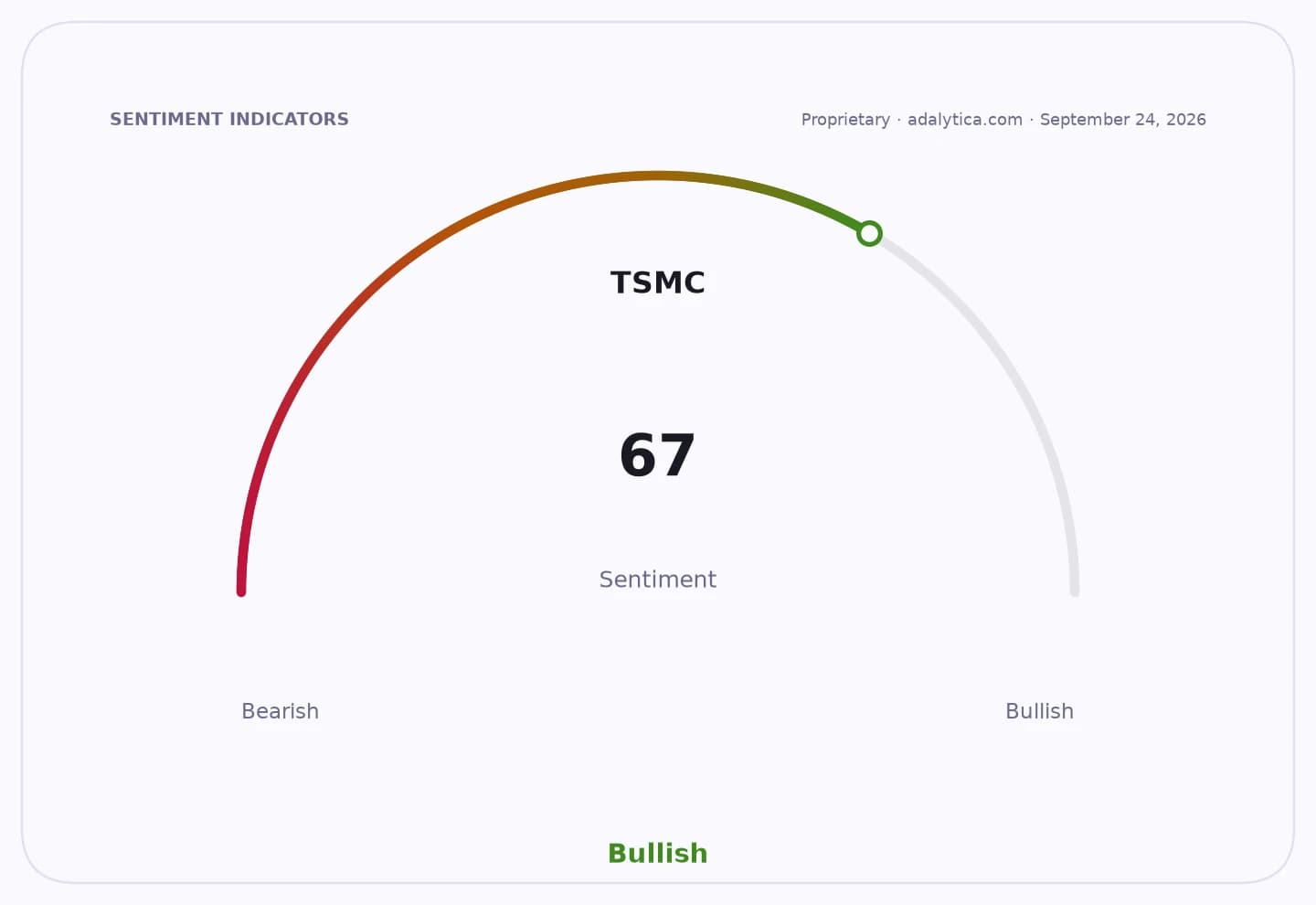
Sentiment IndicatorsⓘProprietary · adalytica.com · September 3, 2026
This is a snapshot — live sentiment, awareness and momentum for 130+ markets update continuously in the dashboard.Open AlphaPulse
TSMC is not just ordering more machines; it is also building out roughly 20 factories worldwide. That expansion underscores how the AI cycle has become a physical-capacity story, not simply a software or server story. Advanced packaging, leading-edge wafers and the clean-room space to host them are all increasingly scarce, and that scarcity supports pricing power across parts of the semiconductor ecosystem.
The immediate beneficiaries are equipment makers such as ASML Holding, Applied Materials and Lam Research, which sit at the front end of every capacity expansion cycle. TSMC’s larger procurement plans translate into stronger order visibility for those suppliers and reinforce the case that AI-related capital expenditure is now multi-year rather than a single product-cycle burst.
Investors have already been rewarded for that narrative, but the latest move also helps explain why valuations remain elevated across the semiconductor stack. TSMC shares have held above both the 50-day and 200-day moving averages even after recent volatility, while ASML and Applied Materials have also traded with heavy volume and stretched technical readings at points this year, reflecting expectations that demand will remain robust. Still, the current setup also raises execution risk: TSMC faces a shortage of experienced construction workers, which could slow the pace at which new capacity turns into revenue.
That tension matters. The bull case is straightforward: AI compute demand keeps rising, TSMC adds capacity, and equipment suppliers capture another round of orders. The bear case is that construction bottlenecks, longer lead times or a pause in AI spending could leave the industry with more capital committed than it can efficiently deploy. For now, the balance of evidence still favors the first scenario, and TSMC’s procurement guidance suggests the semiconductor supply chain is preparing for demand that remains well ahead of supply.
| Entity | Gains | Losses |
|---|---|---|
| TSMC | ▲Higher AI-driven orders | ▼Construction bottlenecks |
| ASML, AMAT, LRCX | ▲Stronger equipment demand | ▼Cyclical demand slowdown |
| AI developers, cloud providers | ▲More chip supply capacity | ▼Higher input costs |
| Chip buyers waiting on supply | ▲Eventually better availability | ▼Near-term delays |