TSMC posted a record third-quarter profit that jumped 69% and topped expectations, underscoring how aggressively AI hardware demand is flowing through the semiconductor supply chain and cementing the Taiwanese foundry’s role as the industry’s key bottleneck and beneficiary.
TSMC Posts Record Q3 Profit on AI Chip Demand
Taiwan Semiconductor Manufacturing Co said net profit for July to September rose to T$763.1 billion, beating the T$746.3 billion LSEG SmartEstimate and marking the company’s strongest quarterly earnings on record. The result matters well beyond TSMC’s own balance sheet: as the primary manufacturer for Nvidia, Apple and other leading chip designers, TSMC is one of the clearest gauges of whether AI infrastructure spending is still translating into real production demand rather than just capital expenditure plans.
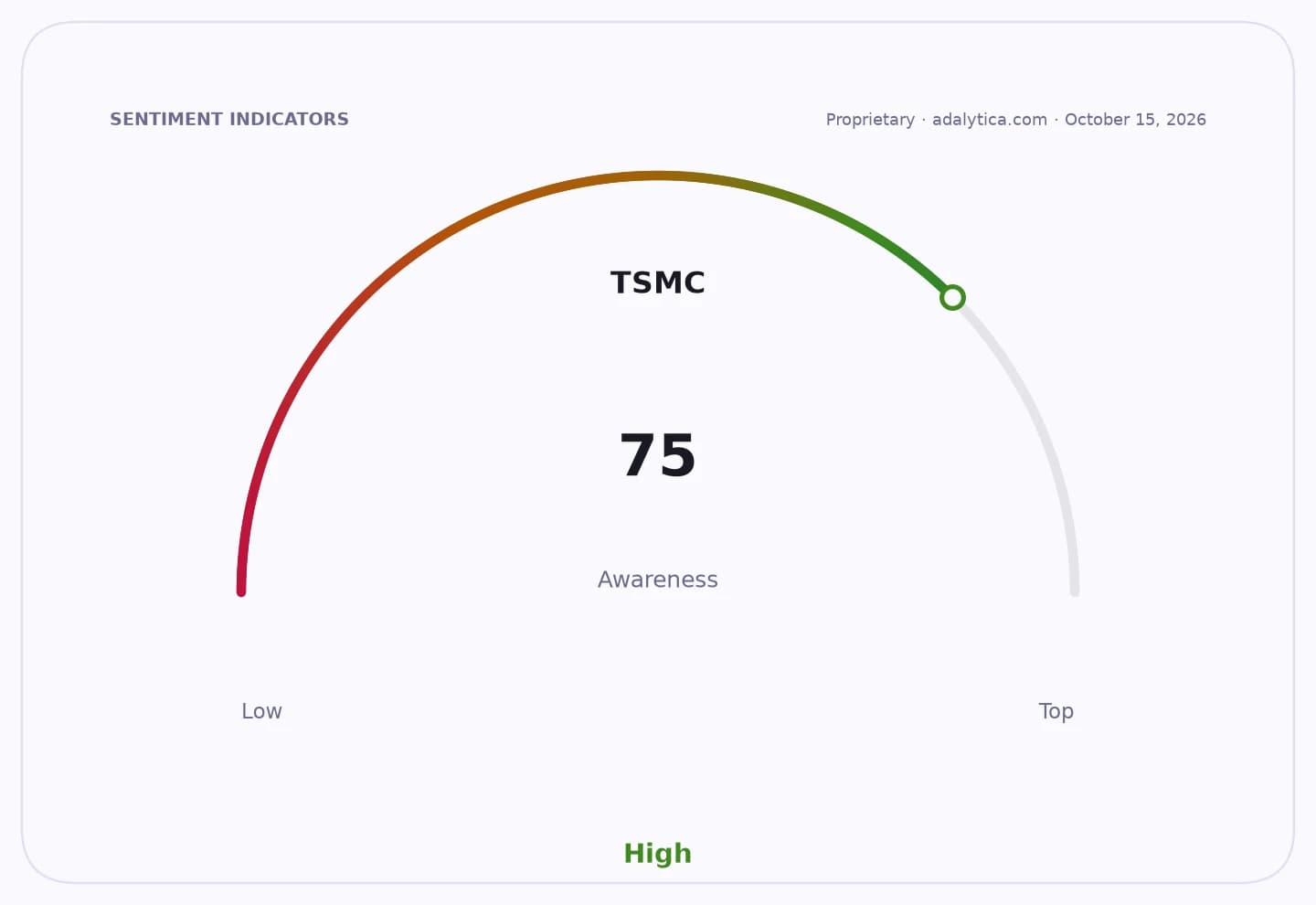
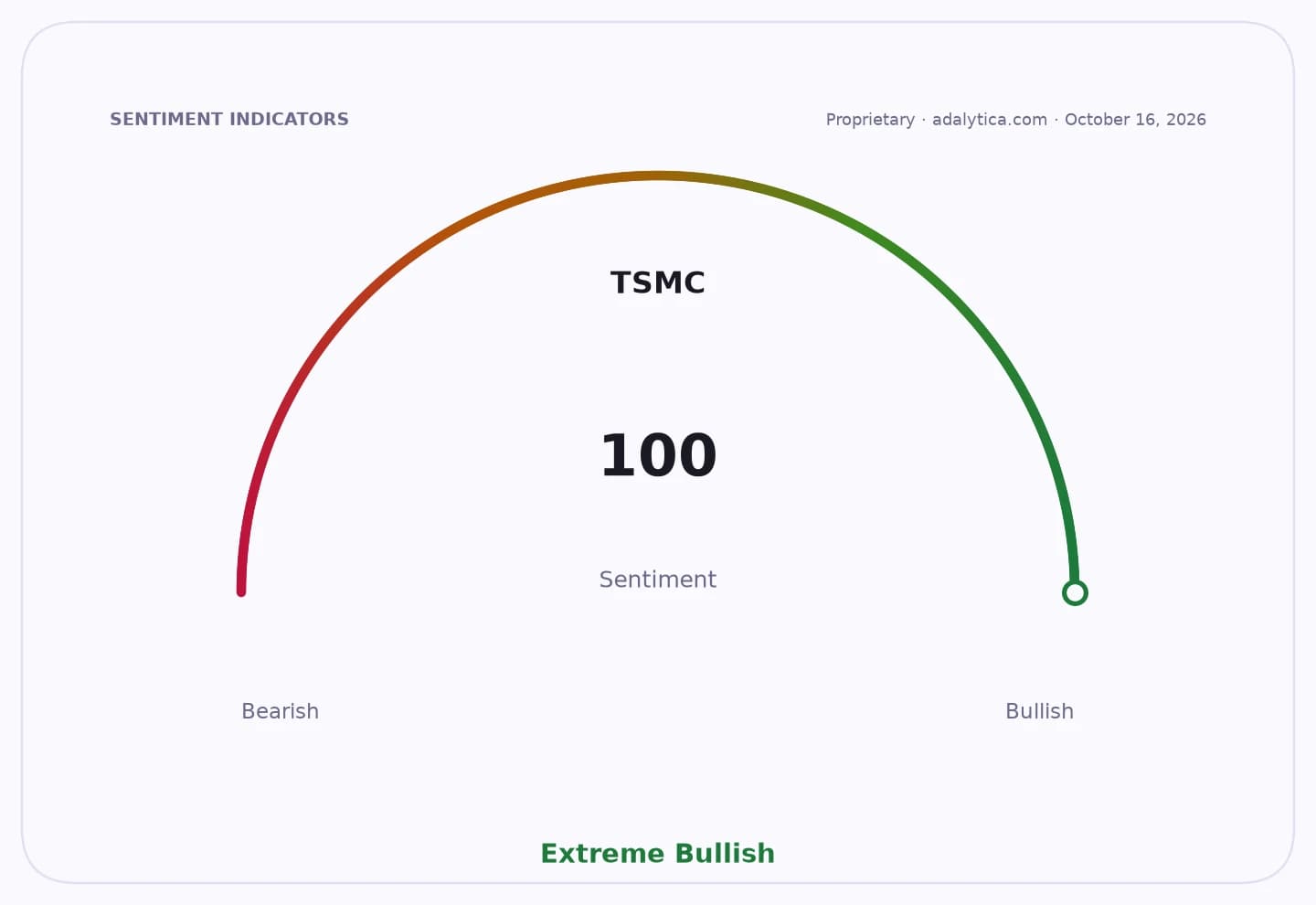
Sentiment IndicatorsⓘProprietary · adalytica.com · October 16, 2026
This is a snapshot — live sentiment, awareness and momentum for 130+ markets update continuously in the dashboard.Open AlphaPulse
The earnings beat helps confirm that AI-related orders remain the dominant growth engine in semiconductors, even as the broader chip cycle has been uneven. TSMC’s performance also supports the view that the AI buildout is still early enough to keep advanced-node capacity tight, which can preserve pricing power for leading foundries and strengthen the case for continued capital spending on high-end fabrication lines and packaging. For investors, that keeps TSMC at the center of the AI trade and reinforces the linkage between its results and the prospects for Nvidia, advanced-memory suppliers and semiconductor equipment makers.
The company’s numbers also carry macro and geopolitical weight. Taiwan remains critical to global technology supply chains, and TSMC’s record profit highlights how concentrated advanced chip manufacturing has become even as governments in the US, Japan and Europe push to diversify production. That concentration is positive for margins in the near term, but it also leaves customers and policymakers exposed to any disruption in the island’s operations or to tighter export controls in the US-China technology contest.
TSMC shares have reflected that tension as well as the earnings strength. The stock closed at $411.13 in recent trading, above its 200-day moving average but below the 50-day line, while Nvidia has also been under pressure from broader market pullbacks despite its own AI-driven demand backdrop. Semiconductor sector fund SOXX has weakened too, suggesting investors are still debating whether the AI earnings boom justifies current valuations or whether the market has already priced in too much of the upside.
The bull case is straightforward: if AI server and accelerator demand keeps expanding, TSMC can continue to monetize the most advanced process nodes and maintain premium utilization rates. The bear case is that any slowdown in hyperscaler spending, inventory digestion or US-China trade friction could cool orders quickly, especially for a company whose fortunes are tied to a narrow group of customers and a capital-intensive manufacturing model.
For now, Thursday’s record profit argues that AI demand is still doing the heavy lifting for the semiconductor industry. The next test is whether that demand remains broad enough to support another year of record spending — and whether TSMC can keep turning its manufacturing dominance into earnings momentum.
| Entity | Gains | Losses |
|---|---|---|
| TSMC | ▲Record profit growth | ▼Valuation skepticism |
| Nvidia and AI chip customers | ▲Foundry capacity support | ▼Higher supply-chain dependence |
| Semiconductor suppliers | ▲Stronger equipment demand | ▼Cyclical demand risk |
| Short sellers / cautious investors | ▲— | ▼Momentum and earnings upside |