Tunisia has launched a tender to buy 26,500 tonnes of feed corn, adding to evidence that North African importers are still stepping into the market even as corn futures have slipped under pressure from the advancing U.S. harvest.
Tunisia launches 26,500-tonne feed corn tender
The purchase is modest in size, but it matters because state buyers like Tunisia help set the tone for near-term global demand in a market that has been leaning on fresh supply. Corn futures have fallen in recent sessions, with the most actively traded U.S. contract last around $4.51 a bushel, well below its late-summer peak, as harvest progress and heavy crop flow weigh on prices.
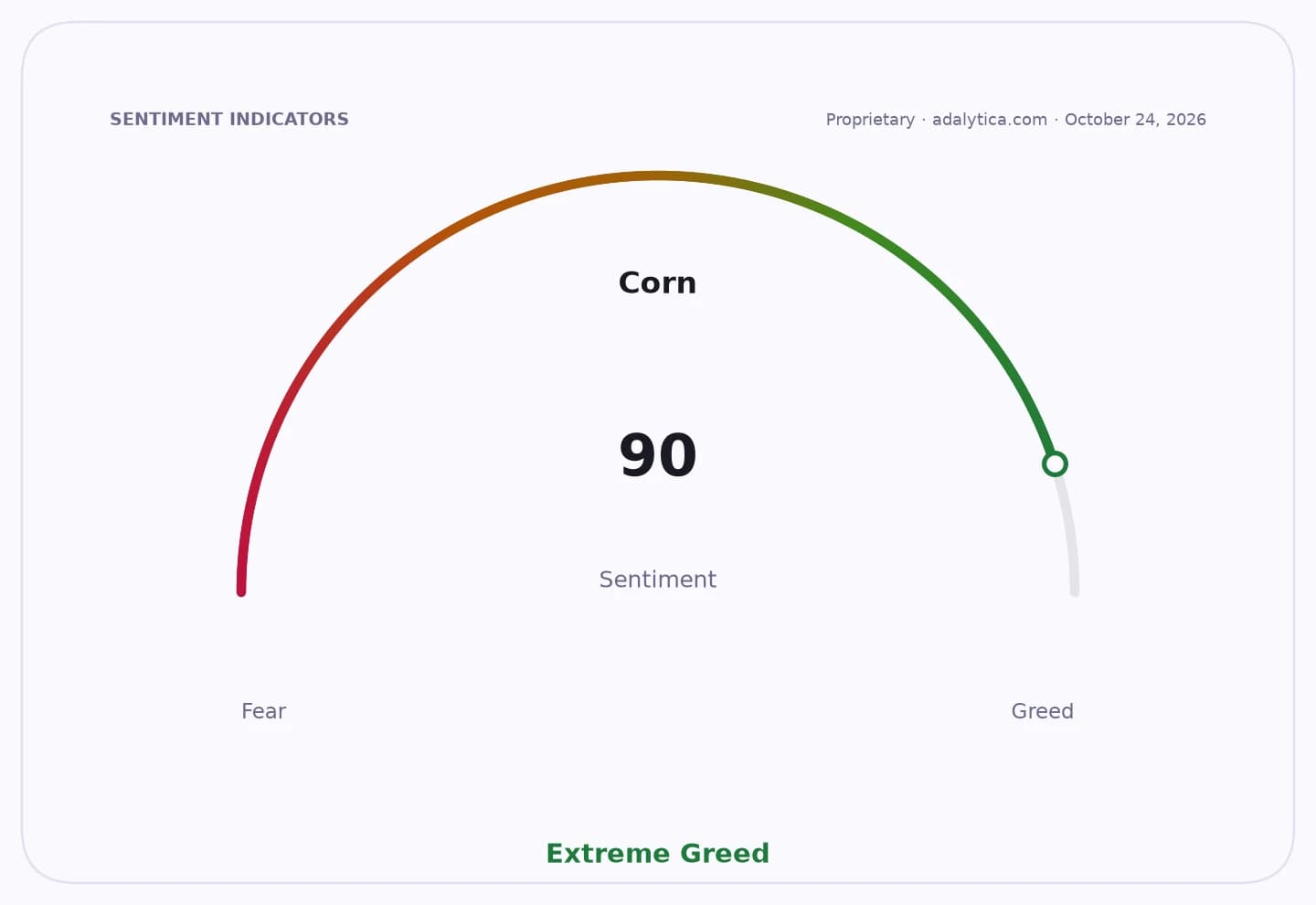
Sentiment Indicators
For exporters and grain merchants, the tender offers another outlet for U.S., Black Sea and South American supply at a time when global trade remains active but competitive. Buyers in import-dependent regions have been using lower prices to cover needs, while sellers face a market that is sensitive to every sign of demand, from government tenders to private buying.
The move also comes against a mixed backdrop for other grains. Wheat has hovered near a 3.5-month low, while corn prices have tracked lower, reflecting a broader easing in row-crop markets even as export flows from Ukraine and Moldova remain strong and some farmers delay harvests.
Investors in grain traders and commodity-linked funds will be watching whether Tunisia’s tender draws competitive offers and what origin wins the business, since that can influence export premiums, freight demand and the pace of global shipments. The next catalyst is likely to be follow-on tenders from importers and the pace of U.S. harvest data, which will keep pressure on prices if supplies continue to build.
| Entity | Gains | Losses |
|---|---|---|
| Tunisia | ▲Secures feed supply | ▼Faces import-price exposure |
| Grain exporters | ▲Gain sales outlet | ▼Compete on narrower margins |
| Corn farmers | ▲Benefit from export demand | ▼Lose pricing power from harvest pressure |
| Commodity shorts | ▲Gain from weaker prices | ▼Lose if tenders tighten demand |