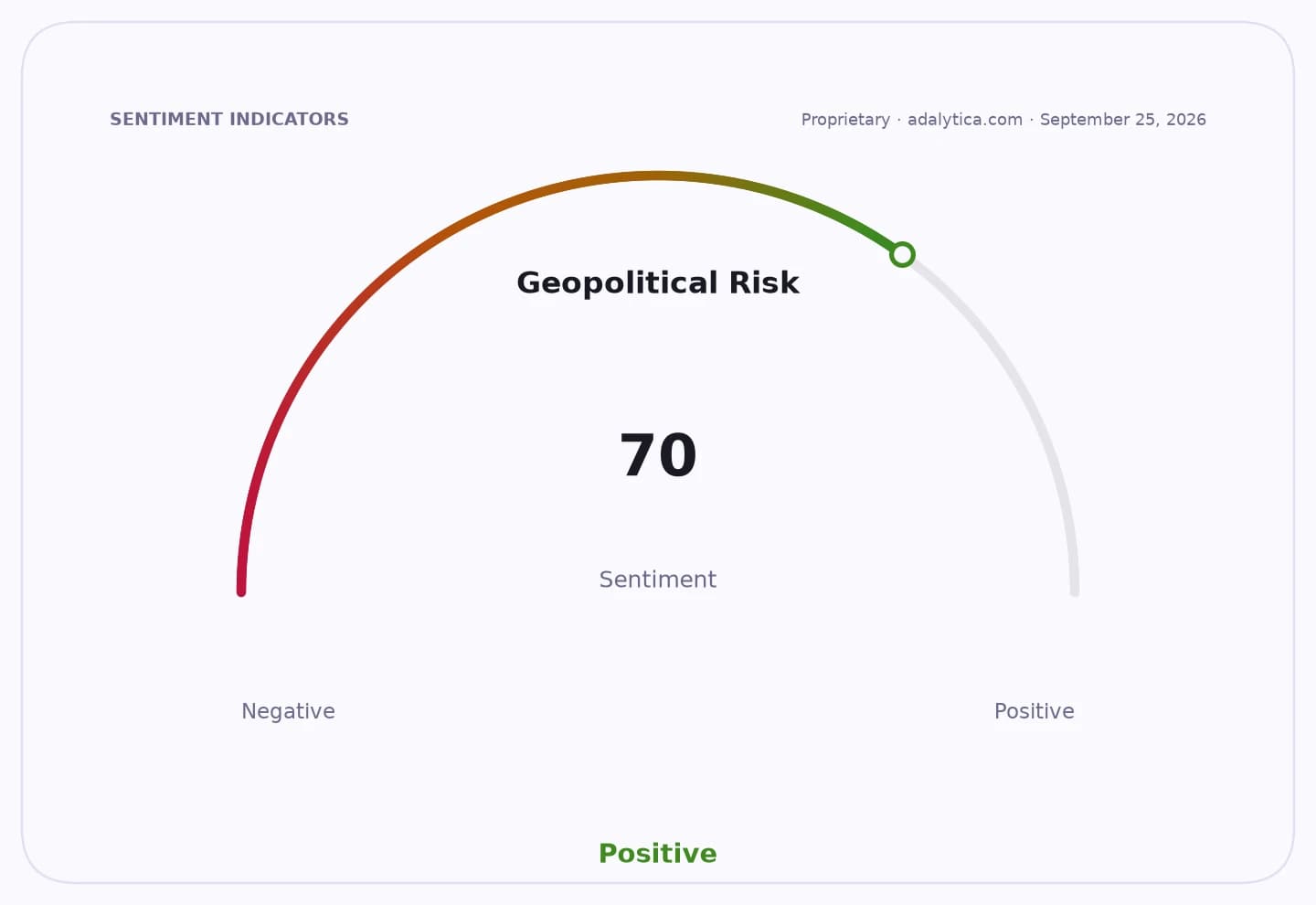
Turkey’s consumer confidence index climbed to 89.8 in June, the highest in two years, and that matters because household sentiment is one of the earliest signs that demand is stabilizing after a long stretch of inflation pressure and policy tightening.
Turkey Consumer Confidence Signals Domestic Demand Recovery
For investors, the move suggests the economy may be moving past the worst of the squeeze on discretionary spending. A firmer consumer backdrop can support retail sales, travel, autos and other domestic-demand sectors, while also improving the earnings visibility of companies exposed to Turkish households. In a market where sentiment has often been battered by lira volatility, high inflation and abrupt policy shifts, even a modest rebound in confidence can be an important leading indicator.
Sentiment IndicatorsⓘProprietary · adalytica.com · July 23, 2026
This is a snapshot — live sentiment, awareness and momentum for 130+ markets update continuously in the dashboard.Open AlphaPulse
The headline number is still not a signal of boom conditions. At 89.8, confidence remains below the neutral 100 mark, which means consumers are still cautious. But the direction is the key message: if households feel better about jobs, inflation and their own finances, they are more likely to spend rather than defer purchases. That can feed through to GDP, tax receipts and corporate revenues, especially in sectors that depend on local demand rather than exports.
The timing also matters. Turkey’s policy mix has been aimed at restoring credibility and cooling inflation, and consumer confidence often responds with a lag to those efforts. A two-year high suggests the market is beginning to see the benefits of tighter macro discipline, even if the recovery remains fragile. That creates an investable setup for selective exposure to domestic winners, particularly companies with pricing power, scale and balance-sheet resilience.
The stock market is still signaling caution, with Turkish equities not yet in a clear risk-on breakout, but that is exactly where opportunity can emerge. If confidence keeps improving into the second half of the year, the first beneficiaries are likely to be retailers, banks, consumer lenders and cyclical names tied to spending and credit growth. The market tends to miss these turns until the earnings revisions start.
My thesis is straightforward: Turkey’s consumer confidence rebound is not just a feel-good statistic, it is the early-stage signal of a potential domestic-demand recovery. Investors who wait for perfect macro conditions usually miss the inflection point. The better trade is to position now for a gradual normalization in Turkish consumption, while recognizing that inflation and currency risk still make selectivity essential.
| Entity | Gains | Losses |
|---|---|---|
| Turkish retailers | ▲Higher foot traffic and sales | ▼Inventory risk if demand fades |
| Turkish banks | ▲Stronger loan demand and spending flow | ▼Credit risk if households stay stretched |
| Domestic consumers | ▲Improved spending confidence | ▼Still squeezed by inflation |
| Cautious short sellers | ▲Near-term downside if sentiment keeps improving | ▼Lose on a durable confidence rebound |