Turkey’s place in global emerging-market portfolios is under fresh pressure after S&P warned that transparency concerns could cost the country its status, a move that would matter far beyond labels and could force benchmark-tracking funds to reassess exposure to Turkish assets.
Turkey EM status at risk after S&P transparency warning
Losing or even being at risk of losing emerging-market classification would raise the cost of capital, reduce passive inflows and narrow the investor base for Turkish stocks, bonds and the lira. For a country already dependent on external financing, any sign that large index providers are questioning market accessibility or data credibility can quickly feed into higher risk premiums.
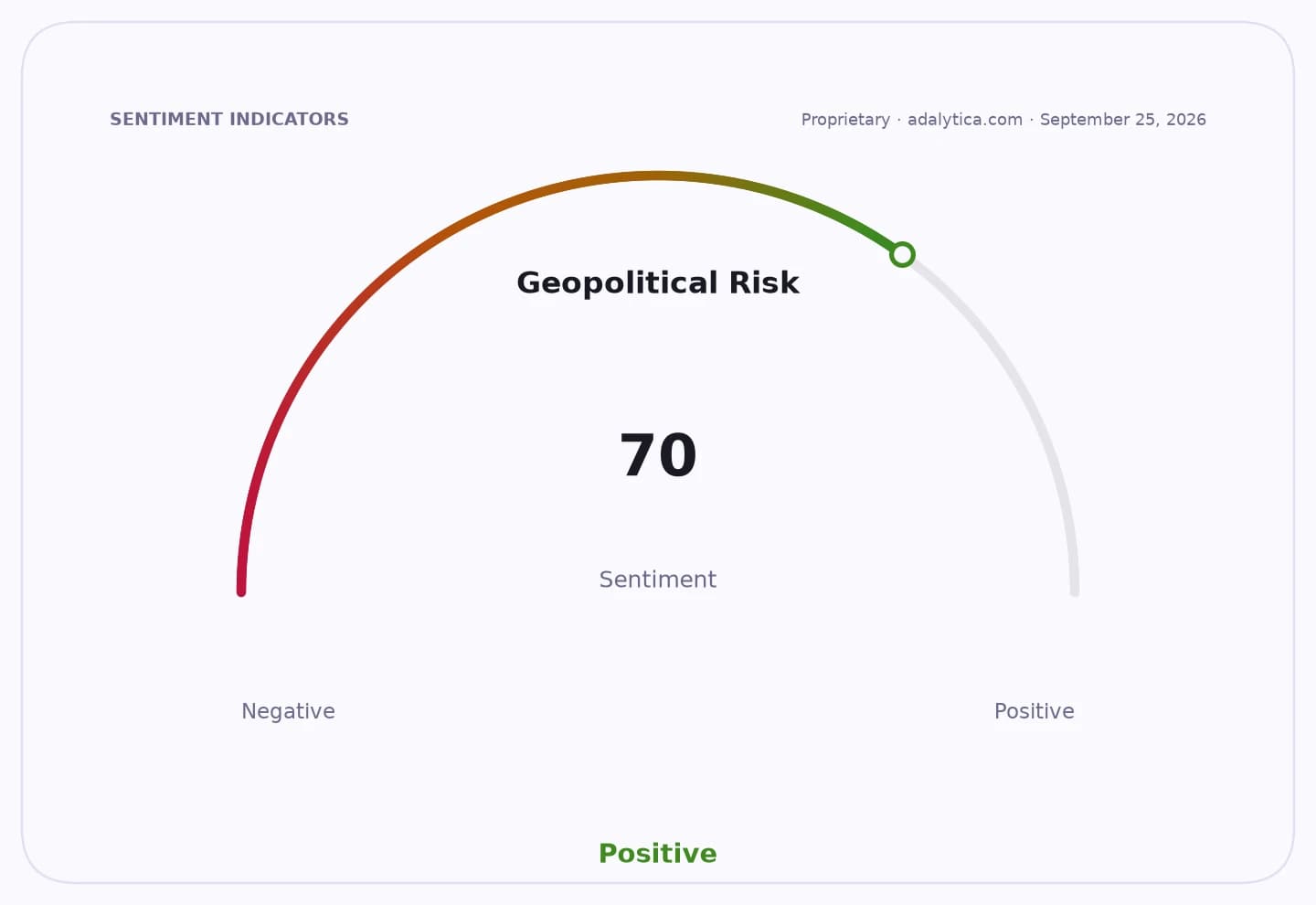
Sentiment IndicatorsⓘProprietary · adalytica.com · August 8, 2026
This is a snapshot — live sentiment, awareness and momentum for 130+ markets update continuously in the dashboard.Open AlphaPulse
The warning lands at a time when investors are already sensitive to Turkey’s policy mix and the durability of reforms aimed at restoring credibility after years of unorthodox economic management. S&P’s focus on transparency underscores a broader concern: even if macro policy stabilizes, market participants still need confidence that official data, institutions and rules are reliable enough to justify long-term capital.
That helps explain why Turkish assets remain highly reactive to changes in global risk appetite. The TUR exchange-traded fund has climbed to about 38.75 from a spring low near 36.26, but it is still well below its February peak above 41, while the more volatile TURB fund has dropped sharply from its September 2025 surge and now trades around $1.43, reflecting how quickly foreign interest can vanish when confidence weakens.
The broader backdrop is not especially forgiving for emerging markets either. Adalytica’s trade signals show extreme greed in the S&P 500 and the U.S. dollar, suggesting investors are still comfortable in U.S. assets rather than reaching for risk in markets such as Turkey, while the Chinese yuan signal is neutral despite heightened attention. That leaves Turkey competing for capital in an environment where investors can afford to be selective.
For portfolio managers, the immediate question is whether S&P’s comments become a precursor to a formal review or a longer-term warning that keeps Turkey at a discount. Any further deterioration in transparency perceptions, or a move by other index providers to echo the concern, would likely hit inflows first and asset prices second.
| Entity | Gains | Losses |
|---|---|---|
| U.S. dollar | ▲Safe-haven demand | ▼EM carry trades |
| Turkey | ▲None | ▼Index inclusion, foreign inflows |
| Passive EM funds | ▲Lower forced exposure | ▼Turkish asset holders |
| Turkish equities and bonds | ▲Short-term trading volatility | ▼Valuation support, liquidity |