Turkey’s inflation gauge is expected to tick higher in July even as the yearly pace keeps cooling, a combination that keeps pressure on policymakers to preserve hard-won stability while leaving room for local assets to extend their rebound.
Turkey inflation seen at 33.90% in July
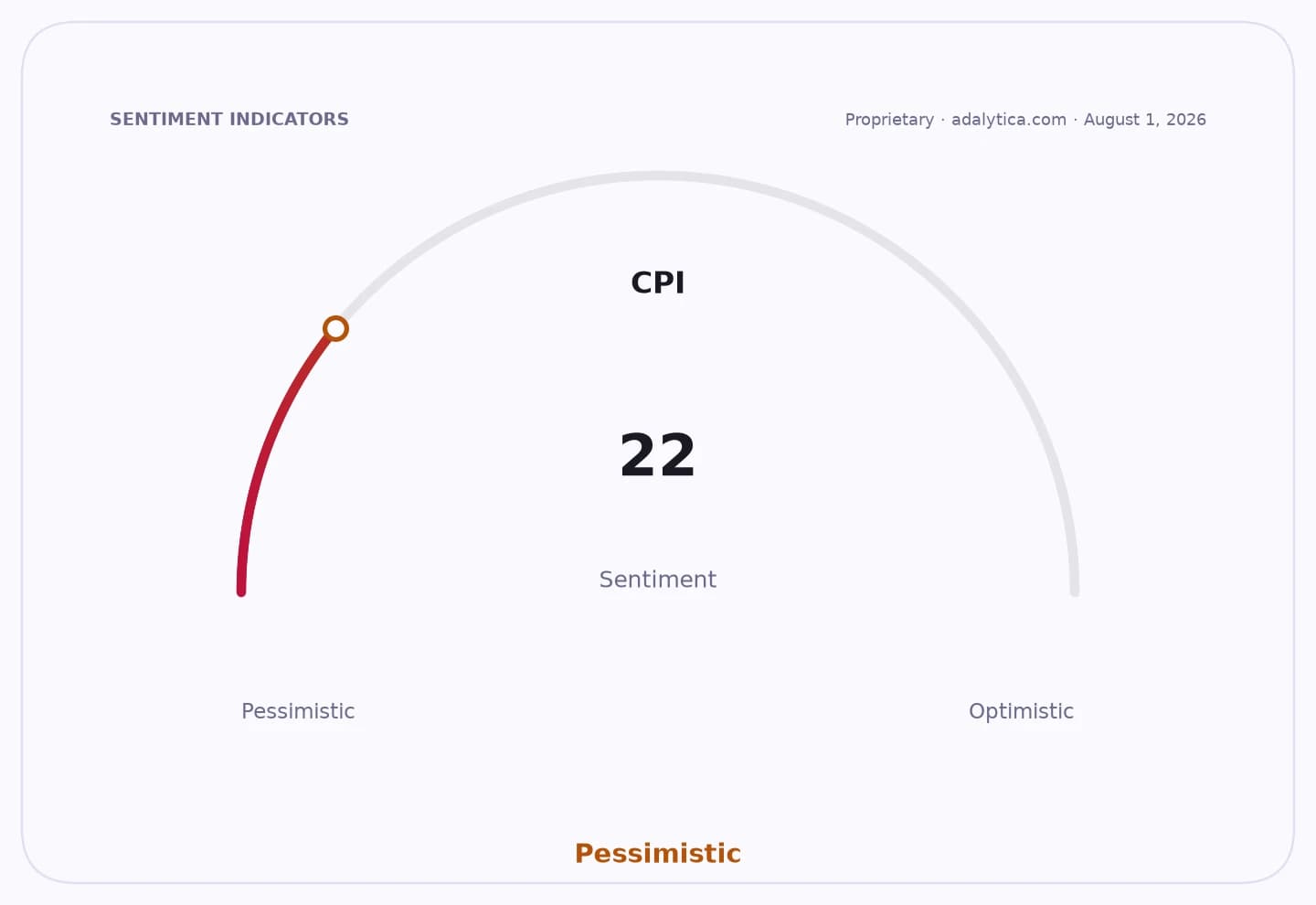
Economists in AA Finance’s monthly survey expect consumer prices to rise 0.89% from June, lifting the CPI to 335.512, while the annual inflation rate is projected to ease from 35.05% to 33.90%. Core inflation is seen rising 0.33% on the month, implying underlying price pressures are still fading more slowly than headline inflation.
Sentiment IndicatorsⓘProprietary · adalytica.com · August 1, 2026
This is a snapshot — live sentiment, awareness and momentum for 130+ markets update continuously in the dashboard.Open AlphaPulse
That matters because Turkey’s disinflation story is the central macro trade in the market. After a brutal inflation cycle, any sign that monthly price gains are settling back toward low single digits helps reinforce expectations that the central bank can keep policy restrictive long enough to restore credibility. The latest forecast suggests that process is continuing, but not cleanly enough to declare victory.
For investors, that is the key tension. Lower annual inflation supports the case for Turkish lira assets, banks and duration-sensitive local bonds, but a still-firm monthly print means real rates will likely remain elevated and the policy path will stay cautious. That typically favors carry trades and inflation-linked positioning over aggressive bets on rapid easing.
Markets have already begun to price that stabilization. The 10-year Turkish yield sits around 4.66% in the data context, while consumer-linked sentiment remains weak even as spending sentiment is strong, underscoring a split between price stability and household relief. Equity and bond investors are watching for evidence that the disinflation trend can survive external shocks, including geopolitical risk tied to the Middle East conflict and imported energy costs.
The broader narrative is straightforward: Turkey’s inflation peak is receding, but the monthly path still matters more than the annual headline. If July confirms another step down in year-on-year inflation, it strengthens the case that policymakers have room to stay the course, which is exactly what fixed-income investors and anyone looking for a deeper re-rating in Turkish assets want to see. The trade remains to stay selective, but not underweight, because the largest gains in inflation normalization usually come before the data feel comfortable.
| Entity | Gains | Losses |
|---|---|---|
| Turkish lira bonds | ▲Higher real yields | ▼Faster easing bets |
| Banks | ▲Policy stability | ▼Inflation surprises |
| Consumers | ▲Slower annual inflation | ▼Higher monthly prices |
| Short-duration bears | ▲Disinflation trend | ▼Duration rally |