Turkey’s move to tie the lowest pension to the net minimum wage would give millions of retirees a meaningful income lift, but it also raises the kind of fiscal question investors and policymakers cannot ignore: who pays for it, and how much budget strain can Ankara absorb?
Turkey Plans Higher Minimum Pension
The bill, sent to parliament’s Planning and Budget Committee, would raise the lowest pension from 23,552 liras to the current minimum wage of 28,075 liras. That is a jump of about 19%, a sizeable increase in a country where inflation has already eroded household purchasing power and made fixed incomes particularly painful. For retirees, the logic is simple: if wages at the bottom of the labor market are reset higher, pensions should not lag far behind.
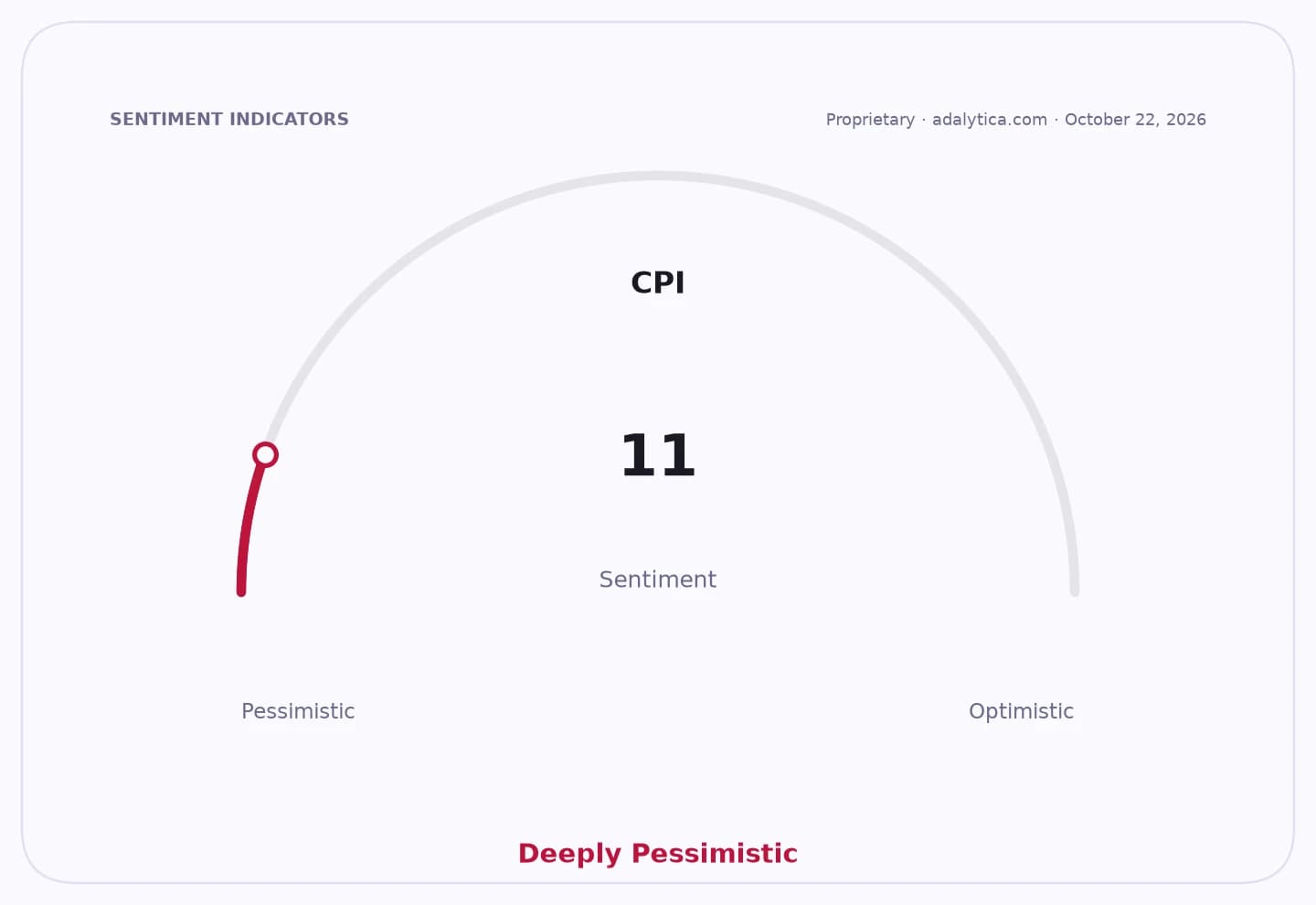
Sentiment IndicatorsⓘProprietary · adalytica.com · October 23, 2026
This is a snapshot — live sentiment, awareness and momentum for 130+ markets update continuously in the dashboard.Open AlphaPulse
For the economy, the proposal matters because pension spending is not just a social-policy line item. It is a transfer into consumer demand. Turkey’s retirees are a large and politically sensitive constituency, and any increase in monthly payments tends to flow quickly into spending on food, rent and utilities. That can provide some support to domestic consumption, but it also adds pressure to public finances at a time when Ankara is still managing the broader cost of living problem.
The political backdrop is just as important. The ruling AKP-MHP bloc has already rejected efforts to align the lowest pension with the minimum wage, highlighting the tension between social relief and fiscal discipline. Labor groups, including DİSK, have argued that pensioners and low-income workers deserve a bigger share of economic growth, especially after years of high living costs. That debate is unlikely to go away, because it cuts to the heart of Turkey’s social contract.
For investors, the story is less about the headline and more about the policy direction it reveals. A pension floor indexed to the minimum wage would be inflationary at the margin and potentially budgetary at scale, depending on how it is financed. It could also reinforce expectations that the government will continue using wage and pension adjustments as a political stabilizer, even if that complicates disinflation efforts.
The long-term takeaway is that Turkey’s retirement system is becoming a bigger macroeconomic issue, not just a welfare issue. If parliament pushes the bill forward, retirees stand to benefit immediately, but bondholders, currency investors and anyone watching the inflation path will want to know whether Ankara has a credible funding plan. Until then, the proposal is worth watching as a test of how far the government is willing to go to protect household incomes.
| Entity | Gains | Losses |
|---|---|---|
| Retirees | ▲Higher minimum income | ▼Less erosion from inflation |
| Government | ▲Political support | ▼Bigger budget burden |
| Labor groups | ▲Leverage for higher pay | ▼Slower policy compromise |
| Bondholders/currency investors | ▲— | ▼Higher fiscal and inflation risk |