Turkey’s next minimum wage is heading toward a double-digit jump, with five inflation-based scenarios putting the 2027 net wage as high as 36,608 lira and setting up a high-stakes December negotiation that will ripple through consumer spending, business costs and inflation expectations.
Turkey Minimum Wage Seen Rising in December Talks
The most important economic driver is inflation. The latest September print showed annual inflation at 29.73% and nine-month inflation at 24.32%, sharpening attention on the year-end forecasts that often anchor Turkey’s wage talks.
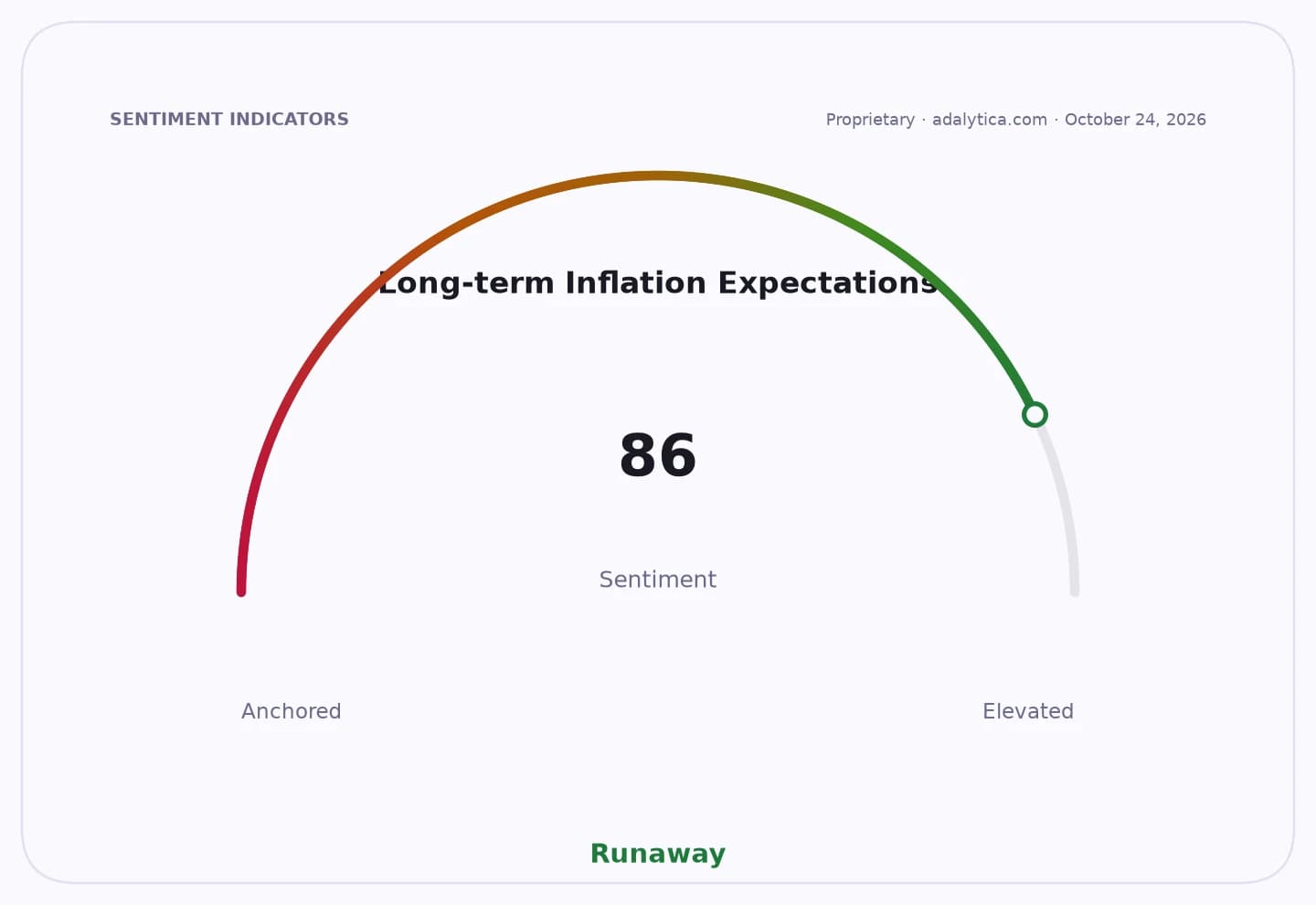
Sentiment IndicatorsⓘProprietary · adalytica.com · October 7, 2026
This is a snapshot — live sentiment, awareness and momentum for 130+ markets update continuously in the dashboard.Open AlphaPulse
Under the central bank’s 28% year-end inflation target, the net minimum wage would rise to 35,936 lira from the current 28,075 lira, an increase of 7,861 lira. The government’s medium-term program, which points to 28.4% inflation, implies a net wage of 36,049 lira and a gain of 7,973 lira.
Market-based expectations run slightly hotter. The central bank’s survey of market participants at 29.61% points to a net wage of 36,389 lira, while an AA Finans economists’ poll at 29.66% implies 36,403 lira. The highest scenario, from the Financial Institutions Union’s economic outlook survey, assumes 30.39% inflation and would lift the net minimum wage to 36,608 lira, or 8,532 lira above the current level.
For investors, the size of the increase matters because the minimum wage is a reference point for labor costs across retail, food service, logistics and manufacturing, while also shaping household purchasing power and the path of price pressures. A larger increase would support spending but could also feed into corporate margins and keep inflation sticky.
The Wage Inflation Sentiment gauge from Adalytica.com is flashing “Extreme Greed,” underlining how intense the market focus has become around wage-setting and cost inflation. That comes as Turkey’s minimum wage commission, made up of labor, employers and government representatives, is expected to begin talks in the first week of December, with a final decision likely at the end of the month.
The outcome will be watched not just by workers and employers, but by policymakers trying to balance income growth against inflation control ahead of 2027.
| Entity | Gains | Losses |
|---|---|---|
| Workers | ▲Higher take-home pay | ▼None |
| Employers | ▲Certainty after deal | ▼Higher labor costs |
| Consumers | ▲More spending power | ▼Higher prices if costs pass through |
| Policymakers | ▲Policy flexibility if compromise holds | ▼Inflation risk and wage pressure |