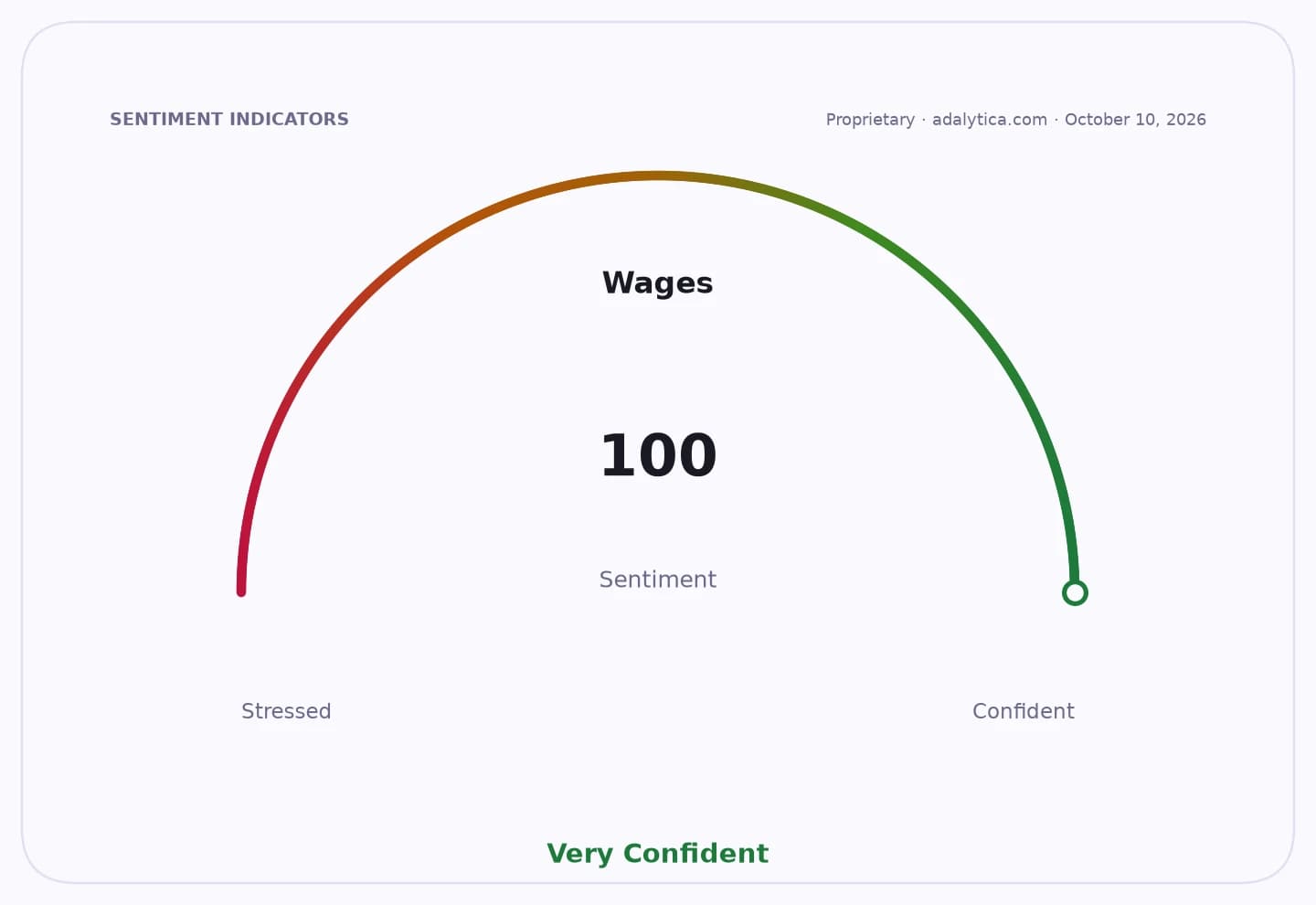
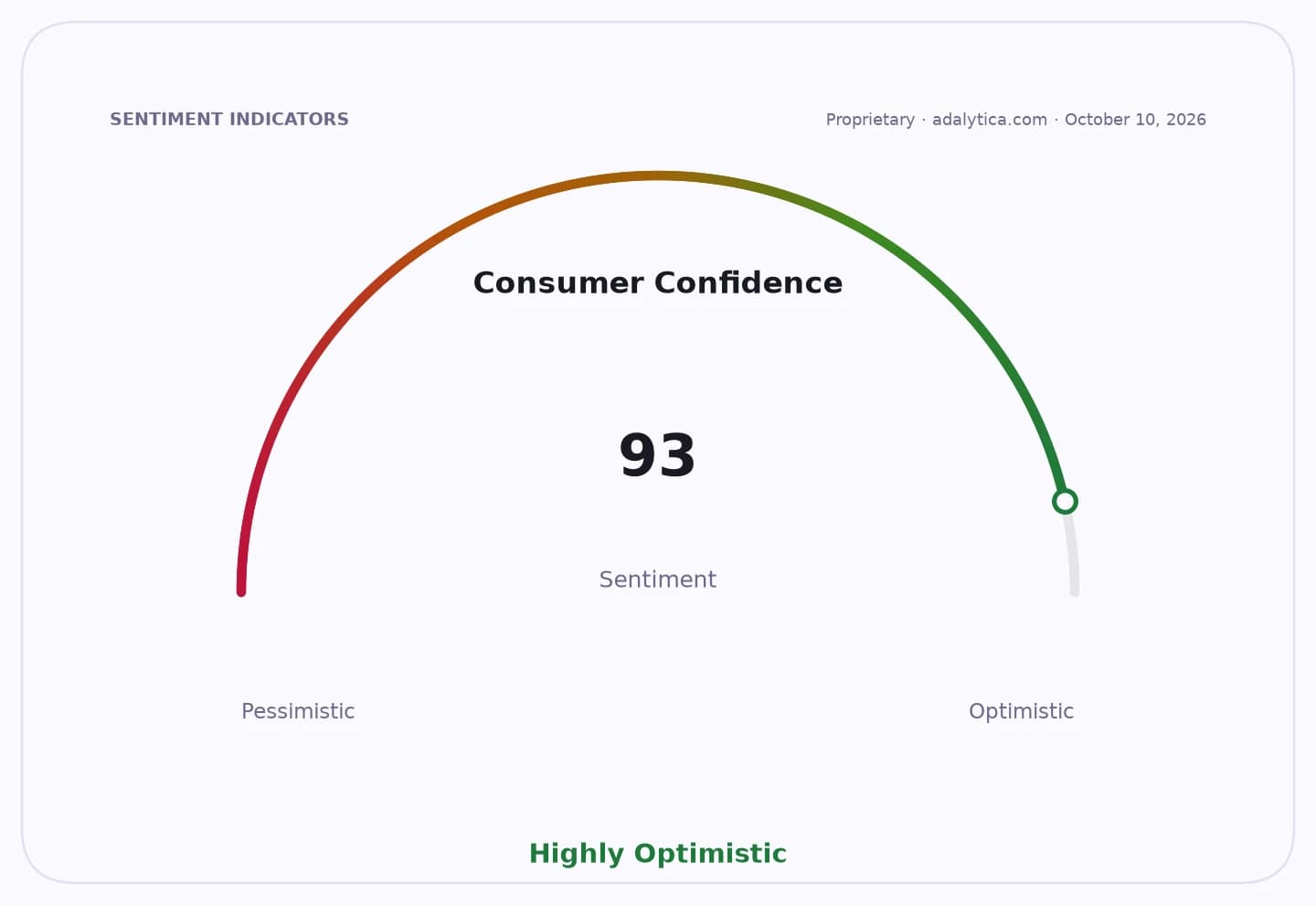
Turkey’s minimum wage has lost 28% of its value in the first nine months of 2026, a sharp erosion that underscores how inflation and taxes are crushing household purchasing power and setting up a tougher consumer backdrop for the economy.
Turkey Minimum Wage Loses 28% of Real Value
The calculation from the DİSK-AR research center lands at the center of Turkey’s most important macro problem: wages are not keeping pace with prices, and the gap is widening fast. According to the report, the net minimum wage’s purchasing power fell by 6,828 lira by September, leaving its real value at 21,248 lira. On a gross basis, the 33,030-lira minimum wage suffered a cumulative loss of 83,360 lira over January-September from tax, deductions and inflation, with September’s total loss alone reaching 11,782 lira.
Sentiment IndicatorsⓘProprietary · adalytica.com · October 10, 2026
This is a snapshot — live sentiment, awareness and momentum for 130+ markets update continuously in the dashboard.Open AlphaPulse
For the broader labor market, the damage is even larger. DİSK-AR said the cumulative cost of inflation and taxes for more than 17 million insured workers reached at least 2.254 trillion lira in the first nine months of the year. Of that, 1.223 trillion lira came from inflation and 1.031 trillion lira from tax-related erosion. That is not just a distributional story — it is a demand story. When wage earners lose that much purchasing power, spending on discretionary goods, retail, durables and services comes under pressure, even if headline employment remains steady.
The timing matters for investors because Turkey’s consumer economy depends heavily on wage income. A minimum wage that is shrinking in real terms tends to hit lower-income spending first, but the drag spreads quickly into the broader consumption chain. Retailers, consumer lenders and domestic brands face weaker transaction volumes and more price sensitivity, while import-heavy sectors can also feel the strain if households trade down or delay purchases.
It also raises political and policy risk. With official consumer inflation at 24.32% over nine months, the labor debate will likely intensify around 2027 wage setting, tax relief and possible administrative support for workers. Markets should treat that as more than a social issue: a bigger wage adjustment can support consumption but also re-accelerate inflation expectations, complicating monetary policy and keeping real rates and financing conditions volatile.
The market is underestimating how quickly real wage compression can reshape earnings across Turkey’s domestic economy. The immediate winners are exporters and firms with hard-currency revenues, which are less exposed to local purchasing power. The losers are the retailers, consumer-facing lenders and domestically oriented names that depend on wage growth to sustain sales.
For investors, the takeaway is clear: in an economy where the minimum wage has already lost more than a quarter of its value in nine months, the next trade is not just about inflation — it is about which businesses can thrive while household demand is being squeezed.
| Entity | Gains | Losses |
|---|---|---|
| Exporters | ▲FX revenue buffer | ▼Domestic demand exposure |
| Retailers | ▲Aggressive discounting | ▼Lower household spending |
| Consumer lenders | ▲Yield on high rates | ▼Weaker credit quality |
| Wage earners | ▲— | ▼Real income erosion |