Turkey’s central bank added to official reserve assets in a sign it has a little more ammunition to manage volatility in the lira, even as the currency remains under persistent pressure and investor confidence stays fragile.
Turkey Adds Reserves, Lira Still Vulnerable
Official reserve assets at the Central Bank of the Republic of Türkiye rose 2.3% to $163.3 billion in the week of July 10, according to the data. The increase matters because reserves are the first line of defense for a central bank that has repeatedly had to balance currency stabilization, inflation control and external financing needs in one of the world’s most fragile emerging markets.
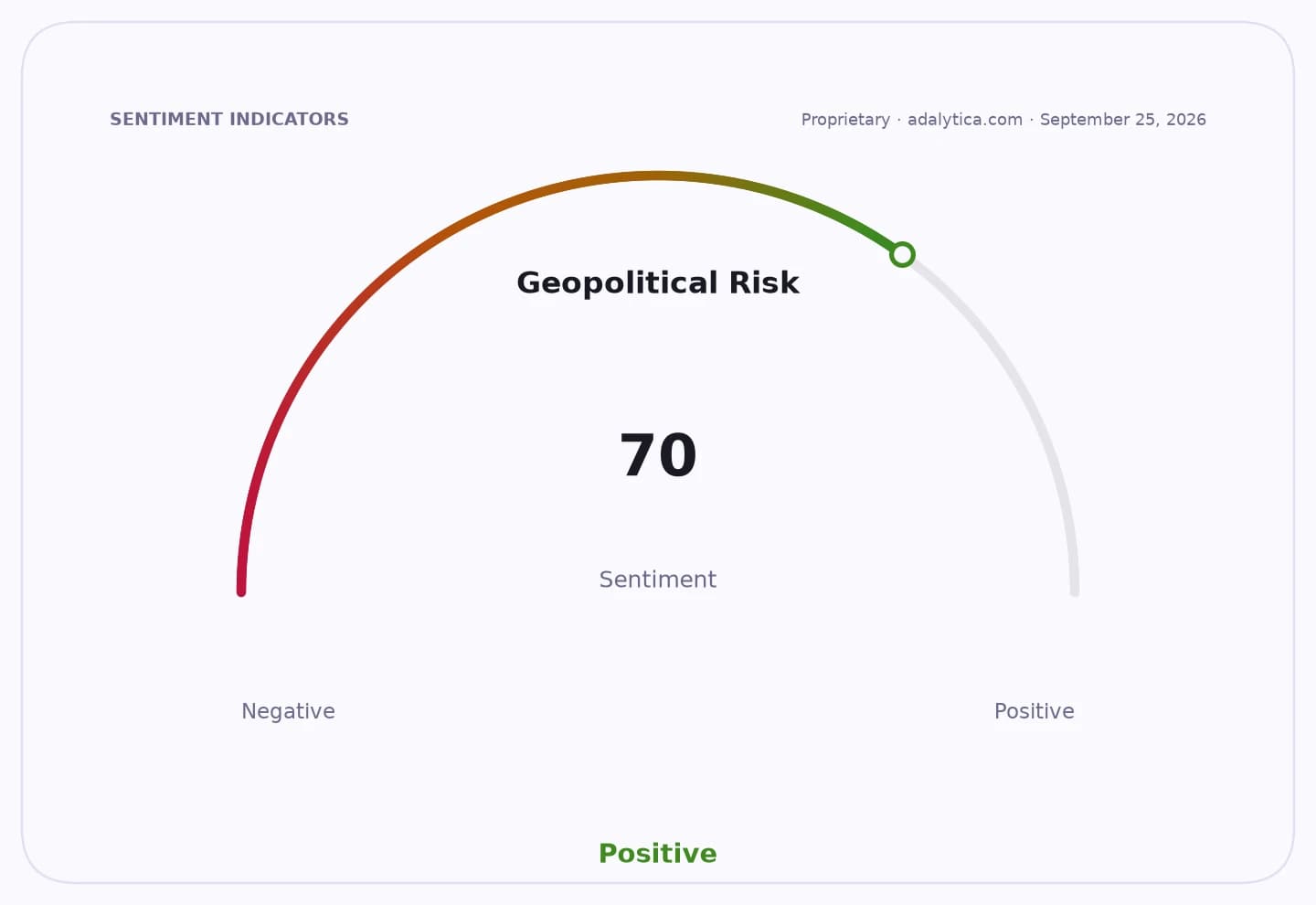
Sentiment IndicatorsⓘProprietary · adalytica.com · July 16, 2026
This is a snapshot — live sentiment, awareness and momentum for 130+ markets update continuously in the dashboard.Open AlphaPulse
The timing is important. The lira was trading around 47.0 per dollar on the latest readings, with conventional technical indicators showing the currency deeply overbought in recent sessions, including an RSI reading of 100 and prices holding above both the 50-day and 200-day moving averages. That suggests the market has been in a one-way move, leaving the currency vulnerable to sharp swings if reserve support or policy signals change.
For investors, reserve accumulation is a useful signal but not a cure. Higher reserves can improve Turkey’s ability to smooth disorderly moves, reassure bondholders and support local assets by reducing tail-risk around payments and external funding. But the level still needs to be judged against the scale of Turkey’s dollarization pressures, short-term liabilities and the cost of defending the currency in a high-inflation environment.
The backdrop remains politically and geopolitically sensitive. Tensions with Greece and broader regional security concerns continue to weigh on perceptions of Turkish risk, while global trade and dollar sentiment remain mixed. Adalytica’s Euro Trade Signals snapshot shows extreme fear in euro-related positioning, and US dollar trade signals remain in the fear zone, underscoring how unsettled broader currency sentiment is.
That makes the reserve data more than a routine weekly print. If the CBRT can keep building reserves, it strengthens the case that policymakers have more flexibility to manage the lira without immediately resorting to more disruptive measures. If reserves slip again, traders will read that as a sign the bank is still fighting a costly battle to contain currency weakness.
For now, the message is that Turkey has added some dry powder. Whether that translates into lasting stability will depend on how long the central bank can keep reserves rising while inflation, political risk and external funding pressures continue to test the currency.
| Entity | Gains | Losses |
|---|---|---|
| CBRT | ▲More reserve firepower | ▼Less immediate pressure |
| Lira bulls | ▲Better defense capacity | ▼Still exposed to volatility |
| Importers/debtors | ▲Some FX stability | ▼Persistent hard-currency risk |
| Short-dollar speculators | ▲Lower tail-risk | ▼Potential squeezes |