China’s state of alert as Typhoon Noul nears is a reminder that weather shocks in the world’s second-largest economy can quickly ripple through ports, factories, power networks and export schedules — and investors are still underpricing that tail risk.
Typhoon Noul Raises China Supply Chain Risk
The immediate issue is not just the storm itself but the economic fragility it exposes. Coastal provinces such as Zhejiang and Fujian are dense with manufacturing, logistics hubs and consumer demand, which means even a short-lived disruption can hit shipping timelines, squeeze working capital and force temporary shutdowns across industrial supply chains. When emergency measures are triggered at this scale, the market impact is less about one storm and more about the recurring cost of climate volatility in Asia’s production center.
That matters because China sits at the center of global trade flows. Any disruption along its eastern seaboard can reverberate through semiconductors, electronics, textiles, chemicals and consumer goods. The knock-on effects are often felt first in freight rates, insurance pricing and inventory management, then in earnings revisions for companies reliant on just-in-time deliveries. For multinationals, the risk is not necessarily outright damage; it is delay, rerouting and margin pressure.
The market is already telling part of that story. The China-focused ETF FXI has been stuck near the mid-30s, with its 200-day moving average still well above current levels, signaling that the broad China equity trade remains technically weak despite intermittent rebounds. KWEB is even more vulnerable, trading far below its 200-day moving average, a sign that investors remain cautious on China’s growth and policy outlook. YANG, the bearish China ETF, has drawn attention after recent swings but is still below its short-term peak, reflecting a market that is trying to price in stress without yet embracing a full risk-off move. In a classic storm trade, that hesitation can create opportunity in hedges before panic sets in.
Our thesis is simple: typhoon alerts are not just weather headlines, they are a stress test for China’s industrial machine and for portfolios that remain heavily exposed to it. The underappreciated beneficiaries are not only insurers and logistics names with pricing power, but also U.S.-listed hedges tied to China weakness, infrastructure resilience plays, and companies selling equipment for grid repair, flood control and emergency response. Every severe-weather event reinforces the case for owning the picks-and-shovels of adaptation rather than the most exposed endpoints.
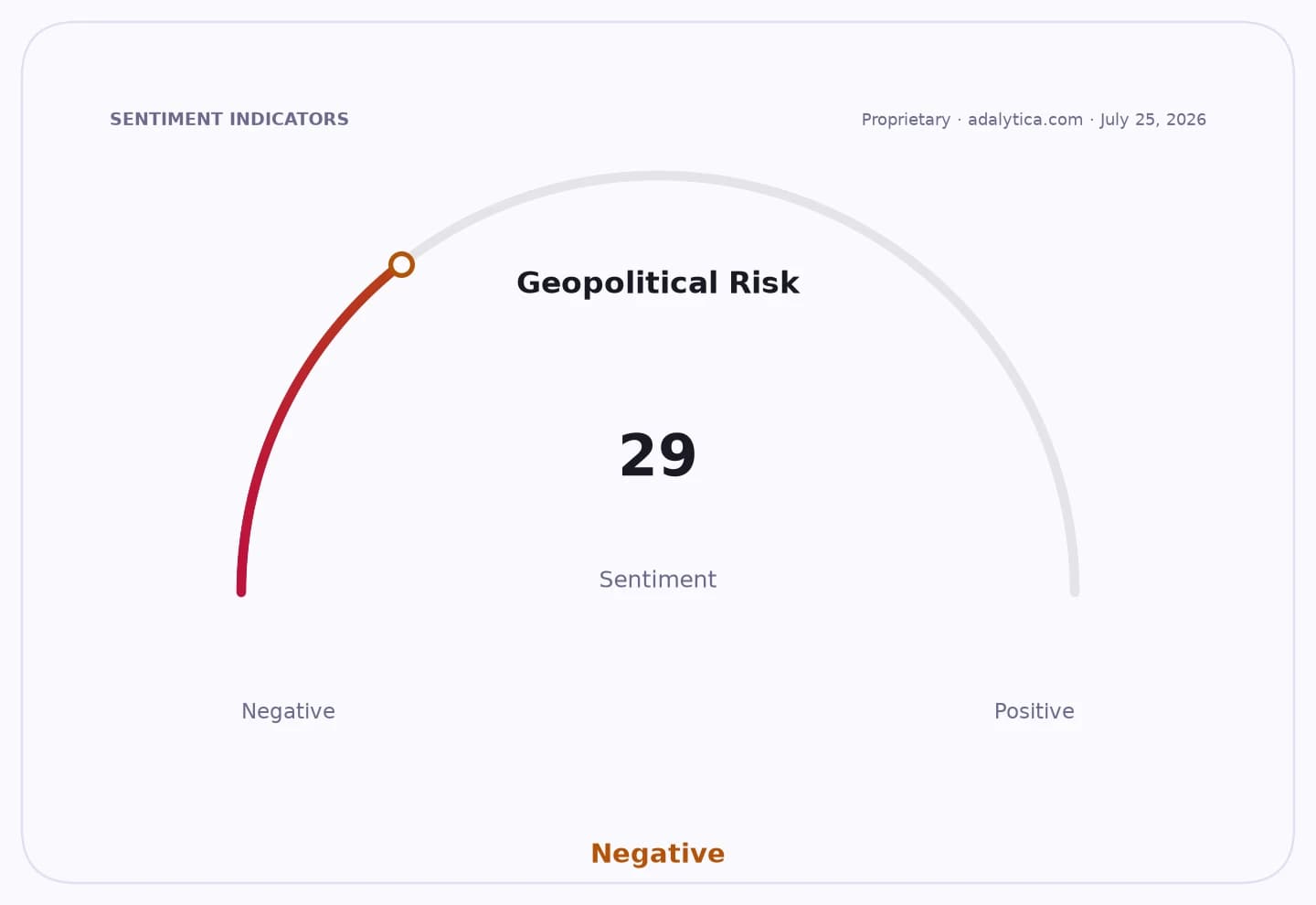
There is also a broader geopolitical layer. The more frequently China’s coast is hit by extreme weather, the more capital markets must price in recurring operational disruption alongside slower growth, property strain and policy intervention. That combination can suppress sentiment in mainland and Hong Kong equities even when the headline event fades. Adalytica’s Global Stability Sentiment gauge has already slumped into fear territory, underscoring how quickly investors shift into caution when the macro backdrop turns unstable.
For investors, the takeaway is that storms like Noul create a tradable asymmetry: the downside is concentrated in exposed supply chains and cyclical China proxies, while the upside sits in hedges, resilience infrastructure and volatility-sensitive defensive sectors. If this alert turns into material flooding or port disruption, the market will likely chase the obvious beneficiaries only after the damage is visible. The better trade is to position early, before the storm becomes consensus.
| Entity | Gains | Losses |
|---|---|---|
| YANG / China downside hedges | ▲Higher demand for protection | ▼If storm impact fades |
| FXI / KWEB holders | ▲Short-term volatility traders | ▼China equity bulls |
| Insurers & flood-control suppliers | ▲Pricing power, new orders | ▼Exposed coastal assets |
| Exporters / logistics firms | ▲Resilience spending | ▼Shipment delays, margin pressure |