U.S. consumer sentiment improved in July, but the rebound is still too weak to suggest households have shaken off the drag from higher living costs.
U.S. Consumer Sentiment Rises to 55.2 in July
The University of Michigan’s consumer confidence index rose to 55.2 in July, up from 49.5 in June and above the 43.99 economists had expected, according to the data context. That lift matters because consumer spending accounts for the bulk of U.S. economic activity, and the survey suggests households may be feeling slightly better about the near-term economy even as inflation remains a live concern.
Sentiment IndicatorsⓘProprietary · adalytica.com · July 31, 2026
This is a snapshot — live sentiment, awareness and momentum for 130+ markets update continuously in the dashboard.Open AlphaPulse
The bigger message is that confidence is recovering from depressed levels rather than returning to anything like normal. July’s reading is still far below the long-run averages that typically align with stronger discretionary spending, and the improvement comes alongside continued concern over the cost of living. That combination points to a consumer base that is willing to spend selectively, but remains highly sensitive to prices for essentials, credit costs and income expectations.
Inflation is still doing the heavy lifting in shaping behavior. The consumer price index stood at 332.568 in June, with economists looking for 335.512 in July, while core CPI, which strips out food and energy, was forecast to edge up to 337.1758 from 336.065. Even if inflation is no longer accelerating at the pace seen earlier in the cycle, price levels remain elevated enough to keep real purchasing power under pressure. For households, that means confidence can improve on the margin without translating into a broad-based spending surge.
UMCSENT vs CPIAUCSL — macro contextadalytica.com
Explore this data interactively — full history, time series and cross-market comparisons.Open AlphaPulse
That dynamic is already visible across consumer-sensitive equities. The Consumer Discretionary Select Sector SPDR Fund, XLY, finished July 31 at 116.09, just above its 50-day moving average and slightly below its 200-day average, a sign of a market still looking for conviction in discretionary demand. The Consumer Staples Select Sector SPDR Fund, XLP, ended at 85.05, above both its 50-day and 200-day moving averages, suggesting investors continue to favor defensive spending categories over more cyclical names. Retail-focused XRT also remains below its recent highs, underscoring the market’s skepticism that consumer confidence alone will drive a clean rebound in retail demand.
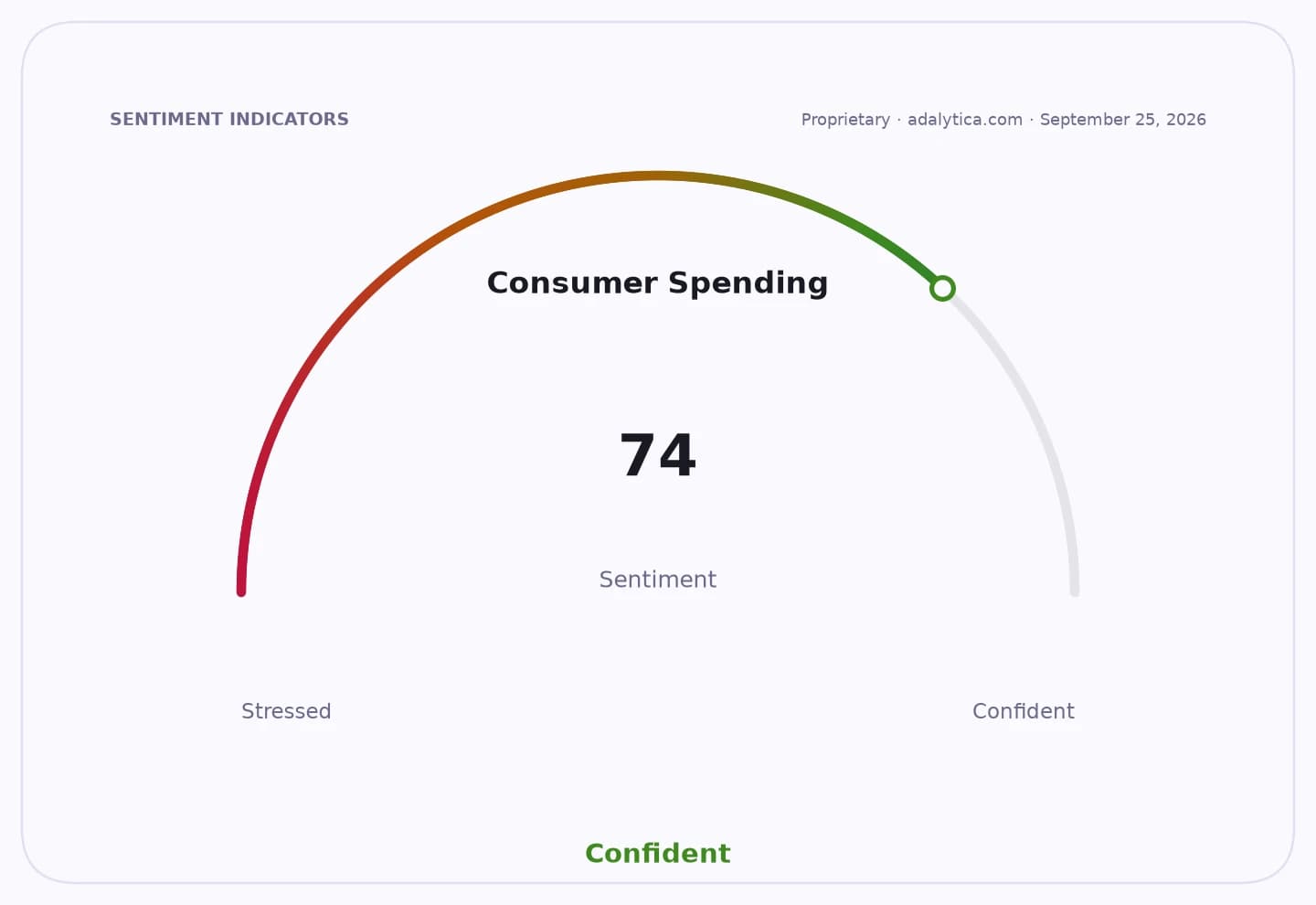
Adalytica’s Consumer Spending Sentiment snapshot showed “Extreme Greed” at 89, while Retail Sales Sentiment was also in “Extreme Greed” territory at 92, reflecting expectations for spending rather than proof that consumers are doing more of it. That split fits the macro backdrop: sentiment can brighten before sales data does, but persistent inflation can still force households to trade down, delay purchases or concentrate spending on necessities.
For investors, the July confidence improvement is supportive for cyclicals at the margin, but not enough on its own to justify a strong re-rating of consumer names. Bullish investors will argue that better sentiment can stabilize traffic, help promotions work less aggressively and support earnings revisions if inflation cools further. The bearish case is that the rebound simply reflects normalization from very weak June levels, while pricing pressure and still-elevated core inflation keep real demand constrained.
The key test now is whether the confidence gain translates into actual spending and whether inflation data allows households to feel richer in real terms. Until that happens, the market is likely to keep rewarding defensives, value-oriented retailers and companies with pricing power over more discretionary consumer plays.
| Entity | Gains | Losses |
|---|---|---|
| U.S. consumers | ▲Slightly better confidence | ▼Still squeezed by living costs |
| Defensive retailers/staples | ▲More resilient demand | ▼Less upside from discretionary rebound |
| Discretionary retailers | ▲Potential traffic lift | ▼Weak real spending momentum |
| Inflation-sensitive households | ▲Some sentiment relief | ▼Persistently high price levels |