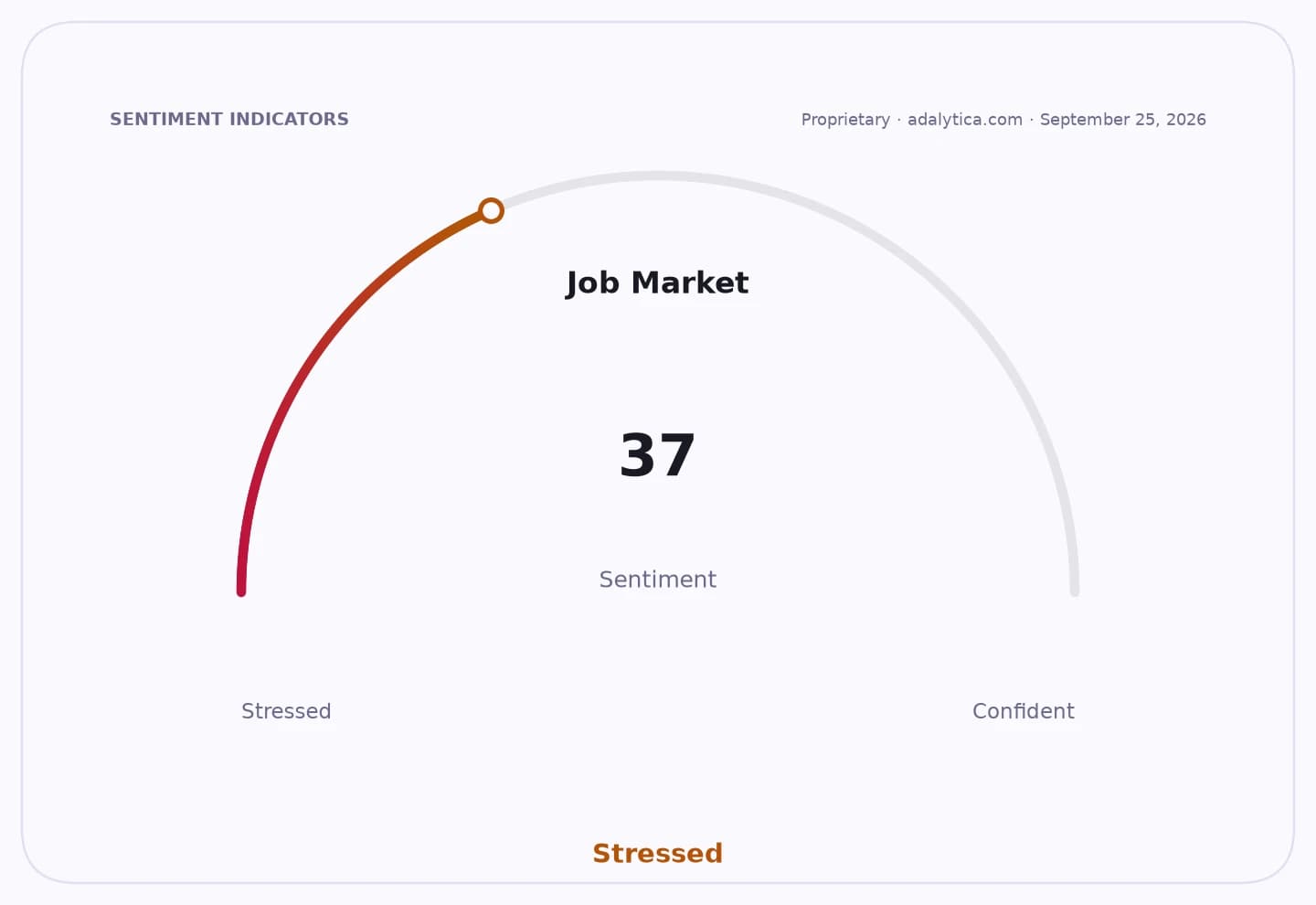
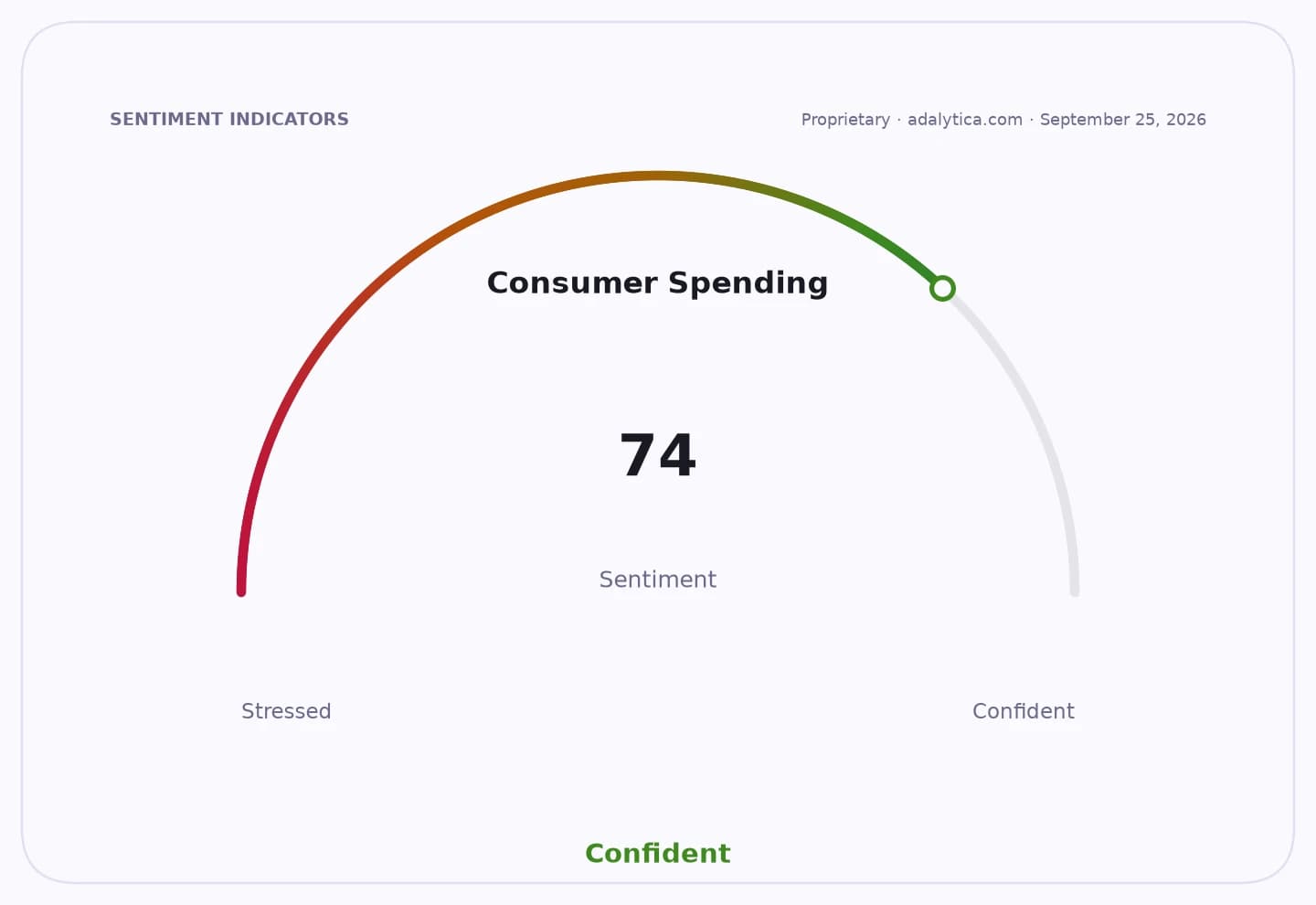
American households are still spending and working as if the economy is slowing, not breaking, a sign that recession anxiety remains muted even after months of mixed economic data.
U.S. consumers stay steady as July sentiment seen at 43.99

That matters because consumer confidence is one of the best real-time gauges of whether the U.S. economy is about to lose momentum. If households were bracing for layoffs and cutting back sharply, recession odds would rise fast. Instead, the latest readings suggest people are uneasy, but not panicked. The University of Michigan consumer sentiment index was 49.5 in June and is forecast at 43.99 for July, down from 49.8 in April but still far from the collapse seen in past downturns. At the same time, the unemployment rate has eased to 4.2% from 4.3% in April and payroll employment continues to edge higher, with nonfarm payrolls at 158.984 million in June and projected to reach 159.1709 million in July.
Sentiment IndicatorsⓘProprietary · adalytica.com · August 6, 2026
This is a snapshot — live sentiment, awareness and momentum for 130+ markets update continuously in the dashboard.Open AlphaPulse

For investors, that combination is important because it points to an economy that is cooling without rolling over. A labor market that is still adding jobs supports wages, household spending and corporate revenues, especially in consumer-facing industries. It also helps explain why the S&P 500 can still attract strong risk appetite: Adalytica’s S&P 500 trade signals show sentiment at 86, labeled “Extreme Greed,” even after a 6% drop over the past 30 days. In other words, markets may be pricing in a soft landing rather than a hard one.
The bigger story is that Americans are not behaving like a recession is imminent. Consumer sentiment has been volatile, falling from 49.8 in April to 44.8 in May before rebounding to 49.5 in June. That kind of wobble reflects caution around prices, interest rates and the cost of living, but not the kind of shock that usually accompanies a downturn. Employment is still expanding, and that is the key buffer. As long as people have jobs, they can keep spending, which gives companies time to grow earnings and preserve free cash flow.
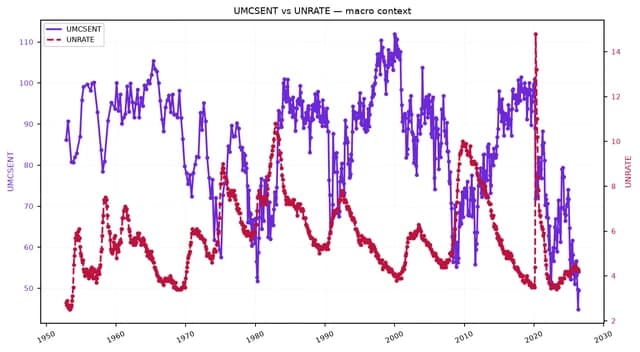
That is why long-term investors should care. Consumer strength does not mean stocks are risk-free, but it does mean the economic foundation is sturdier than recession headlines suggest. Companies with pricing power, recurring revenue and resilient demand can keep compounding even in a slower economy. Retailers, restaurants, travel stocks and consumer discretionary names all benefit when households stay confident enough to spend. The flip side is that any sudden deterioration in jobs data would hit those groups first.
There are still risks. Confidence can weaken quickly if layoffs rise, credit gets tighter or inflation flares again. And the current mood in markets leaves little room for disappointment. But the evidence right now argues against an economy on the edge. The U.S. consumer looks cautious, not frightened.
For investors with a multi-year horizon, that is a constructive setup. It is a reminder to stay diversified, keep an eye on labor trends, and focus on businesses that can thrive even if growth cools further. Recession fears may keep making headlines, but the consumer is still standing. Worth watching, not running from.
| Entity | Gains | Losses |
|---|---|---|
| U.S. consumers | ▲Steady jobs, spending power | ▼Rising prices, uncertainty |
| Consumer-facing companies | ▲Resilient demand | ▼Margin pressure if spending slows |
| S&P 500 bulls | ▲Soft-landing narrative | ▼Recession traders |
| Recession hedge assets | ▲Volatility, fear premium | ▼If growth holds up |