The Trump administration’s latest attempts to cool U.S. fuel prices — from an $8 billion farm aid package to plans tied to Russian diesel and sanctioned tankers — are unlikely to deliver quick relief as diesel and gasoline costs remain elevated and geopolitics keep global supply tight.
U.S. fuel prices stay high despite Trump aid plan
That matters because higher fuel prices are feeding inflation, squeezing consumers, farmers and trucking companies, and risking a deeper political backlash ahead of the November midterm elections. Analysts say there is no single “silver bullet” for a market being distorted by sanctions, refinery disruptions, shipping bottlenecks and war-related supply risks.
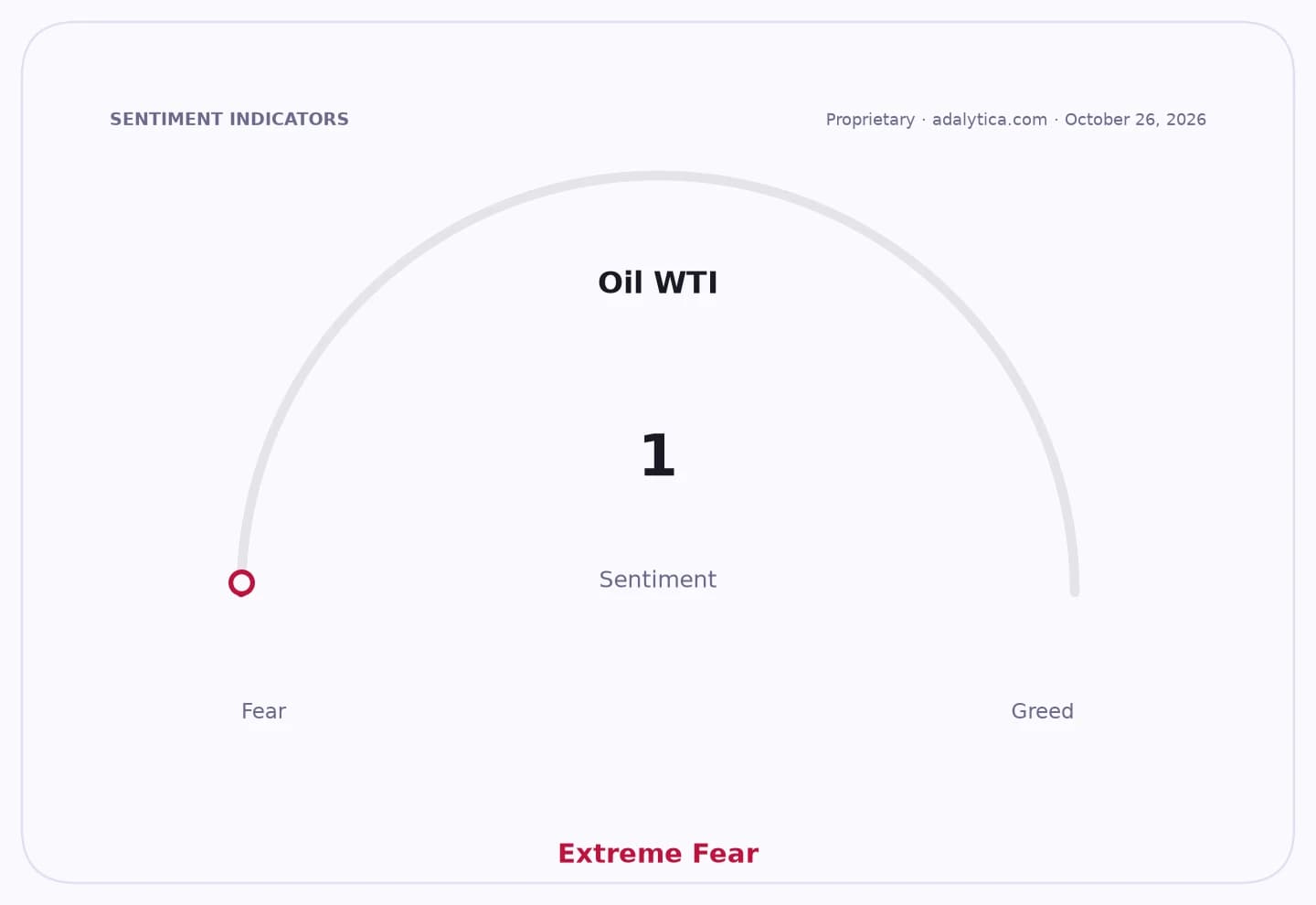
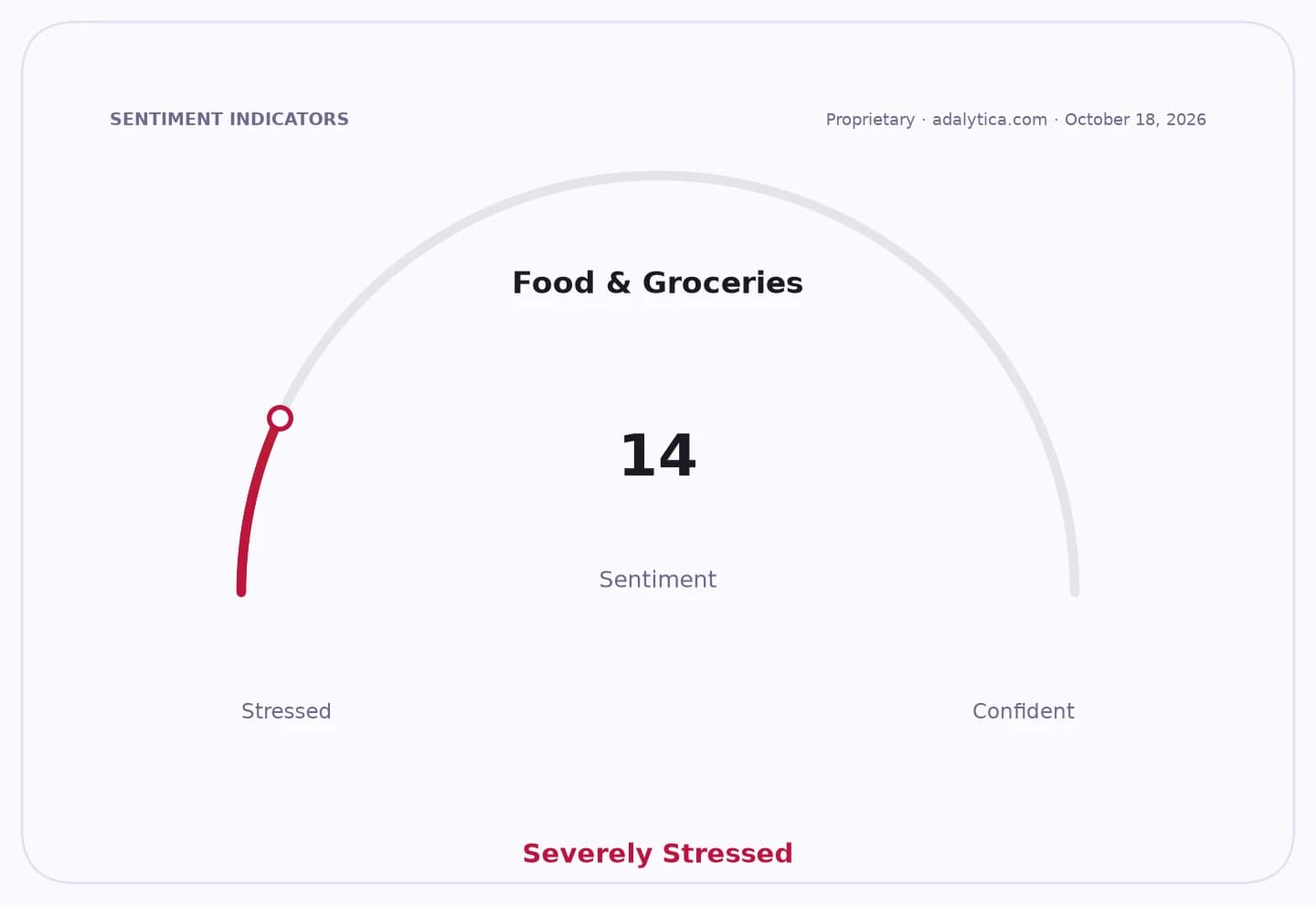
Sentiment IndicatorsⓘProprietary · adalytica.com · October 27, 2026
This is a snapshot — live sentiment, awareness and momentum for 130+ markets update continuously in the dashboard.Open AlphaPulse
The administration has moved on several fronts in recent weeks. It unveiled the $8 billion farmer support package, said it would allow truck drivers to use red-dyed diesel, explored bringing some sanctioned tankers back into service, and floated imports of Russian diesel. But experts say the measures are too small or too slow to materially shift prices in the near term.
Douglas Holtz-Eakin, president of the American Action Forum, said the moves show the White House is under pressure, but diesel prices are unlikely to change much in 14 days. Bob McNally, founder and chairman of Rapidan Energy Group and a former George W. Bush energy adviser, said there is no single fix that can solve the problem.
The scale mismatch is stark. The administration’s reported plan to bring in about 2.2 million barrels of diesel would cover only a fraction of U.S. demand, which runs around 4 million barrels a day including heating oil. Even if delivered all at once, analysts say the supply would be a very short-lived boost.
That has left fuel markets under strain. U.S. diesel prices climbed from $3.76 a gallon before the Iran conflict to a record $6.53 a gallon at the end of September, a jump that hits farms first because diesel powers tractors, harvesters and the trucks that move crops to market. One Kansas farm was said to have spent about $31,000 on diesel last year, with costs potentially doubling this year.
The $8 billion farm package is meant to cushion those shocks, but economists say it will be uneven in practice and may not line up with individual losses. USDA has not yet said how much each farmer will get. The aid also follows a separate $12 billion farm relief program, underscoring how subsidy support is becoming a recurring feature of U.S. agriculture.
The truck measure offers only partial relief. Letting drivers use red-dyed diesel could save the 24.4-cent federal highway tax, but state fuel taxes still apply in many places, limiting the impact and adding compliance headaches for fleets crossing state lines.
The tanker idea faces even bigger hurdles. Buying, repairing and reactivating sanctioned vessels would require legal clearance, insurance coverage and costly refurbishment of aging ships. McNally said the benefit may be limited because many of the available vessels are old or already heavily used.
For investors, the story reinforces that fuel inflation is still being driven more by supply fragility than by policy. Energy prices remain sensitive to the Israel-Iran conflict, Russia-Ukraine disruptions and Houthi attacks in the Red Sea, while the International Energy Agency warned the global market could take more than a year to normalize.
Oil-linked funds have already reflected that strain. The United States Oil Fund has surged to 163.88, well above its 50-day average of 147.94 and 200-day average of 122.55, with RSI at 78.4, a sign of stretched momentum. The Energy Select Sector SPDR has also climbed to 68.21 from 57.81 on the 200-day average, keeping energy stocks bid as fuel prices stay elevated.
Unless the economy slows sharply or there is a credible peace deal, McNally said fuel prices are unlikely to fall fast. For now, the administration’s measures look more like stopgaps than solutions, leaving households, farmers and transport companies exposed to another round of expensive fuel.
| Entity | Gains | Losses |
|---|---|---|
| Farmers | ▲Temporary cash support | ▼No quick fuel relief |
| Trucking companies | ▲Slight tax savings on dyed diesel | ▼Higher compliance costs |
| Energy producers | ▲Higher fuel prices support margins | ▼Policy uncertainty remains |
| Consumers | ▲Little immediate benefit | ▼Higher gasoline and diesel costs |