The United Arab Emirates has turned itself into one of the oil market’s most influential swing players outside OPEC, using higher output, flexible export routes and deepening geopolitical leverage to shape prices and regional security at a time when crude is again trading near $80 a barrel.
UAE oil power grows as WTI holds near $78
That matters because the UAE’s strategy has changed the balance of power in the Gulf. Rather than waiting for OPEC quotas to dictate its fate, Abu Dhabi has pushed capacity, captured more market share and positioned itself to benefit from volatility in a market still prone to supply shocks from the Strait of Hormuz and wider Middle East tensions.
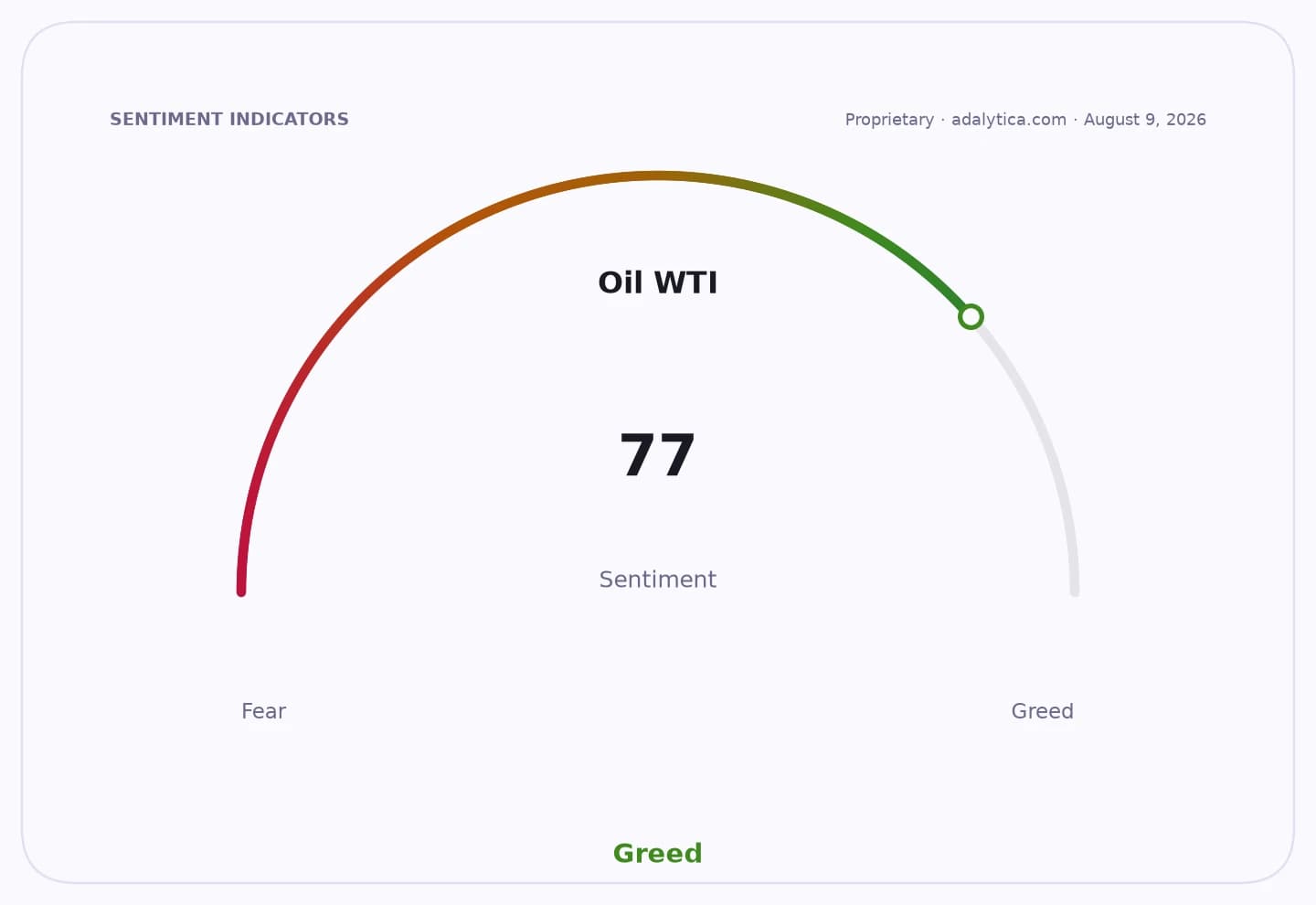
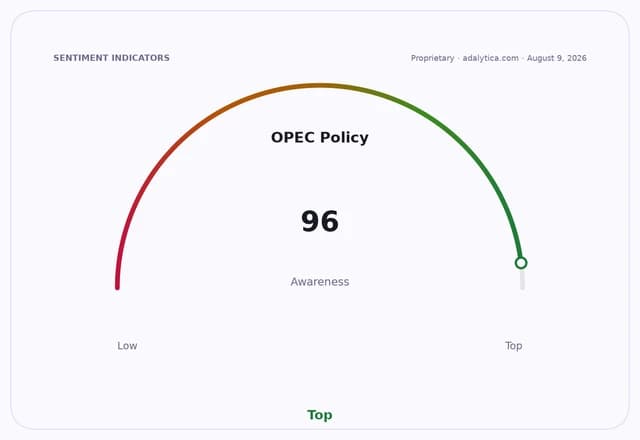
Sentiment IndicatorsⓘProprietary · adalytica.com · August 9, 2026
This is a snapshot — live sentiment, awareness and momentum for 130+ markets update continuously in the dashboard.Open AlphaPulse
WTI settled at $78.18 on Aug. 7 after touching $75.22 two days earlier, while USO, the crude-linked ETF, closed at $117.98. The moves reflect a market that remains sensitive to any disruption in Gulf exports, especially after the UAE condemned a missile attack on an ADNOC tanker in the Strait of Hormuz and described it as piracy.
For investors, that combination of rising Gulf risk and resilient oil prices has supported energy stocks and oil-linked funds, even as the market cools from earlier spikes. The Energy Select Sector SPDR fund closed at $57.50 on Aug. 7, well above its 200-day moving average of $52.43, underscoring that the sector still enjoys technical support even after recent consolidation.
OPEC Policy vs CL=Fadalytica.com
Explore this data interactively — full history, time series and cross-market comparisons.Open AlphaPulse
The UAE’s challenge to the old OPEC order also carries broader economic consequences. Higher and more agile UAE output can pressure peers to defend market share, complicate production discipline and reduce the cartel’s ability to manage prices as cleanly as it once did. That is especially relevant when benchmark crude is already elevated and global growth is being tested by higher financing costs, with the U.S. 10-year Treasury yield at 4.69%.
At the same time, the security premium embedded in oil remains substantial. Adalytica’s Oil WTI Trade Signals show a greed reading of 77, while its OPEC Policy Sentiment gauge has fallen to 25, labeled fear, suggesting traders are more focused on physical market tightness and geopolitical risk than on confidence in coordinated supply management.
The UAE’s rise as an oil power is therefore not just a story about barrels. It is about a producer that has paired capital spending, logistics and political hard power to gain leverage in a market where disruptions can still move prices by several dollars a barrel in a matter of sessions.
With the Strait of Hormuz still vulnerable and OPEC discipline under strain, investors will be watching whether the UAE keeps leaning into expansion and regional assertiveness — or whether fresh conflict risk forces a broader rerating of Gulf supply security.
| Entity | Gains | Losses |
|---|---|---|
| UAE / ADNOC | ▲Market share; geopolitical leverage | ▼OPEC discipline; security exposure |
| Oil bulls / energy stocks | ▲Higher crude prices; sector support | ▼Refined-fuel consumers; margin squeeze |
| OPEC core producers | ▲— | ▼Pricing power; quota control |
| Importers / refiners | ▲— | ▼Higher feedstock costs; volatility |