Britain’s AI datacentre boom will be limited less by demand than by whether the country can build an electricity-and-infrastructure plan that stops new capacity from colliding with the grid, water constraints and planning politics.
UK AI datacentre boom faces grid and water limits
That is the real economic issue behind the push for a more rational national strategy: without tighter coordination on grid connections, closed-loop cooling, hardware reuse and waste-heat recovery, the UK risks importing the worst parts of the AI buildout while capturing too little of the value.
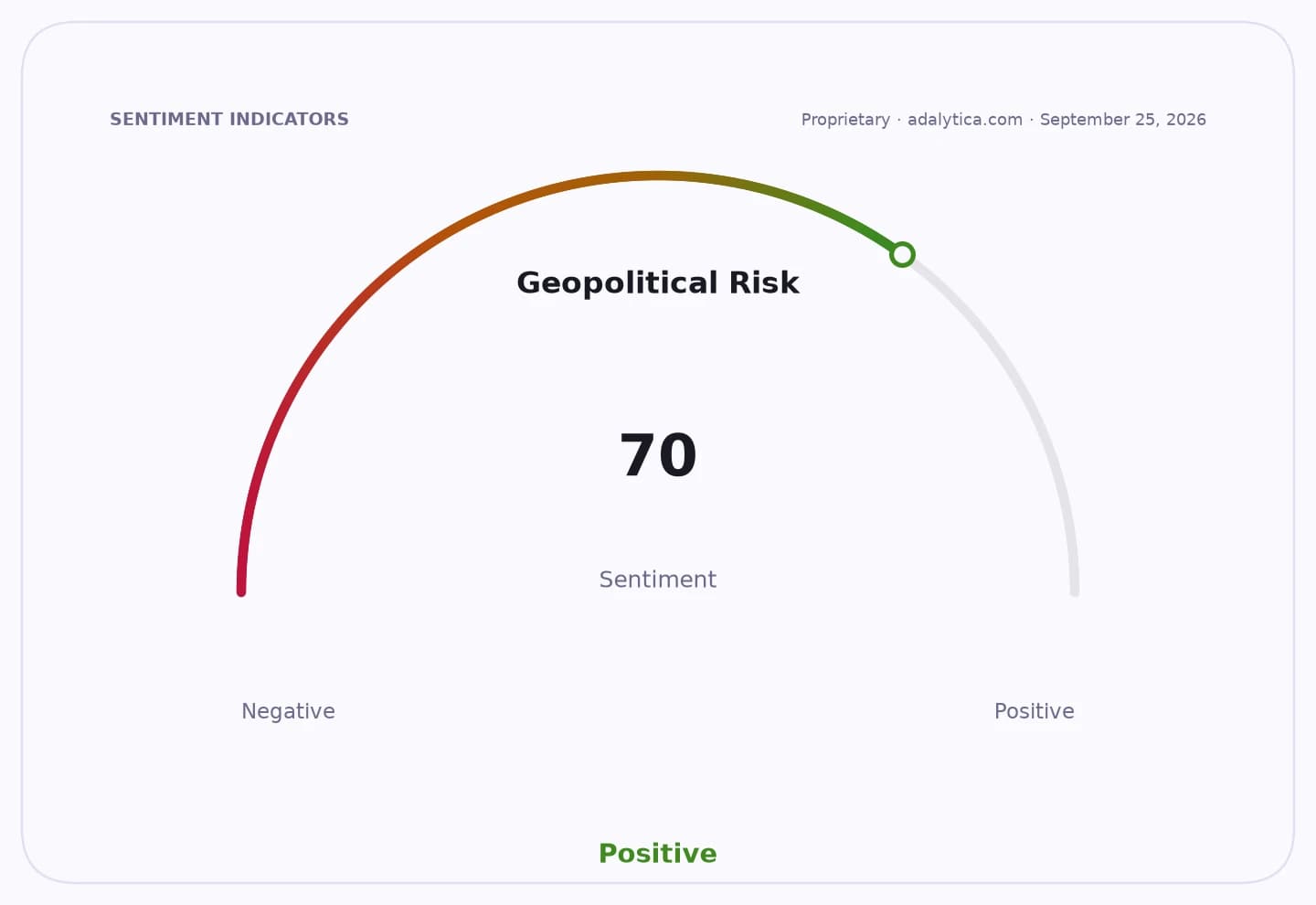
Sentiment IndicatorsⓘProprietary · adalytica.com · August 20, 2026
This is a snapshot — live sentiment, awareness and momentum for 130+ markets update continuously in the dashboard.Open AlphaPulse
The stakes are high because datacentres are no longer a niche property play. They are becoming core industrial infrastructure for cloud computing, AI training and inference, and the power density of that workload is rising fast. Equinix’s latest filing said customers are drawing more power per cabinet, while also warning that evaporative cooling can create water-related risks in drought-prone regions. That combination is forcing operators toward more disciplined designs, especially in markets where land, power and permitting are already tight.
Investors have been rewarding that scarcity. Equinix shares have climbed to about $1,077 from roughly $785 on Oct. 29 and are trading well above both the 50-day and 200-day moving averages, a sign that the market still sees datacentre landlords as long-duration beneficiaries of AI spend. Digital Realty has also held near $192, while Vertiv, which sells thermal-management and power systems, has surged to about $261, underlining how the winners in the AI economy increasingly include the picks-and-shovels layer that makes dense computing possible.
But the same rally reflects a bottleneck that policymakers cannot ignore. AI demand is pulling more megawatts into fewer sites, increasing the pressure on Britain’s grid and amplifying local opposition where water use, heat emissions and electricity prices are already politically sensitive. For the UK, a laissez-faire approach would likely mean slower delivery, higher project costs and a growing dependence on power-hungry facilities that do little to improve resilience or regional development.
A national plan would therefore need to treat datacentres like strategic energy users, not just real estate. Grid discipline would mean prioritising sites with available capacity and faster connection timelines, rather than letting speculative development clog the queue. Closed-loop cooling would reduce exposure to water stress. Circular hardware policies could soften the supply-chain and e-waste burden as operators refresh GPUs and servers more frequently. Waste-heat recovery would help turn datacentres from a pure load on the system into a source of district heating and industrial efficiency.
That is economically relevant far beyond the sector itself. Better-planned AI infrastructure can support domestic productivity gains, attract foreign capital and strengthen the UK’s position in cloud services, fintech and advanced research. Poor planning, by contrast, risks pushing investment to countries with cheaper power, faster approvals or clearer industrial policy. The recent strength in the pound — with Adalytica’s British pound trade signals still neutral but improving on the day — suggests markets are not yet pricing in a severe policy shock, but they are also not rewarding Britain for a coherent infrastructure edge.
For investors, the message is that AI infrastructure will keep creating winners, but not indiscriminately. Datacentre operators, power-equipment suppliers and grid-adjacent infrastructure names stand to benefit if Britain formalises a clearer national framework. Pure-play developers without access to power, water efficiency or heat-reuse solutions may face longer timelines and tighter returns. The next catalyst will be whether government, utilities and operators agree on a model that makes AI capacity buildable at scale without turning it into a resource and planning crisis.
| Entity | Gains | Losses |
|---|---|---|
| UK datacentre operators with grid access | ▲Faster approvals, lower operating risk | ▼Speculative developers |
| Power and cooling suppliers | ▲Higher demand for efficient systems | ▼Water-intensive legacy designs |
| UK economy and regions with heat reuse | ▲Productivity gains, local spillovers | ▼Grid-stressed communities |
| Investors in disciplined infrastructure | ▲Better visibility on returns | ▼Owners exposed to permitting delays |