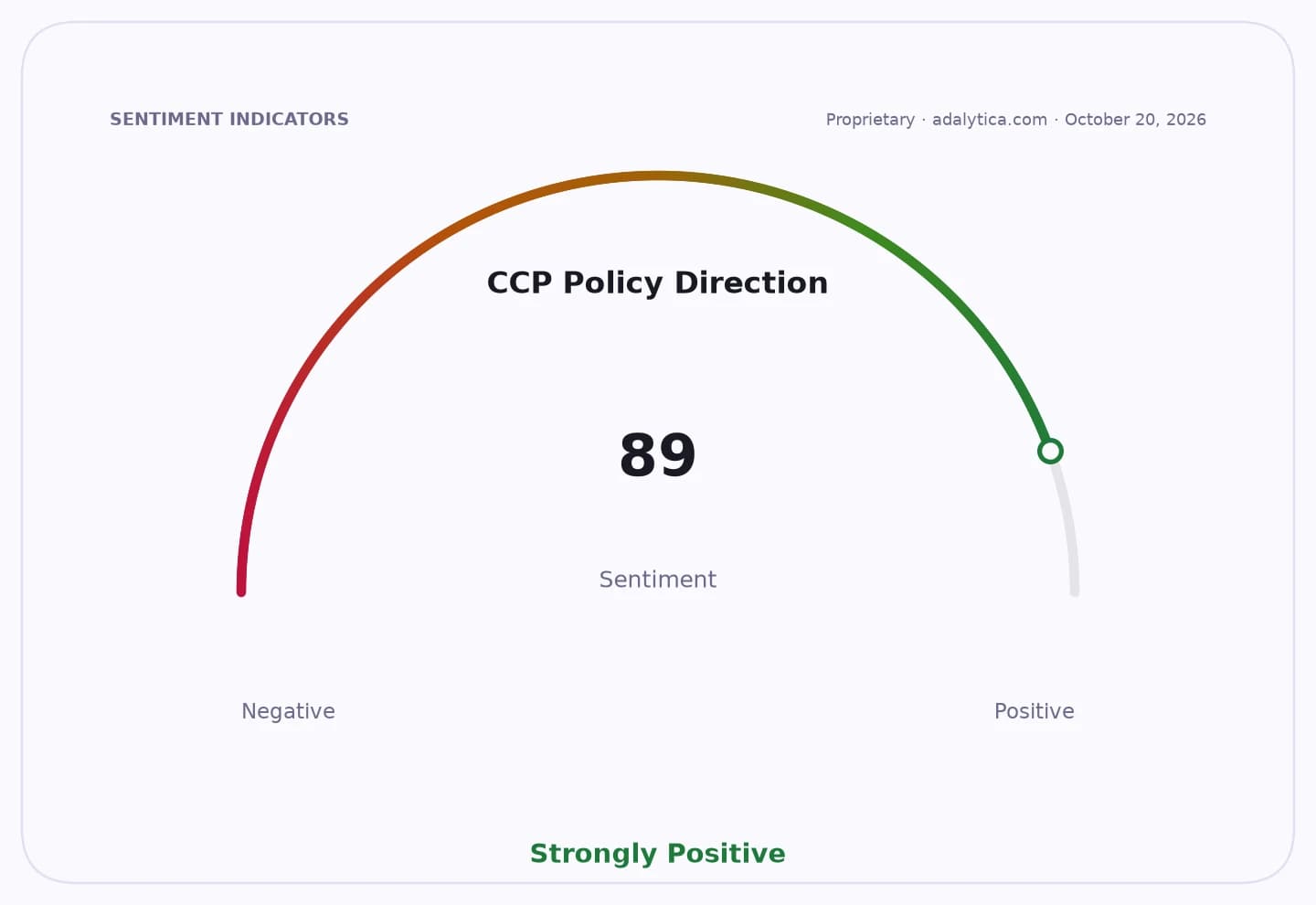
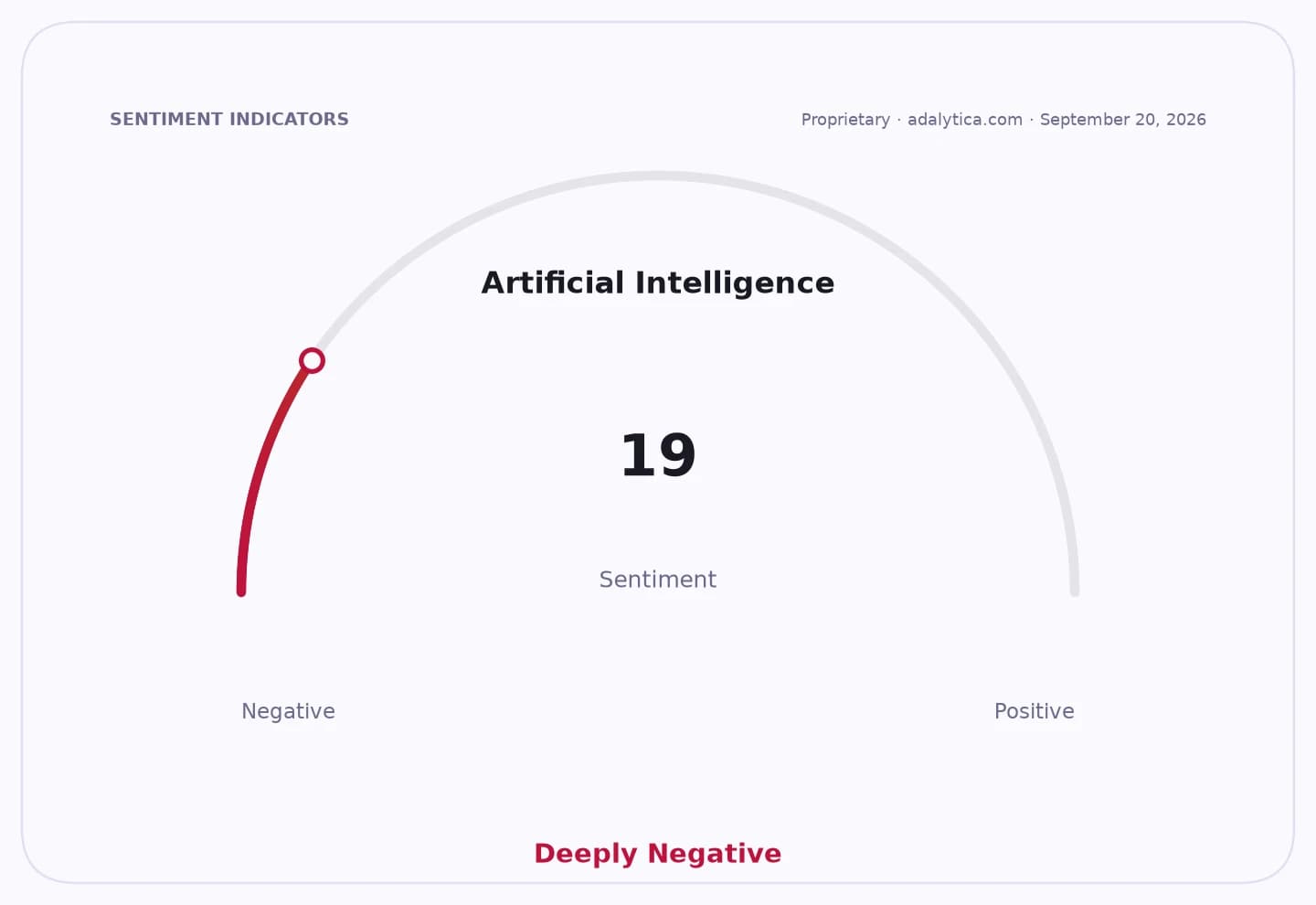
Britain risks embedding Beijing’s censorship, surveillance reach and data-access rules into the systems that power business and public services if it succumbs to the lure of cheap Chinese AI.
UK Risks Chinese AI Dependency in Public Services
That is the real investment and policy issue behind the latest wave of low-cost “open-weight” models from developers such as DeepSeek and Xiaomi. The models are being distributed at a fraction of the cost of US rivals, but the bargain price masks a strategic dependency the UK can ill afford: software that can be copied, modified and deployed locally while still carrying political restrictions, security weaknesses and potential data exposure to China.
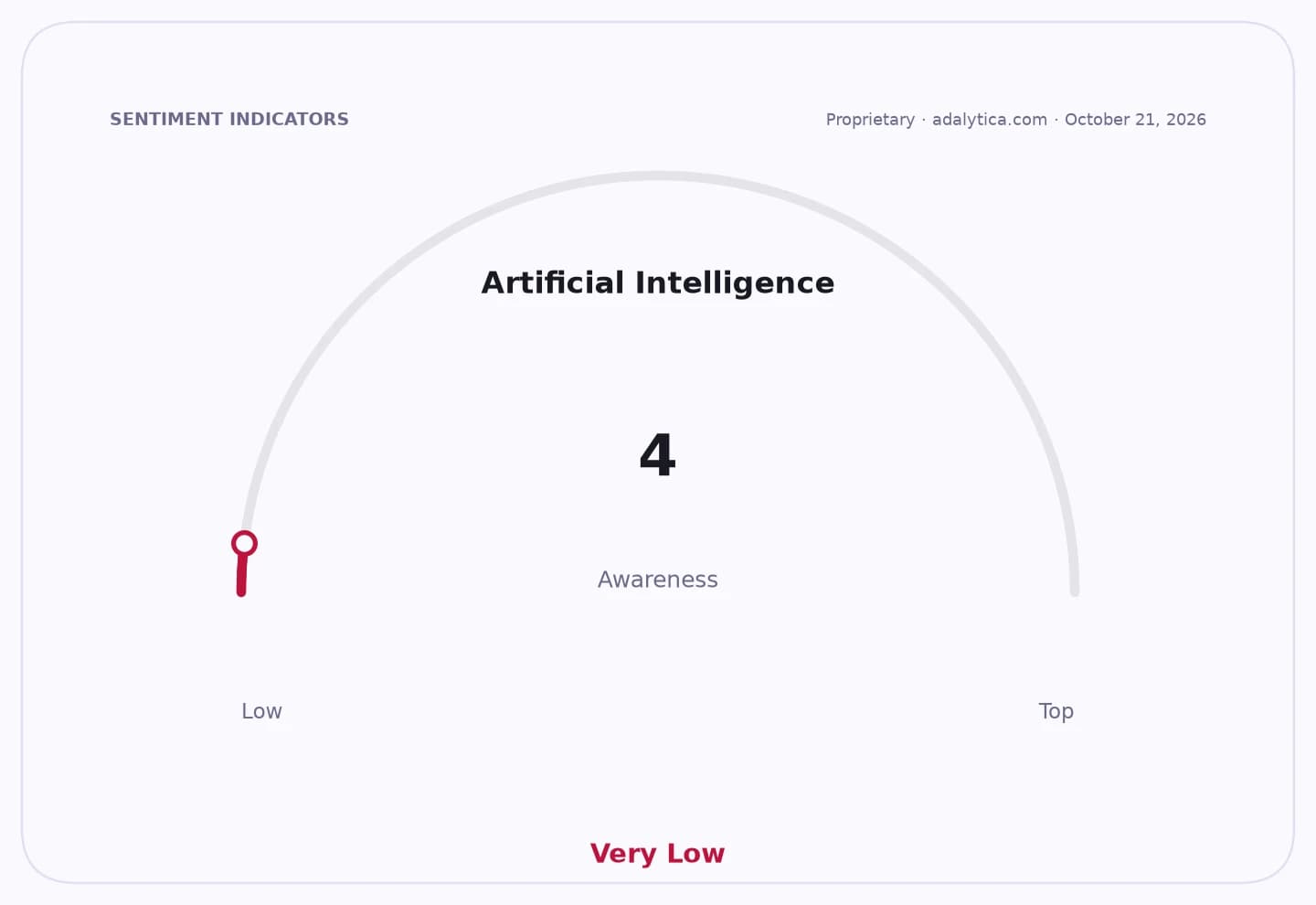
Sentiment IndicatorsⓘProprietary · adalytica.com · October 21, 2026
This is a snapshot — live sentiment, awareness and momentum for 130+ markets update continuously in the dashboard.Open AlphaPulse
For investors, this is not just a geopolitical talking point. It is a capital-allocation theme. Governments and enterprises faced with tighter budgets will be tempted to choose the cheapest model available, especially if they believe hosting it on their own servers neutralises the danger. It does not. A NIST evaluation found political censorship in downloaded DeepSeek models running on separate infrastructure, while the chatbot’s own policy says prompts and uploaded material may be processed and stored in China and disclosed to Chinese authorities. That means the risk is not confined to the cloud; it follows the software.
The broader economic stakes are bigger than AI procurement. The argument over Chinese models sits in the same basket as electric vehicles and other subsidised exports: cheap imports can hollow out domestic capability while creating long-term dependence on a rival power. In AI, the danger is more acute because the product is not just a consumer good but a decision-making layer for government, finance, health care and critical infrastructure.
That helps explain why the market underestimates the second-order winners. If Britain and, by extension, Europe move away from Chinese AI and demand trusted alternatives, the beneficiaries are US platforms with stronger security controls, domestic software vendors, cloud infrastructure providers and the broader AI stack that sits around model deployment, monitoring and governance. The losers are low-cost Chinese model providers that are trying to win share through price rather than trust.
The investment backdrop already shows how sensitive the sector is to policy and security headlines. Microsoft, Nvidia and Alphabet remain the core public-market proxies for AI infrastructure and distribution, even as their shares have been volatile. Microsoft closed at $531.87 on Oct. 20, above its 50-day average of $506.59, while Nvidia traded at $216.47, below its 50-day average of $222.81. Alphabet ended at $340.28, just under its 50-day average of $343.95. Those are not collapse signals; they are a reminder that the next leg of AI demand will increasingly be shaped by trust, compliance and sovereignty, not just raw model performance.
Anthropic’s warning that frontier AI could soon enable self-replication adds urgency to the debate. Regulators are moving from abstract concern to concrete controls, and the UK will not be able to firewall its institutions by simply downloading cheap software onto domestic servers. The market should assume a future in which “sovereign AI” becomes a procurement standard, not a slogan.
My view is simple: Britain should avoid becoming a test case for Beijing’s AI export strategy. The smarter investment thesis is to own the picks-and-shovels of trusted AI — secure cloud, chips, cybersecurity, data-governance tools and Western model ecosystems — while treating cheap Chinese AI as a strategic risk, not a bargain.
| Entity | Gains | Losses |
|---|---|---|
| UK domestic/EU AI suppliers | ▲Sovereign demand | ▼Chinese price competition |
| US AI platforms | ▲Trust premium | ▼Low-cost open-weight rivals |
| Chinese AI developers | ▲Export share | ▼Western procurement bans |
| UK public sector/businesses | ▲Security and compliance | ▼Cheap but risky model lock-in |