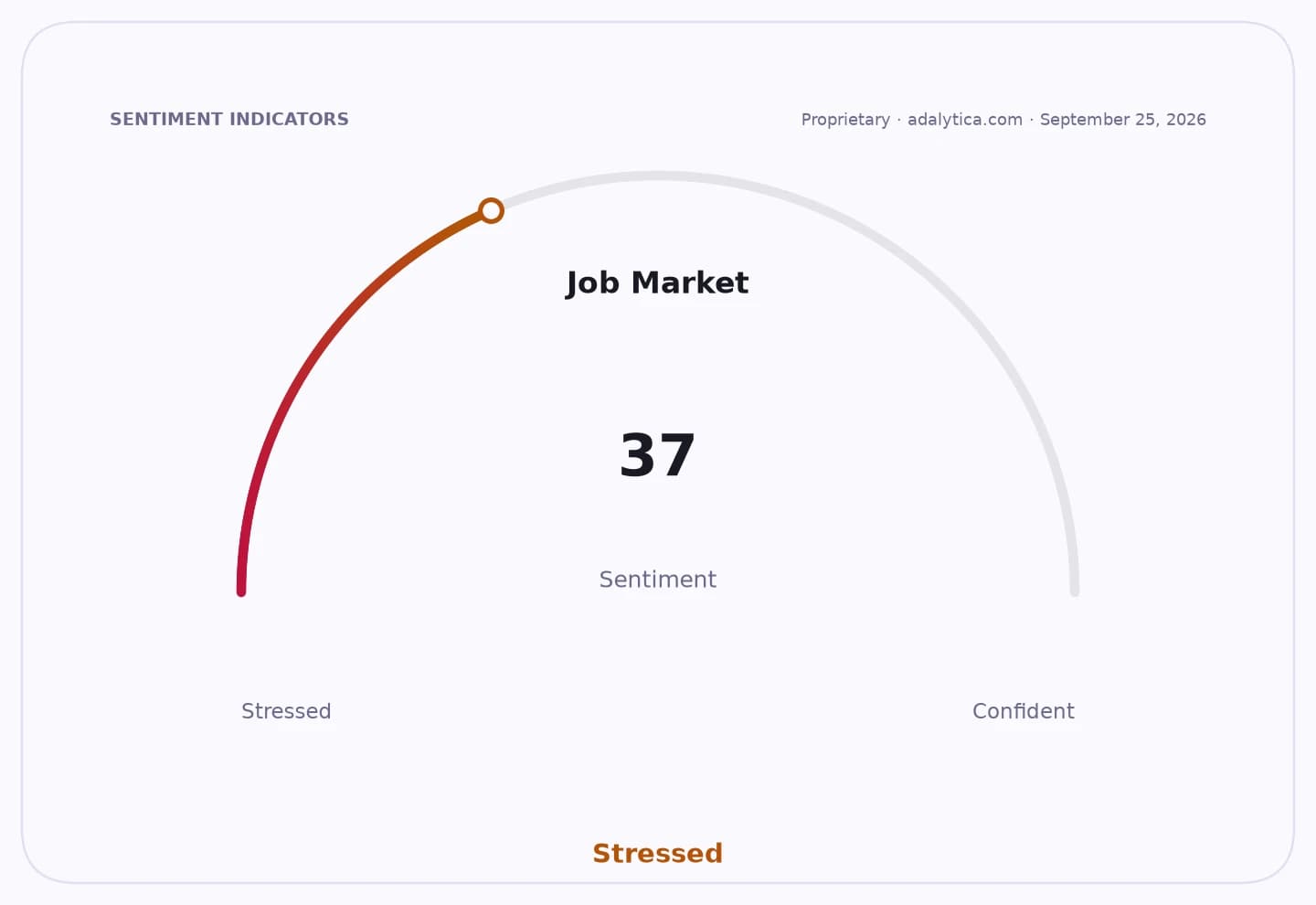
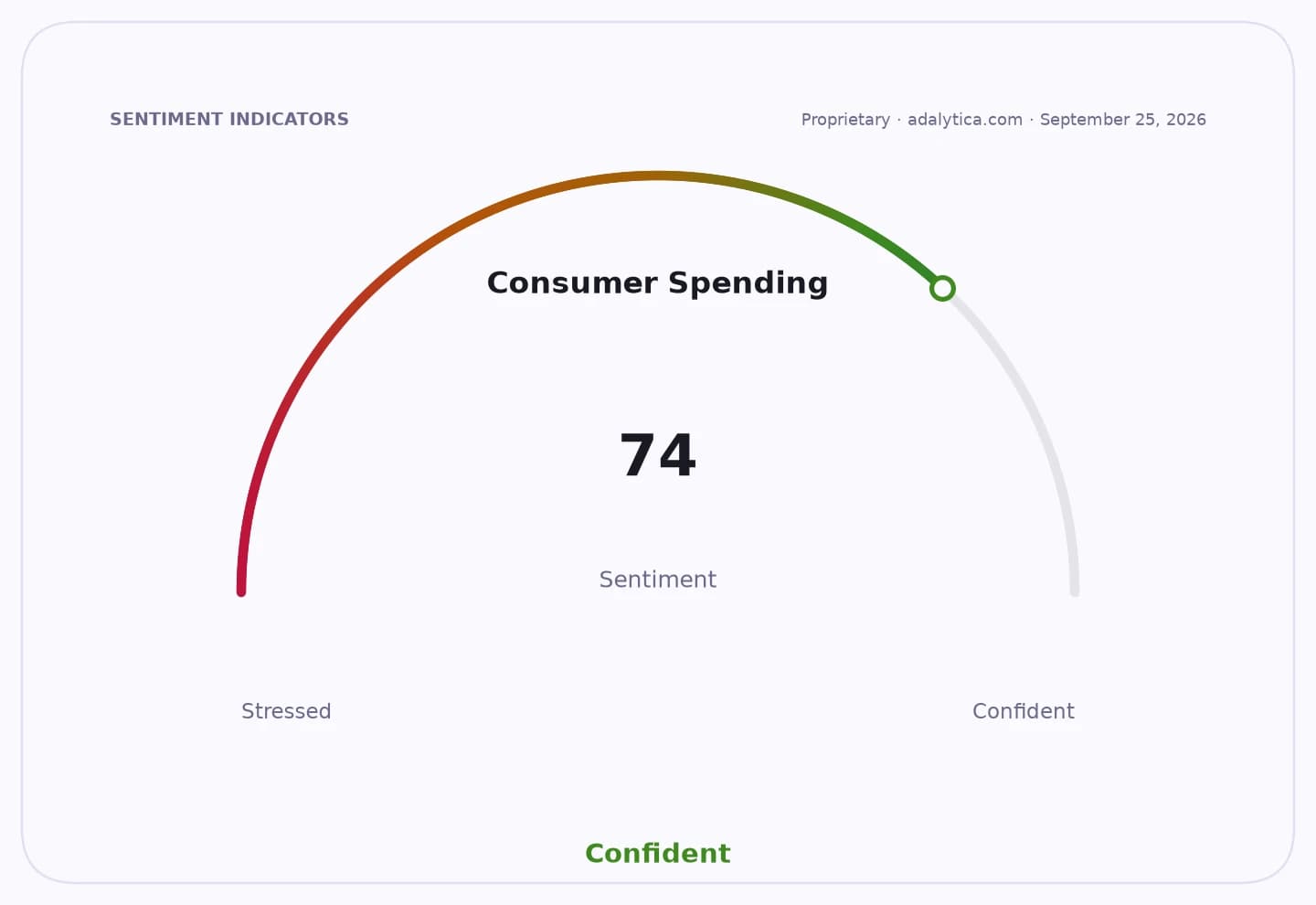
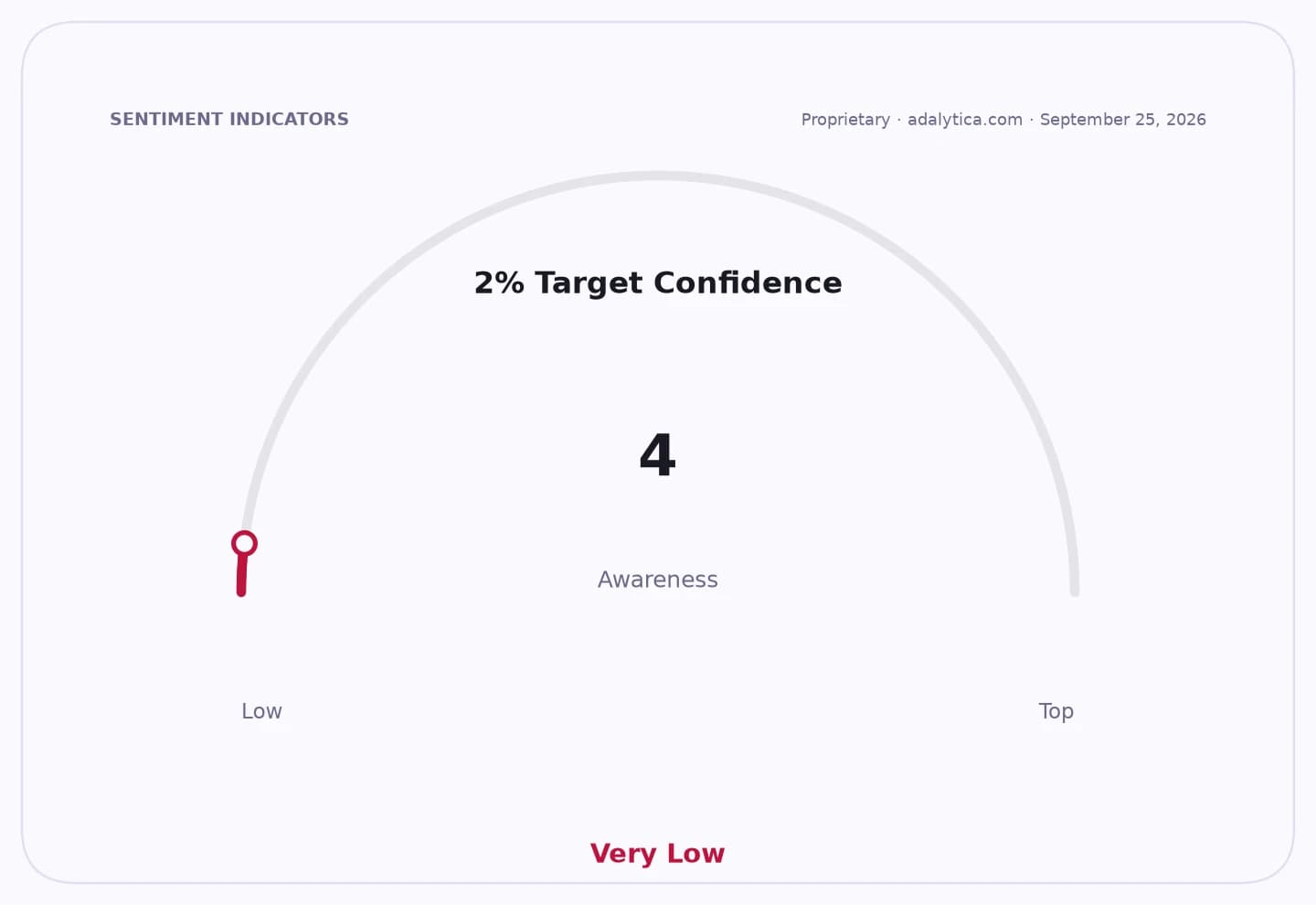
The UK’s cost-of-living squeeze is intensifying as government housing benefit cuts and flat wage growth leave more households unable to cover basics, widening the gap between pay packets and everyday expenses.
UK cost-of-living squeeze deepens
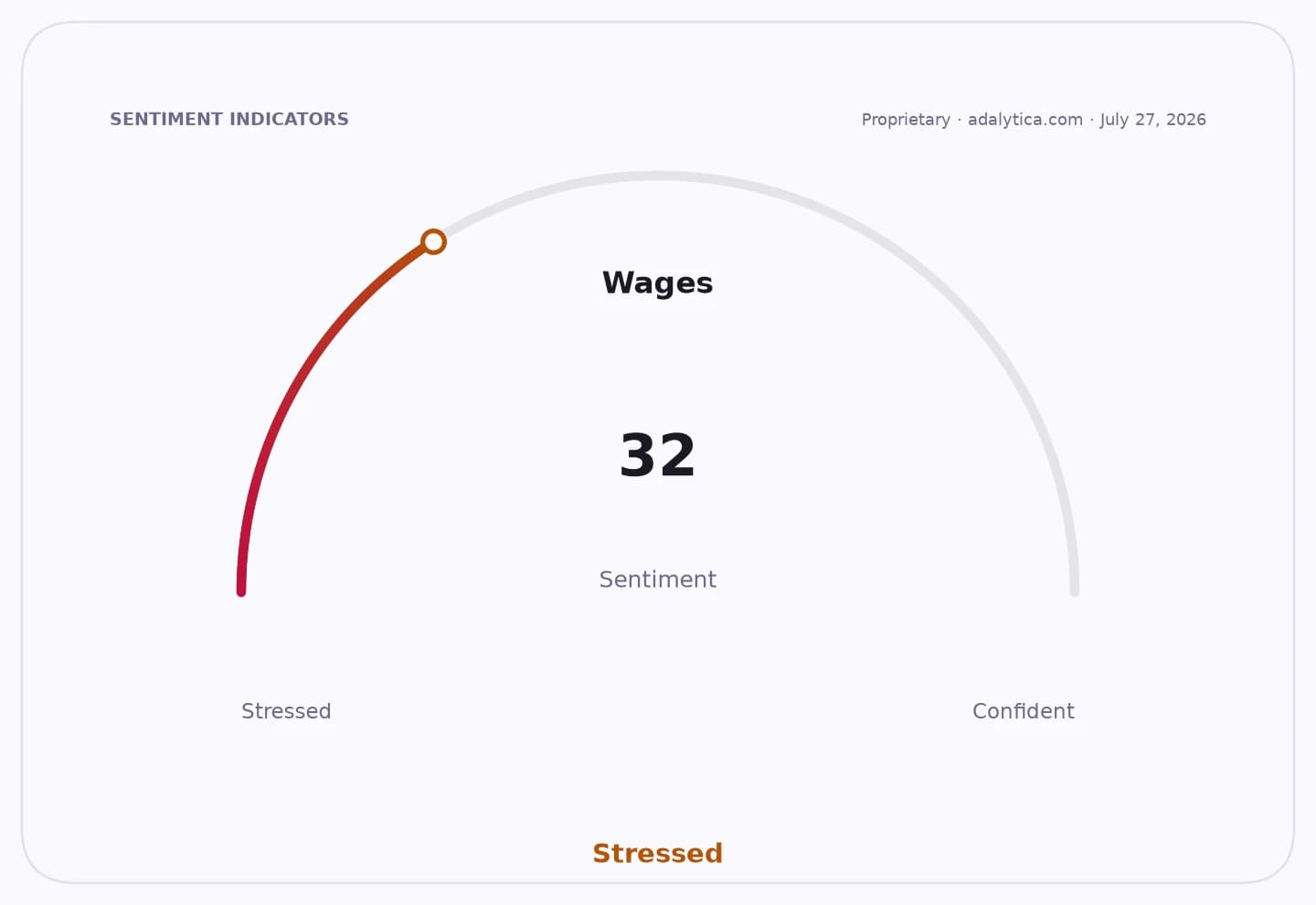
That matters economically because housing is the biggest fixed cost for many low-income families, and when support is reduced while essentials remain expensive, spending shifts from discretionary goods to rent, energy and food. The result is weaker consumer demand, higher arrears risk and a greater burden on local services and charities.
Sentiment IndicatorsⓘProprietary · adalytica.com · July 27, 2026
This is a snapshot — live sentiment, awareness and momentum for 130+ markets update continuously in the dashboard.Open AlphaPulse
Fresh data in the briefing show 7.4 million households are struggling to afford basic essentials, underscoring how broad the pressure has become. The consumer price backdrop is still elevated, with the CPI forecast rising 0.89% in July after a 0.42% decline in June, while the broader index sits far above pre-pandemic levels. Even with unemployment at 4.2% and payroll employment near 158.984 million, pay gains are not keeping up with the cost of shelter and daily necessities.
For investors, the story points to a consumer under strain. Retailers serving lower-income households, utilities and landlords face a more cautious customer base, while companies tied to discretionary spending may see demand soften if families are forced to prioritise rent and bills. It also reinforces pressure on policymakers, who must balance fiscal restraint against the risk of deepening hardship and weakening household consumption.
CPI — 30-day sentimentadalytica.com
Explore this data interactively — full history, time series and cross-market comparisons.Open AlphaPulse
The narrative is straightforward: employment is holding up, but real purchasing power is not. Unless wages accelerate or living costs ease, Britain’s poorest households are likely to remain trapped in a spending squeeze that has broader implications for growth, credit quality and social stability.
| Entity | Gains | Losses |
|---|---|---|
| Government | ▲Fiscal savings | ▼Political backlash |
| Low-income households | ▲Limited relief from wages | ▼Housing support, disposable income |
| Essential retailers | ▲Steady demand for basics | ▼Trade-down from consumers |
| Landlords/utilities | ▲Rent and bill collections | ▼Higher arrears risk from tenants |